The Myth of Heat Rising: A Physics Lesson from the Attic
My old mentor, a man who smelled like burnt ozone and pipe dope, used to scream at me whenever I complained about a cold floor: ‘You can’t heat what you can’t reach! And heat doesn’t rise, son—hot air rises, but heat? Heat moves toward cold like a magnet.’ This core principle of thermodynamics is the only reason radiant floor heating works, and it is the exact reason why most homeowners get scammed by ‘Sales Techs’ who don’t know a BTU from a BLT. When we talk about the major differences between electric and gas (hydronic) radiant floor systems, we are really talking about the battle between high-resistance electricity and the thermal mass of water. In the freezing winters of the North, where a polar vortex can turn your pipes into ice sculptures, choosing the wrong system isn’t just an inconvenience; it’s a financial catastrophe. We see guys pushing electric mats for whole-house heating in 2,500-square-foot homes, and I tell them they’re building a giant toaster that will eat the homeowner’s retirement fund. If you want real comfort, you have to understand the physics of the floor.
“The most expensive equipment in the world cannot overcome a bad duct system, or in the case of radiant heat, an improperly sized thermal load.” – Industry Axiom
Electric Radiant: The High-Resistance Toaster
Electric radiant heating is essentially a series of high-resistance wires tucked under your tile or laminate. It is fast, it is thin, and it is relatively cheap to install. But here is the catch that the ‘Sparky’ won’t tell you: the operational cost in a cold climate like Chicago or the Northeast is staggering. Electric systems are best served as ‘floor warming’ for small bathrooms where you want that ‘beer can cold’ feeling gone from your toes in the morning. When you try to scale this to a whole-house heating service, you are fighting a losing battle against the meter. Unlike heating service innovations transforming 2025, electric mats have no way to integrate with solar thermal heating integration or other renewable sources. They are 1:1 efficiency. You put a dollar of juice in, you get a dollar of heat out. In the HVAC world, that’s actually poor performance compared to modern heat pump tech.
Gas Hydronic: The King of Thermal Mass
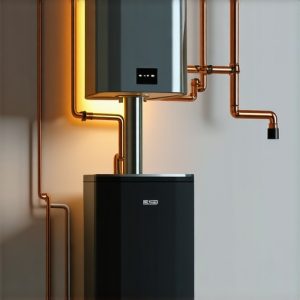
Hydronic systems are the heavyweights. We’re talking about PEX tubing—the industry standard—embedded in a thick slab of concrete or over a subfloor. Instead of electricity, we use a high-efficiency gas boiler or a dual fuel heat pump system to circulate hot water. This is where control board diagnostics become critical. A hydronic system is a living, breathing creature. It uses thermal mass to hold heat for hours. When we integrate these with solar thermal heating integration, the efficiency numbers go through the roof because we are using the sun to pre-heat the fluid. This is a far cry from the quick-fix electric mats. If you are looking for long-term survival in a cold climate, hydronic is the only way to go, especially when paired with SEER2 compliant upgrades for your overall HVAC ecosystem. Many homeowners are now looking at hyper-heat heat pumps to drive these hydronic loops, providing an incredible bridge between the gas and electric worlds.
“Design for radiant systems shall be based on the peak sensible heating load of the space, ensuring the surface temperature does not exceed 84°F for occupant comfort.” – ASHRAE Standard 55
The Invisible War: IAQ and Airflow Management
One of the biggest reasons my clients switch to radiant—and why they often ask about IAQ improvement services—is the lack of forced air. When you aren’t blowing air through dusty trunks, you don’t need duct cleaning services as frequently, and the ‘pookie’ (mastic) on your joints isn’t leaking conditioned air into the crawlspace. However, don’t be fooled. Even with radiant heat, you still need a plan for summer. This is where ductless mini-split installation comes into play. You get the silent, efficient heat from the floor in the winter, and the precision cooling of a mini-split in the summer. It’s the ultimate combo for the modern home. I’ve seen too many people forget about ventilation because their floors were warm, leading to ‘stale air syndrome.’ You still need to move air to stay healthy.
Repairing the Unseen: Diagnostics and Maintenance
When a gas-fired radiant system goes down, it’s usually a pump or a zone valve. I can fix those all day. When an electric floor mat snaps under a tile because the house settled? You’re ripping up the floor. That’s the ‘Sales Tech’ trap. They sell you on the low install price but never mention the lack of serviceability. If you’re serious about your home’s longevity, look into priority service memberships that cover your boiler and your auxiliary systems. I’ve spent thirty years catching the mistakes of ‘tin knockers’ and plumbers who didn’t understand flow rates. Don’t be the person who ignores their system until the pipes are humming a death rattle. For more on avoiding these pitfalls, check out furnace repair myths debunked by industry experts to see why ‘more power’ isn’t always the answer.
Final Verdict: Which System Wins?
If you are doing a small bathroom remodel, go electric. It’s simple. But if you are building or doing a major gut-job in a cold climate, gas-fired hydronic (or heat pump-driven hydronic) is the only professional choice. It allows for dual fuel heat pump systems integration and keeps your operational costs from skyrocketing. Remember, comfort is physics, not magic. You want to heat the objects in the room, not just the air. And for heaven’s sake, keep an eye on your control board diagnostics. If the light is blinking red, don’t wait for the first frost to call for a heating service. Be proactive, stay warm, and don’t let a ‘Sales Tech’ talk you into a toaster when you need a boiler. For more advice on making the right call, see choosing the right HVAC fixes before you sign that contract.