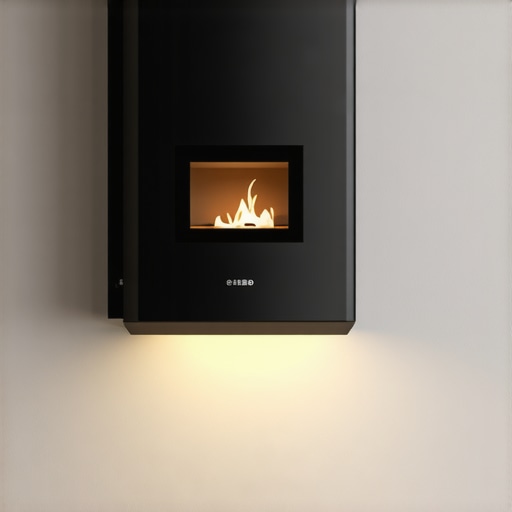
The Physics of Comfort: Why Your Wall Furnace is Lying to You
My old mentor, a man who smelled perpetually of PVC glue and burnt electrical contactors, used to corner me in the back of the van and scream, ‘You can’t cool what you can’t touch, and you can’t heat what you don’t control!’ He was a ‘Tin Knocker’ of the old guard, and he knew that airflow matters more than horsepower. He’d watch these ‘Sales Techs’ push a 5-ton unit into a 1,200-square-foot house and just shake his head. It’s the same story with wall furnaces. People think a heater is just a box that makes fire. They’re wrong. It’s a thermodynamic heat exchanger designed to balance the heat loss of your building envelope against the chemical energy of natural gas. If you’re still running an old ‘on-or-off’ dinosaur, you aren’t just wasting money; you’re fighting physics and losing every single month.
In the cold North, where the wind bites through the brick and the frost line stays deep until May, the enemy isn’t just the temperature—it’s the cycle. Standard furnaces are binary; they are either 100% on, blasting you with scorched air, or 100% off, letting the room plummet into a drafty chill. This is the ‘Stratification Trap.’ Hot air rises, cold air pools at your ankles, and the thermostat (usually a cheap piece of plastic mounted on a drafty wall) stays confused. The secret to killing those high energy bills isn’t just ‘turning it down.’ It’s modulation.
“The most expensive equipment in the world cannot overcome a bad duct system, and a furnace that cannot modulate its output is simply an oversized engine in a school zone.” – Industry Axiom
The Thermodynamic Zoom: What is Modulation?
Let’s talk about the gas valve. In a standard setup, that valve is a gate. It’s open or closed. A modulating wall furnace uses a stepper motor to adjust that gate in increments as small as 1%. Imagine driving a car where the only two options were ‘Engine Off’ and ‘Pedal to the Metal.’ You’d burn through a tank of gas in ten miles and your brakes would be screaming. That’s what your old furnace does. Modulation allows the system to run at 40% capacity on a 40°F day, sipping ‘juice’ (fuel) and maintaining a constant, gentle flow of warmth that keeps the air mixing. This prevents the ‘Polar Vortex’ effect inside your living room. By matching the heat output to the actual heat loss of the room, you eliminate the massive energy spikes of startup. Most of your wear and tear happens during the startup cycle—that’s when the capacitor replacement services usually come into play, as the initial torque required to spin up a blower motor is three times the running load.
The Silent Killers: Static Pressure and Flame Sensors
If you’ve ever noticed your furnace ‘clicking’ but not firing, you’re likely looking at a dirty flame sensor. This isn’t magic; it’s a process called flame rectification. The furnace sends a small AC voltage to the sensor; the flame itself acts as a conductor to ground, turning that AC into a tiny DC microamp signal. Over time, silicon dioxide (a byproduct of burning gas) coats the rod. The furnace thinks there’s no fire, shuts the gas valve for safety, and tries again. It’s a $0.05 cleaning job that ‘Sales Techs’ will try to turn into a $4,000 system replacement. This is why top HVAC repair strategies to extend your systems life always start with the basics: clean your sensors and check your heat exchanger. In the North, a cracked heat exchanger is a death sentence—not just for the unit, but potentially for the occupants due to Carbon Monoxide (CO) leakage.
Airflow in a wall furnace is limited by the physical ‘tin’ of the unit. There’s no massive duct system, which means the internal static pressure is critical. If the intake is blocked by dust or the ‘Pookie’ (mastic) used to seal the vent pipe has degraded and fallen into the blower, the heat exchanger will overheat. It’s a simple cycle: low airflow leads to high internal temps, which leads to metal fatigue, which leads to cracks. You want to see a technician who understands refrigerant leak detection for the summer but knows how to use a manometer in the winter.
Occupancy Sensors and the Smart Grid
We are entering the era of the ‘Thinking Home.’ Why heat a room if nobody is in it? Occupancy sensor installation integrated with a modulating furnace is the ultimate ‘hack’ for 2025. These sensors tell the modulating valve to drop to ‘Pilot Mode’ or minimum firing rate when the room is empty. It’s significantly more efficient than a garage heater installation that runs 24/7 just to keep the pipes from freezing. If you’re managing a larger facility, like school boiler maintenance, you know that zoning is everything. In a residential setting, you achieve this by pairing modulation with high-end IAQ (Indoor Air Quality) sensors. If the air gets stagnant, the variable speed blower kicks on to circulate air through the filters without necessarily firing the burners.
The Myth of ‘Topping Off’ the Juice
I see it every year. A tech walks in, looks at a system, and says, ‘You’re just a little low on gas, let me top it off.’ Listen to me: an HVAC system is a sealed loop. If it’s low on refrigerant, there is a hole. Period. ‘Topping it off’ is like putting air in a tire with a nail in it—it’s a temporary fix for a permanent problem. Whether it’s your main AC or a hybrid heat pump system, you need a tech who will find the leak. This is why priority service memberships are actually worth the paper they’re printed on; they usually include an annual leak search. For those in the colder climates looking at radiant floor heating installation, remember that your boiler is a sealed system too. If you’re adding water constantly, you have a leak in the pex or a failing expansion tank.
“ASHRAE Standard 62.1 reminds us that ventilation is not just about temperature; it is about the dilution and removal of contaminants. A furnace that doesn’t move air doesn’t just fail to heat; it fails to protect.” – ASHRAE Standards
Choosing the Right Path for 2025
As we move toward the R-454B refrigerant transition and higher AFUE (Annual Fuel Utilization Efficiency) requirements, the ‘cheap’ options are disappearing. A high-efficiency modulating wall furnace might cost more upfront, but when you factor in the HVAC maintenance plans and the sheer reduction in therms consumed, the ROI is usually under three years. Don’t let a ‘Sales Tech’ scare you into a full central air overhaul if a targeted wall solution or IAQ improvement services can fix the problem. Knowledge is your best tool against the ‘Sparky’ or the ‘Tin Knocker’ who just wants to get to the next job. If you want to know more about making the right choice, check out choosing the right HVAC fixes what homeowners need to know or dive into our heating service hacks for comfort and savings in 2025. Comfort isn’t a luxury; it’s a matter of physics. If your tech doesn’t talk about static pressure or microamps, find a new tech. And for the love of all things holy, stop using 1-inch pleated filters that choke your system to death. Go for the high-flow media or don’t complain when your heat exchanger pops on a Tuesday night in January.