The Brutal Reality of the 2025 Regulatory Cliff
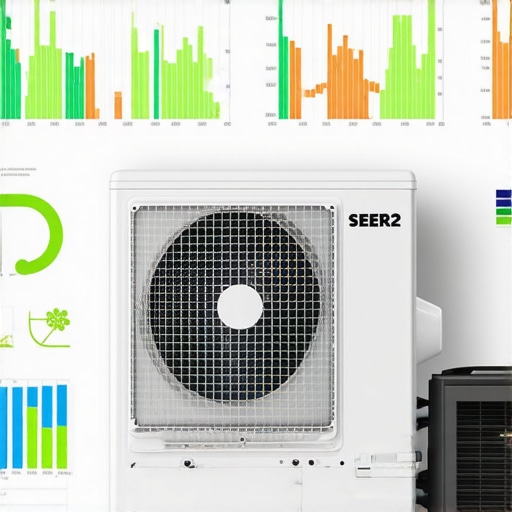
The industry is changing, and if you’re listening to a ‘Sales Tech’ who spends more time looking at his commission than his manifold gauges, you’re about to get burned. We aren’t just talking about a sticker change. The shift to SEER2 (Seasonal Energy Efficiency Ratio 2) is a fundamental overhaul in how we measure cooling. For years, the old SEER ratings were a laboratory fantasy—testing units at 0.0 inches of water column (wc) of external static pressure. Any tin knocker worth his salt knows that no real-world duct system runs at zero static. SEER2 finally accounts for the ‘real world’ by testing at 0.5 inches wc, acknowledging that your ductwork is a restrictive tunnel of air that the blower has to fight against.
I remember following one of those flashy ‘comfort consultants’ into a split-level home last November. The homeowner was shivering because her furnace had locked out, and this guy had already quoted her $18,000 for a full 18-SEER2 system with all the bells and whistles. He told her the heat exchanger was shot. I pulled the panel, checked the flame rollout switch, and found a bird’s nest in the intake. A thirty-minute fix and some honest furnace repair saved her fifteen grand. That’s the problem today: the industry is pushing high-efficiency furnace installation as a band-aid for bad physics. If your ‘pro’ doesn’t own a manometer to check static pressure, he’s just a salesman in a uniform.
“The most expensive equipment in the world cannot overcome a bad duct system.” – Industry Axiom
The A2L Transition: Why R-410A is Gas of the Past
We are currently staring down the barrel of the R-410A phase-out. The EPA is moving us toward A2L refrigerants like R-454B and R-32. These are ‘mildly flammable,’ which sounds terrifying to a homeowner but is just another Tuesday for us grease monkeys. However, this change means your next unit will have leak sensors and redesigned coils. If you’re trying to limp a 15-year-old system along with ‘juice’ (refrigerant) that costs $150 a pound, you’re throwing good money after bad. You need to understand that ac installation secrets aren’t about the brand on the box; they are about the evacuation and the microns held during the vacuum pump stage.
In our northern climate, where a polar vortex can turn your outdoor condenser into a block of ice, the interaction between your AC and your heating system is critical. You can’t just slap a high-SEER2 coil on an old furnace and expect it to sing. Proper heating service innovations now include demand-controlled ventilation and blower motors that can handle the increased static of tighter, more efficient coils. If your attic insulation for heating is thin, that 20-SEER2 unit is just going to work overtime to cool the neighborhood instead of your living room.
The Physics of Latent vs. Sensible Heat
Let’s talk thermodynamics. When that evaporator coil gets ‘beer can cold,’ it’s doing two jobs: dropping the air temperature (sensible heat) and wringing the water out of the air (latent heat). In our region, if you oversize the unit because the Sales Tech thinks ‘bigger is better,’ the unit will short-cycle. It will drop the temp in ten minutes, but it won’t run long enough to pull the humidity out. You’ll end up with a house that feels like a cold, damp basement. This is where choosing the right hvac fixes becomes a math problem, not a guessing game.
“Standard 62.2 defines the roles of and minimum requirements for mechanical and natural ventilation systems and the building envelope intended to provide acceptable indoor air quality.” – ASHRAE Standards
If you’re looking for heating service hacks, start with your thermostat. Remote thermostat access is great for convenience, but the real savings come from Energy Star heating certification and proper rebate application assistance. Many utility companies will literally pay you to upgrade to a high-efficiency furnace installation, provided the numbers match the climate zone requirements. Don’t forget the peripherals either; we handle everything from commercial furnace repair to specialized spa heater services, because heat transfer is heat transfer, whether it’s in a plenum or a heat exchanger for a pool.
The Maintenance Trap: Don’t Get Scammed
Every spring, the ‘Sparky’ (electrician) and the ‘Tin Knocker’ (duct guy) see the same thing: homeowners paying $29 for a ‘tune-up’ that is actually just a high-pressure sales pitch. A real tech will check the capacitor’s microfarads, wash the condenser coils (because dirt is an insulator, and insulation on a coil is a death sentence), and check the contactor for pitting. If they aren’t looking at your preventative hvac repair needs through the lens of airflow, they are wasting your time. Even simple portable heater safety checks during the winter can prevent a house fire, yet people ignore the basics. Stay vigilant, watch your static pressure, and remember: pookie (mastic) on the duct joints is better than the most expensive smart thermostat on the wall.