The Myth of the ‘Forever’ System: A Tech’s Perspective
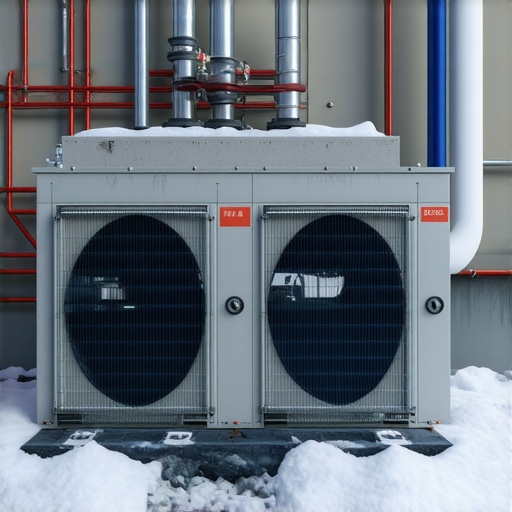
I’ve spent thirty winters crawling through crawlspaces where the frost line was just a suggestion and the wind chill could stop a heart. My old mentor, a man who could smell a refrigerant leak from the driveway, used to scream at me, ‘You can’t heat what you can’t touch!’ This is why airflow matters more than horsepower. He was a tin knocker by trade, and he knew that if the air doesn’t move across that coil, your high-efficiency geothermal unit is nothing more than a very expensive boat anchor. Geothermal is often sold as the ‘forever’ solution for heating, but in freezing climates, the mechanical reality is far more brutal than the brochure suggests. When the ground is locked in ice, your system is essentially trying to squeeze BTUs from a 50-degree loop while the wind is trying to strip them away at -10°F. It is a thermodynamic war of attrition.
“Geothermal heat pump systems shall be sized according to the heating and cooling loads of the building as determined by Manual J or equivalent.” – ACCA Manual J
In the North, where the polar vortex is a seasonal guest, the enemy isn’t just the cold; it’s the cycle rate. A geothermal unit in a freezing climate isn’t just ‘running’; it is performing a complex dance of phase changes. If your system was installed by a sales tech looking for a commission rather than an engineer, you’re going to find out the hard way. I once walked into a house where a homeowner had spent $30,000 on a ground-source setup, only to have the furnace repair is urgent alarm go off because the loop wasn’t deep enough. The ‘juice’—that’s refrigerant to you—wasn’t reaching the proper temperature because the ground around the pipes had literally turned into a block of permafrost. The system was short-cycling, and the compressor was screaming for mercy.
The Mechanical Anatomy: Why Parts Fail When the Mercury Drops
Let’s talk about blower motor replacement. In many geothermal setups, the blower is the unsung hero that has to overcome the massive static pressure of HEPA filter systems. Homeowners love HEPA because it keeps the air clean, but it’s like trying to breathe through a wet wool blanket. If that motor has to ramp up to its maximum RPM just to push air through a clogged filter, you’re going to be calling me for a replacement long before the ten-year mark. It’s not just the motor; it’s the heat. When the air slows down, the limit switch replacement becomes inevitable because the internal cabinet temperatures spike, tripping the safety. I’ve seen pookie (mastic) melt off joints because a system was starving for air while trying to satisfy a 75-degree thermostat setting in a blizzard.
Then there is the wiring repair for heating systems. Modern geothermal units are packed with app-controlled heating systems and complex boards. While thermostat wiring upgrades are often necessary to handle the communication between the unit and the cloud, every connection is a potential point of failure. In cold climates, wires can become brittle, and if a sparky didn’t use the right gauge, you’ll see voltage drops that fry control boards. This isn’t like the old days of pilot light relighting or a simple thermocouple replacement on a cast-iron boiler. Those systems were simple; these are computers that happen to move heat. If your oil to gas conversion didn’t work out and you went geothermal, you’ve moved from a mechanical beast to an electronic one. You need to treat it accordingly.
“The design and installation of ground-source heat pumps must account for the long-term thermal equilibrium of the ground heat exchanger.” – ASHRAE Standards
The Forensic Diagnosis: Longevity vs. Reality
If you want your geothermal system to last 25 years, you have to understand Thermodynamic Zooming. The evaporator coil must drop below the dew point to remove latent heat in the summer, but in the winter, the coaxial heat exchanger has to pull sensible heat from the ground loop. If the loop is undersized, the fluid returning to the unit gets colder and colder as the winter progresses. This causes the compressor to work harder, increasing the compression ratio and shortening its life. I’ve performed efficient HVAC repairs on units where the ground loop was so depleted that the backup electric heat strips—the ’emergency heat’—were running 24/7. That defeats the entire purpose of geothermal.
We also need to consider hospital HVAC zoning techniques being applied to residential geothermal. Proper zoning allows the system to direct heat only where it’s needed, which can save the compressor from unnecessary wear. However, if the zoning is done poorly without a bypass damper or a variable-speed blower, the static pressure will kill the unit. Check out these heating service hacks to see how small adjustments to your airflow can save your hardware. Don’t believe the furnace repair myths that say geothermal is ‘maintenance-free.’ You still have pumps, you still have blowers, and you still have sensors that need calibration.
The Final Verdict on Cold-Climate Geothermal
Longevity is a function of design, not luck. If you are in a freezing climate, your ground loop is your fuel tank. If that tank is too small, your system will starve. Ensure your technician isn’t just a parts changer but understands the physics of heat transfer. When the suction line is ‘beer can cold’ in the summer, that’s great, but in the winter, I want to see a stable delta-T across your source-side heat exchanger. If you ignore the signs—the weird vibrations, the slightly longer run times, the humming of a struggling blower—you’ll be looking at a five-figure bill instead of a two-figure tune-up. Physics doesn’t care about your warranty; it only cares about the laws of thermodynamics.