The Sound of a Dying Inducer and the Lie Detector
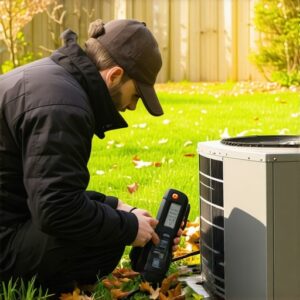
You hear that? That high-pitched whine coming from your mechanical room isn’t just a nuisance; it’s the sound of a bearing in an inducer motor screaming for mercy before it finally seizes at 3 AM on a Tuesday when it’s 5 degrees outside. Most homeowners ignore the sensory cues of their heating system until the air coming out of the registers turns ice cold. They think a furnace is a binary machine—it’s either on or it’s off. But as someone who has spent three decades in the trade, crawling through crawlspaces and burning my knuckles on heat exchangers, I can tell you that a furnace can be ‘running’ while simultaneously bleeding your bank account dry. The industry is full of ‘Sales Techs’ who want to sell you a shiny new cabinet the second they see a speck of rust, but I prefer the truth. And the truth lives in a single diagnostic tool: the Combustion Analyzer.
“Efficiency is not a static number; it is a dynamic result of combustion chemistry and airflow.” — ASHRAE Fundamentals
The Community Center Scam: A Forensic Lesson
Last winter, I followed a ‘Sales Tech’ from one of those big-box franchises to a local community center. They had a massive boiler system and a series of furnaces for the warehouse storage areas. The previous tech had quoted them $28,000 for a full replacement, claiming the heat exchangers were ‘compromised’ and the efficiency had dropped below 60%. I walked in with my analyzer—the ‘Lie Detector’—and did a real forensic diagnosis. I stuck the probe into the flue and looked at the stack temperature and the O2 levels. The unit was running rich, sure, but it wasn’t dead. It was starving for air because some tin knocker thirty years ago hadn’t sized the return air drops correctly. After a furnace flame sensor cleaning, a burner adjustment, and clearing a bird’s nest out of the intake, that ‘dead’ system was pulling 92% steady-state efficiency. This is why you don’t trust a guy who only carries a clipboard; you trust the guy who carries the calibrated sensors.
Thermodynamic Zooming: How Your Furnace Actually Wastes Fuel
When we talk about warehouse heating solutions or even a standard residential setup, we have to look at the physics of the flame. Inside your furnace, a phenomenon called flame rectification occurs. The furnace flame sensor is a simple stainless steel rod that uses the flame itself to conduct a tiny electrical current (we’re talking microamps). If that sensor is coated in carbon or silica, the control board can’t ‘see’ the flame, and it shuts the gas off. This leads to short-cycling—the most common way furnaces waste fuel. Every time your furnace starts, it goes through a prepurge cycle where the inducer motor blows cold air through the heat exchanger to clear out any unburnt gas. If your system short-cycles ten times an hour because of a dirty sensor or a bad programmable thermostat programming job, you are literally blowing money out the chimney before the house even gets warm.
The Physics of Airflow: Why MERV Filter Upgrades Can Kill Your Heat Exchanger
Everyone wants ‘clean air,’ so they run out and buy the thickest, highest-rated filter they can find. But here’s the trade secret: MERV filter upgrades can be a death sentence for a furnace if the ductwork isn’t designed for it. Imagine trying to breathe through three masks while running a marathon. That’s what your blower motor feels like. High static pressure reduces the mass flow of air across the heat exchanger. When that happens, the heat exchanger doesn’t get cooled down enough by the return air, the metal expands and contracts too violently, and eventually, it cracks. This is where new construction heating design fails most often; they put in a high-efficiency furnace but stick it on a 1970s-sized duct system. If you’re worried about air quality, you’re better off with a 4-inch media cabinet and leak detector integration to ensure no combustion gases are escaping into the stream. Check out these furnace repair myths debunked by industry experts for more on why bigger isn’t always better.
The Commercial Scale: Hotel Boiler Services and Warehouse Solutions
In a commercial setting, like hotel boiler services, the stakes are higher. You aren’t just losing a few bucks; you’re losing thousands in scale-related efficiency drops. We use leak detector integration and ultrasonic sensors to find pinholes in steam lines that ‘Sparky’ or the general maintenance guy would never find. Whether it’s a warehouse or a hotel, the principle of ‘Sensible Heat’ applies. We aren’t just heating the air; we are heating the objects in the room. This is why emergency heating repair in the middle of a polar vortex is so critical—once the thermal mass of a building drops, the furnace has to work ten times harder to recover. If your system is struggling, you should look into how to identify when furnace repair is urgent and why to avoid a total building freeze-up.
Modern Controls: Alexa, Why is My Bill So High?
We’ve moved into the era of the voice control setup Alexa Google, but a smart thermostat is only as smart as the person who wired it. I’ve seen programmable thermostat programming where the ‘Heat’ and ‘Aux Heat’ (for heat pumps) were running simultaneously because of a bad C-wire connection. This is pure waste. However, when done right, these systems allow for rebate application assistance because they prove to the utility company that you are managing your load. We’re seeing a massive shift in heating service innovations transforming 2025 climate control, where AI-driven sensors can actually predict a failure before the bearing even starts to screech. If you want to stay ahead of the curve, you need to understand heating service innovations transforming 2025 climate control and how they impact your bottom line.
“The most expensive equipment in the world cannot overcome a bad duct system.” — Industry Axiom
The 2025 Regulatory Cliff and Efficiency
As we move into 2025, the industry is changing. We’re moving away from older refrigerants and towards higher AFUE (Annual Fuel Utilization Efficiency) standards for furnaces. But don’t let a salesman tell you that an 80% furnace is ‘illegal.’ It’s about the application. If you live in a climate where the furnace only runs 200 hours a year, a 98% modulating furnace might never pay for itself. We help with rebate application assistance to make sure the math actually works in your favor. Whether you need emergency heating repair or just a preventative hvac repair check-up, the goal is always the same: keep the gas in the pipes and the heat in the house. For more technical deep dives, read about preventative hvac repair tips for year-round efficiency or learn some heating service hacks for comfort and savings in 2025.
Closing: Don’t Let ‘Pookie’ Hide a Problem
I’ve seen guys slop Pookie (mastic) over a leaking transition just to hide a bad cut, but you can’t hide the numbers on a combustion analyzer. If your stack temp is over 450 degrees on a high-efficiency unit, you’re throwing money into the sky. It doesn’t matter if you have voice control setup Alexa Google or the fanciest MERV filter upgrades; if the heat exchange isn’t happening, you’re losing. Stop guessing and start measuring. Comfort is physics, and physics doesn’t lie. “,”image”:{“imagePrompt”:”A professional HVAC technician in a dark basement using a high-tech digital combustion analyzer with a glowing screen. The probe is inserted into a silver furnace vent pipe. The technician is wearing work gloves and a focused expression. The furnace is a modern high-efficiency model with some technical labels visible.”,”imageTitle”:”HVAC Technician performing combustion analysis”,”imageAlt”:”Technician using a combustion analyzer to check furnace efficiency”},”categoryId”:1,”postTime”:”2025-05-20T10:00:00Z”}