
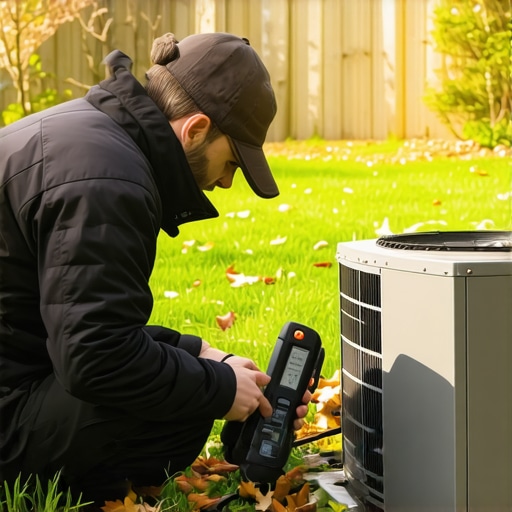
The Physics of Survival: Why Airflow Dictates Your Winter Comfort
My old mentor used to scream at me until his face matched the color of a glowing heat exchanger: ‘You can’t move heat you can’t touch!’ This was his way of hammering home that airflow matters more than horsepower. In thirty years of crawling through crawlspaces and sweating out my body weight on rooftops, I’ve seen thousands of homeowners panic as the first freeze approaches, only to realize their ‘broken’ heat pump is just a victim of bad physics. Before the frost bites, you need to understand that your heat pump isn’t a heater in the traditional sense; it’s a heat mover. It’s scavenging thermal energy from the outdoor air—even when it’s cold—and compressing it to a higher temperature to dump inside your home. If that air can’t move, the system dies.
“The most expensive equipment in the world cannot overcome a bad duct system.” – Industry Axiom
When we talk about HVAC duct sealing, we aren’t just talking about stopping leaks. We are talking about maintaining static pressure. I’ve walked into multi-family heating upgrades where the ‘Tin Knockers’ had more holes in the supply plenum than a block of Swiss cheese. They’d slapped some silver tape on it and called it a day. Real pros use ‘Pookie’ (mastic). If your ducts aren’t sealed, you’re heating your attic while your bedroom stays at 58 degrees. This is the difference between a system that runs efficiently and one that’s destined for a premature compressor burnout.
The Forensic Diagnosis: Anatomy of a Winter Heat Pump Failure
Let’s get into the guts of the machine. In Blueprint A: The Forensic Diagnosis, we look at the unit like a biological organism. The capacitor is the heart’s electrical pulse, the contactor is the muscle, and the compressor is the heart itself. When the first freeze hits, the demand on these components spikes. If your capacitor is weak—maybe it’s reading 32 microfarads on a 45-microfarad rating—the compressor will struggle to start, drawing high amperage and cooking the windings. I hate ‘Sales Techs’ who see a weak capacitor and immediately quote a $15,000 new system. That’s a scam. Most of the time, a simple limit switch replacement or a fresh capacitor is all that’s standing between you and a warm house.
Then there’s the refrigerant leak detection. If you smell something sour or acidic near your indoor coil, you’ve likely got a leak. Refrigerant (or ‘the juice’) is a sealed system. If it’s low, it didn’t ‘wear out’—it escaped. Low charge leads to the evaporator coil freezing into a solid block of ice, even in heating mode. This is why preventative HVAC repair tips are vital. We use electronic sniffers and nitrogen pressure tests to find those leaks before the polar vortex arrives. A heat pump running low on gas is like a car running low on oil; it’ll work for a minute, then it’ll seize.
Thermodynamic Zooming: The Defrost Cycle and Latent Heat
In the North, where the air gets bone-dry, we deal with the battle of Sensible vs. Latent Heat. When the outdoor temperature hits that sweet spot of 35°F to 45°F with high humidity, your outdoor coil will frost over. This is normal. The unit enters a ‘Defrost Cycle,’ essentially flipping the reversing valve to cooling mode to send hot gas back outside to melt the ice. If your furnace repair is urgent, it’s often because the auxiliary heat strips didn’t kick in during this cycle, blowing cold air into your living room. This is also where whole-home humidifiers come into play. Dry winter air sucks moisture out of your skin, making you feel colder than the thermostat says. By adding humidity, you can actually lower the thermostat and feel warmer.
“Inadequate refrigerant charge or restricted airflow can reduce heat pump capacity by over 20%.” – ASHRAE Standard 180
For larger structures, industrial heater services require even tighter tolerances. We’re often looking at flue pipe installation for backup gas furnaces. If that flue isn’t pitched right, condensate will back up, trip the pressure switch, and leave you in the dark. Whether it’s a two-stage furnace installation or geothermal heat pump systems, the physics remain the same: you must manage the air and the moisture.
The 2025 Regulatory Cliff: R-410A and the A2L Transition
As we move into 2025, the industry is shifting away from R-410A refrigerant toward A2L refrigerants like R-454B. These are ‘mildly flammable,’ which sounds scary but just means we need better sensors and training. If you’re looking at expert tips for AC installation, you need to know that older units are becoming obsolete fast. Getting your system checked now means you can decide if you want to repair your current R-410A system or jump to the new tech. Integration with WiFi thermostats allows us to monitor these systems remotely, catching a failing limit switch or a refrigerant leak before you wake up to a 40-degree house.
Summary of Pre-Freeze Checklist
- Check the WiFi thermostat integration to ensure it’s calling for ‘Heat’ and not ‘Emergency Heat’ prematurely.
- Inspect HVAC duct sealing; ensure no ‘Pookie’ has cracked or peeled.
- Listen for the ‘Sparky’ (electrician) work—check for burnt wires at the contactor.
- Clear the outdoor unit of leaves; the ‘Tin Knocker’ didn’t design it to be a compost bin.
- Verify the flue pipe installation is clear of bird nests or debris.
If you’re unsure about your system’s health, contact us for a professional evaluation. Don’t let a ‘Sales Tech’ talk you into a replacement you don’t need when a veteran’s touch is all your heat pump requires to survive the winter.