The Physics Lesson from a Madman
My old mentor, a man who smelled permanently of PVC glue and burnt copper, used to corner me in the back of the van and scream, ‘You can’t heat what’s leaking out the cracks, and you can’t breathe what you’ve trapped inside!’ He was a fanatic about the Airflow Manifesto. Back then, houses were drafty enough that you didn’t worry about fresh air; the wind just whistled through the floorboards. But today? We build houses like Ziploc bags. We seal them tight to save a buck on the gas bill, then wonder why the air feels heavy, smells like last night’s fish, and the windows are sweating like a marathon runner. That’s where the Heat Recovery Ventilator (HRV) comes in. It’s not just a box; it’s the lungs of your home, and if you aren’t using one, you are literally throwing money into the wind.
“Ventilation and acceptable indoor air quality are no longer optional in high-performance building envelopes; they are a physiological necessity.” – ASHRAE Standard 62.2
The Thermodynamic Zoom: How HRVs Work Without Burning a Hole in Your Wallet
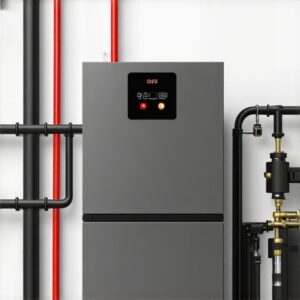
Let’s talk physics. When it’s 10°F outside and you want 70°F inside, your furnace is working overtime. If you open a window to get some ‘fresh air,’ you’re a ‘Tin Knocker’s’ nightmare. You’re dumping all that sensible heat—the heat you can feel on a thermometer—directly into the yard. An HRV stops that theft. Inside that box is a honeycomb-shaped heat exchanger. The stale, warm air from your bathroom and kitchen (the exhaust) passes through one set of channels, while the cold, fresh air from outside (the intake) passes through another. They never touch. There is no cross-contamination. But because the plates are so thin, the heat ‘jumps’ from the outgoing air to the incoming air. You’re pre-heating the outside air using the energy you already paid for. It’s a heating service miracle that recycles up to 80% of the energy that would otherwise be lost.
Static Pressure: The Silent Killer of Efficiency
Most zoning system installation jobs fail because nobody understands static pressure. If your ductwork is restricted, or if the ‘Pookie’ (mastic) wasn’t applied correctly to the seams, your HRV has to fight to move air. This is why I tell people to stop closing vents in unused rooms. You’re just increasing the pressure, which leads to motor failure and a screeching bearing that sounds like a banshee. Proper IAQ improvement services require a balanced system where the ‘suction line’ pressure and the supply pressure are in harmony. If you’re noticing one room is a sauna while the other is an icebox, you don’t need more ‘juice’ (refrigerant); you need a professional to look at your duct design.
“The most expensive equipment in the world cannot overcome a bad duct system.” – Industry Axiom
Modern Innovations: Inverters and Geofencing
We’ve moved past the days of simple ‘on/off’ switches. Today, inverter-driven compressors allow your heat pump to modulate its speed. Think of it like a dimmer switch instead of a standard light switch. When combined with geofencing temperature control, your house ‘knows’ when you are five miles away and starts ramping up the heat pump installation to reach the perfect temp just as you pull into the driveway. This prevents the massive energy spikes associated with traditional systems. If you’re still relying on pilot light relighting for an ancient furnace, you are living in the Stone Age. These modern systems qualify for massive rebate application assistance, making the upgrade cheaper than you think. You can check out heating service innovations transforming 2025 climate control to see how much things have changed.
The Maintenance Truth: Beyond the Filter
I see it every day: a homeowner spends $10k on a unit and then ignores it for five years. That’s how you end up needing a heat exchanger cleaning because it’s caked in dust and pet hair, or worse, a restaurant kitchen exhaust repair because the grease has turned into a fire hazard. Maintenance isn’t just a ‘Sales Tech’ gimmick; it’s about preventing a cracked heat exchanger that could leak carbon monoxide into your kids’ bedrooms. For real tips on keeping your system alive, read up on top HVAC repair strategies to extend your systems life. And if you’re in a pinch, knowing how to identify when furnace repair is urgent can save your life during a polar vortex. Don’t be the person who calls me on Christmas Eve because they skipped a $150 tune-up. If you need a pro who actually knows their way around a manifold gauge, contact us before the mercury drops.