The Myth of Free Energy and the Hard Reality of Thermodynamics
My old mentor used to scream at me in the middle of a frozen January in Chicago, ‘You can’t heat what you can’t touch!’ This was his way of beating the laws of thermodynamics into my thick skull. He was right. Most homeowners think solar thermal heating is some magic box that pulls heat out of thin air. In reality, it is a brutal game of heat exchange efficiency. If your ductwork is leaky or your variable speed furnace services aren’t dialed in, that expensive solar collector on your roof is just a glorified lawn ornament. Solar thermal integration isn’t about getting something for nothing; it’s about the precision of transferring BTUs from the sun into a fluid, then into your home’s air stream without losing half of it to the attic. This is a technical look at the ‘juice’—the glycol or refrigerant—and the hardware that makes it happen.
“Solar thermal systems must be integrated with the auxiliary heating system to ensure that the primary source operates only when the solar source is insufficient to meet the load.” – ASHRAE Handbook – HVAC Systems and Equipment
The Anatomy of the Solar Thermal Loop
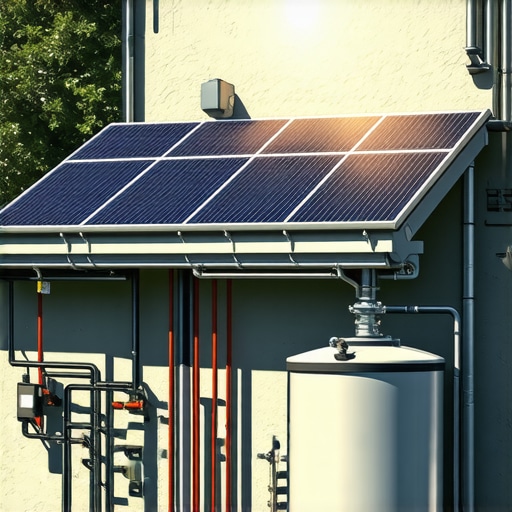
To understand integration, we have to look at the fluid dynamics. Most modern setups use evacuated tube collectors. These aren’t like PV panels that make electricity; they are glass tubes with a vacuum seal that trap heat. Inside is a copper pipe filled with ‘juice’ (usually a propylene glycol mix to prevent freezing in our Northern winters). This heated fluid travels down to a heat exchanger. If you’re lucky, this exchanger is built into a massive storage tank. If not, we’re installing an external plate heat exchanger. This is where the transformer replacement often comes into play, as the pumps and sensors required for this loop can strain an old 40VA transformer. We usually upgrade those to a 75VA to handle the extra logic. This integration is one of the heating service innovations transforming 2025 climate control. You’re essentially using the sun to pre-heat the return air before it ever hits your burner.
The Integration Trap: Variable Speed Furnaces and Control Logic
The real technical nightmare starts at the furnace. When we integrate solar with a variable speed furnace, the blower motor has to be smart. You can’t just slam a solar coil into the plenum and hope for the best. If the static pressure is too high because some tin knocker didn’t size the ducts right, the motor will ramp up, consume more electricity, and negate your solar savings. We use WiFi thermostat integration to manage this. The thermostat has to know when the solar storage tank is at ‘useful’ temperature—usually above 110°F. If it is, the furnace gas valve stays shut, and only the blower runs. If the solar tank drops, the furnace kicks in as back-up. This is where a lot of ‘sales techs’ fail; they don’t understand the sequence of operations. It’s not just about the heat; it’s about the refrigerant leak detection logic if you’re using a hybrid heat pump system. If you want to see how these systems are properly sized, check out this ultimate guide to ac installation and expert tips.
Maintenance: Why Solar Systems Fail
Solar thermal systems are high-maintenance. They aren’t ‘set and forget.’ One of the biggest issues is the furnace flame sensor cleaning on the backup unit. Because solar units run less often, the backup furnace can sit idle for weeks, leading to oxidation on the sensor. When the sun goes down and the house hits 60°F, the furnace tries to fire, fails three times, and goes into lockout. Suddenly, you’re calling for 24/7 heating emergency response for a problem that a simple HVAC maintenance plan would have caught. We also see issues with baseboard heater repair in integrated hydronic systems. Air gets trapped in the lines, and if you don’t know how to purge a system properly, you’ll have a cold room and a hot roof. This is why we recommend MERV filter upgrades to keep the indoor solar coil clean; even a thin layer of dust acts as an insulator, killing your heat transfer. You can find more about these maintenance traps in our furnace repair myths debunked by industry experts.
“Designers shall ensure that the heat transfer fluid used in solar collectors is compatible with the piping materials and that protection against freezing and overheating is provided.” – ACCA Manual S
Static Pressure and The ‘Pookie’ Factor
Airflow is king. In a solar thermal integrated system, you typically have an extra coil in the ductwork. This adds resistance. If your Sparky wired the pump but your ductwork is undersized, the air won’t move. I’ve seen systems where the installer used cheap tape instead of ‘Pookie’ (mastic) on the joints. The solar heat was leaking into the crawlspace instead of reaching the registers. If you aren’t sealing your ducts, you’re just heating the spiders. This is why efficient HVAC repairs are the blueprint for cooler summers and warmer winters. We also integrate steam humidifiers into these systems because solar heat can be incredibly dry. A steam humidifier provides the latent heat (humidity) that makes 68°F feel like 72°F, allowing you to lower the thermostat and save more. Without it, you’re just cranking the heat to fight the ‘chill’ of dry air. If you’re wondering if your system is worth the integration, check choosing the right HVAC fixes before you spend ten grand on a tank. Ultimately, solar thermal is a magnificent piece of engineering, but only if the ‘bones’ of your HVAC system—the ductwork, the blower, and the maintenance—are solid. Don’t let a sales tech talk you into a fancy roof array if your flame sensor is dirty and your ducts are leaking juice.