The Airflow Manifesto: A Lesson from the Old School
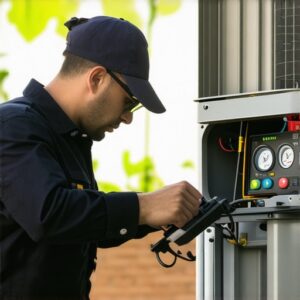
My old mentor, a guy who had been a tin knocker since the Eisenhower administration, used to grab my shoulder until it hurt and yell, ‘You can’t cool what you can’t touch!’ He wasn’t being poetic; he was talking about the brutal reality of physics. If the air doesn’t move across that evaporator coil at the exact cubic feet per minute (CFM) it was engineered for, you aren’t an HVAC technician; you’re just a guy guessing with a set of gauges. That lesson is more relevant now than ever as we hit the SEER2 wall.
‘The most expensive equipment in the world cannot overcome a bad duct system.’ – Industry Axiom
The Death of R-410A and the Birth of SEER2
If you think your current AC is just ‘old,’ you’re missing the bigger picture. We are currently standing on a regulatory cliff. The Department of Energy didn’t just raise the efficiency bar; they changed the entire testing metric. SEER2 (Seasonal Energy Efficiency Ratio 2) accounts for a higher external static pressure. In plain English: the government finally acknowledged that most residential ductwork is trash. If your home has undersized returns or restrictive runs, a new high-efficiency system will choke. This is why proper AC installation now requires advanced airflow measurement services and precise duct design services. You can’t just ‘drop in’ a unit anymore without checking if the ‘Pookie’ (mastic) on your joints is holding up or if your ‘Tin Knocker’ did a half-baked job twenty years ago.
The A2L Transition: Mildly Flammable and Highly Expensive
We are moving away from R-410A ‘juice’ (refrigerant) because of its high Global Warming Potential. The industry is pivoting to A2L refrigerants like R-454B and R-32. The catch? These are classified as ‘mildly flammable.’ That means new units are coming equipped with leak sensors, mitigation boards, and spark-proof components. If you have an old unit that develops a leak, you’re looking at a contactor repair or a full heat pump replacement that will cost 30% more than it did two years ago. The components are more complex, the sensors are more sensitive, and the labor requires specialized training. This isn’t a ‘Sales Tech’ trying to meet a quota; this is the reality of the 2025 supply chain.
The Northern Climate Reality: From Furnaces to Hyper-Heat
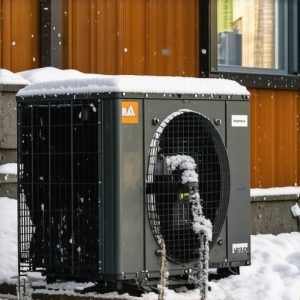
In the cold zones where the winter wind cuts like a knife, the physics change. We used to rely solely on gas, but hyper-heat heat pumps are now viable down to -15°F. However, if you’re sticking with gas, a modulating furnace repair isn’t something you let a ‘Sparky’ (electrician) handle. You need a combustion analysis to ensure that your heat exchanger isn’t cracked and leaking carbon monoxide into your living space. If you are noticing uneven heating, it’s likely a thermostat installation issue or a lack of proper zoning. Modern systems often integrate with voice control setup Alexa Google, but all the smart tech in the world won’t save a furnace with a failing inducer motor. Check out these secrets that pros won’t tell you before signing a contract for a new install.
Why Repairing That 15-Year-Old Unit is a Gamble
When I see a client trying to limp a 15-year-old R-22 or early R-410A system along, I tell them about the ‘Suction Line’ rule. If that line isn’t ‘beer can cold’ and your delta-T is dropping, you’re throwing money into a furnace. A contactor repair might cost you a few hundred bucks today, but it won’t fix the fact that your compressor is drawing high amps and is one heatwave away from a sour burnout.
‘Equipment must be sized according to ACCA Manual J to ensure proper latent heat removal and sensible cooling capacity.’ – ANSI/ACCA Quality Installation Standard
For those in the North, ventless gas heater services are becoming a niche for supplemental heat, but they require strict ventilation protocols. It’s better to invest in 2025 climate control innovations than to keep paying for emergency weekend calls. If you’re unsure if your system is worth the fix, read about identifying urgent furnace repairs before the first frost hits.