The Sound of a Phase Change Revolution
Listen closely to your condensing unit. That steady hum isn’t just the sound of comfort; it is the sound of a chemical reaction occurring under immense pressure. But for millions of homeowners, that hum is about to get a lot more expensive. We are currently standing on a regulatory cliff. The EPA is phased out R-22 years ago, and now the industry standard, R-410A (often called Puron), is walking the plank. If you have an older unit, you are likely running on ‘legacy gas,’ and the bill for ‘topping it off’ is about to make a gas furnace repair look like pocket change.
“The most expensive equipment in the world cannot overcome a bad duct system.” – Industry Axiom
My old mentor, a man who could diagnose a bad TXV just by touching the liquid line, used to scream at me, ‘You can’t cool what you can’t touch!’ He wasn’t talking about the air; he was talking about the physics of heat transfer. He meant that if your airflow is restricted by a choked-up air handler repair issue or a layer of desert dust, the refrigerant can’t do its job. This physics lesson hits home today as we transition to A2L refrigerants. The industry is moving toward R-454B and R-32—substances that are ‘mildly flammable.’ Yeah, you heard that right. The future of cooling involves refrigerants that require specialized sensors and redesigned coils to ensure your house doesn’t become a localized combustion chamber.
Thermodynamic Zooming: How the Juice Actually Works
To understand why the law is changing, you have to understand ‘Thermodynamic Zooming.’ Your AC doesn’t ‘blow cold.’ It removes heat. When the ‘juice’ (refrigerant) enters the evaporator coil, it’s a low-pressure liquid. As the warm return air from your house passes over those fins, the refrigerant boils—literally turns into a vapor at 40°F. This phase change absorbs latent heat. In a dry climate, we deal mostly with sensible heat—the temperature you see on the wall. But if your swamp cooler maintenance has failed you and you’ve switched to refrigerated air, you’re now fighting the ‘Monsoon Effect’ where humidity spikes. If your unit is oversized, it ‘short cycles,’ dropping the temp but leaving the air thick and swampy. This is where efficient HVAC repairs become a matter of engineering, not just swapping parts.
The A2L Transition: The Regulatory Trap of 2025
Why is the government killing R-410A? Global Warming Potential (GWP). R-410A has a GWP of over 2,000, while the new A2L gases are significantly lower. But here is the trap: you cannot just put the new gas into an old system. The oils are different, the pressures are different, and the safety protocols are night and day. If a ‘Sales Tech’ tells you they can ‘drop in’ a new refrigerant to save your 15-year-old compressor, show them the door. They are likely skipping the vacuum pump and leaving non-condensables in your lines, which will cook that compressor in a week. I’ve seen warehouse heating solutions ruined by this kind of negligence. Real pros know that 2025 equipment will include leak detection sensors that shut the system down if even a trace of the new flammable gas is detected.
“It is a violation of EPA Section 608 to knowingly vent ozone-depleting substances or their substitutes while maintaining, servicing, repairing, or disposing of air conditioning or refrigeration equipment.” – EPA Section 608 Regulations
The Physics of the Southwest: High Head Pressure and Fried Capacitors
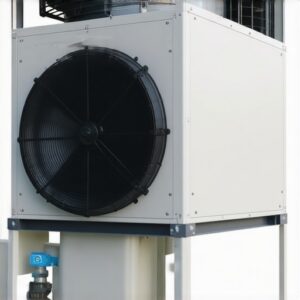
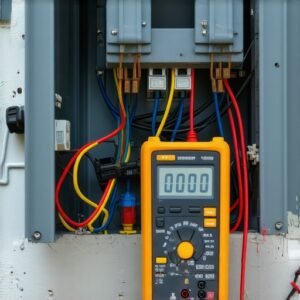
In our neck of the woods, the ambient temp on a roof can hit 130°F. That heat cooks the ‘brains’ of your system. When your condenser fan motor is struggling against that wall of heat, the head pressure skyrockets. This is usually when a $50 capacitor fails, and a ‘Sales Tech’ tries to sell you a $12,000 unit. Don’t fall for it. Often, all a system needs is a thorough cleaning of the condenser coils to restore heat rejection. If you are noticing your hot water heater repair needs are increasing alongside your AC issues, it’s a sign of total home energy stress. This is why top HVAC repair strategies always start with the basics: clean coils and tight electrical connections. For those with fireplace insert services or baseboard heater repair needs in the winter, the same logic applies: obstruction is the enemy of efficiency.
The Airflow Manifesto: Why the ‘Tin Knocker’ Matters
I’ve spent half my life as a ‘tin knocker,’ crawling through crawlspaces to fix mangled ductwork. You can buy the fanciest Variable Speed Trane or Carrier, but if your static pressure is too high because your ducts are undersized, that motor will burn out in three years. I call it ‘HVAC Cardiac Arrest.’ The motor works too hard to push air through a straw. This is why IAQ improvement services are more than just fancy filters; they are about balancing the breath of the home. If your system is gasping for air, you’ll find yourself calling for emergency heating repair when the furnace high-limit switch starts tripping because the heat exchanger is overheating from lack of airflow. Proper maintenance, like what’s found in preventative HVAC repair tips, ensures your ‘Suction Line’ stays ‘beer can cold’ and your compressor stays lubricated.
Conclusion: Buying into the Future Without Getting Ripped Off
As we move into the era of R-454B, the cost of equipment is projected to rise 20-30%. If your current system is on its last legs, 2024 is the year to act before the A2L mandates fully kick in. Look into priority service memberships to keep your legacy R-410A system running as long as possible. Whether you’re dealing with a complex gas furnace repair or just trying to understand why your air feels ‘heavy,’ remember that comfort is physics. Don’t let a ‘Sparky’ or a ‘Sales Tech’ confuse you with jargon. Demand a subcooling and superheat reading. If they can’t give you those numbers, they aren’t technicians—they’re part-changers. Your home deserves an architect of airflow, not a salesman with a clipboard. For more technical deep dives, check out the ultimate guide to AC installation. “,”image”:{“imagePrompt”:”A close-up, high-detail macro shot of an HVAC technician’s manifold gauge set connected to an outdoor AC unit. The gauges show high pressure, and the background features a sun-drenched suburban rooftop with a slight heat haze. The aesthetic is gritty, technical, and professional.”,”imageTitle”:”HVAC Manifold Gauges Measuring Refrigerant Pressure”,”imageAlt”:”A technician’s manifold gauges connected to a residential air conditioning unit during a refrigerant check.”},”categoryId”:1,”postTime”:”2023-10-27T10:00:00Z”}
“`