The Gospel of Airflow and the Sin of Neglect
My old mentor, a man who had more soot in his lungs than a Victorian chimney sweep, used to scream at me until he was blue in the face: ‘You can’t cool what you can’t touch, and you can’t burn what you can’t breathe!’ This is why airflow matters more than horsepower. He wasn’t just talking about the tin knocker‘s ductwork or the suction line being ‘beer can cold.’ He was talking about the fundamental physics of combustion. When we talk about cleaning the dust from your ventless gas heater burner, we aren’t just talking about tidying up. We are talking about the stoichiometry of a flame and the thin line between a cozy living room and a carbon monoxide emergency. If you’ve ever walked into a house and smelled that weird, sweet-yet-sour singed odor, you’re smelling the slow death of a burner orifice. For those of us who have spent decades in the North, where the winter wind howls like a wounded animal, these ventless units are often the only thing keeping a garage or a basement from becoming a walk-in freezer. But they are finicky beasts. Unlike a high-efficiency furnace installation that vents its sins to the outside world through a piece of PVC, a ventless heater stays right there in the room with you. Every speck of dust, pet hair, and skin cell that floats through the air eventually finds its way into that burner. When it does, it doesn’t just disappear; it disrupts the oxygen-to-fuel ratio, and that is when things get dangerous.
“The most expensive equipment in the world cannot overcome a bad duct system, and the most efficient burner cannot overcome a lack of oxygen.” – Industry Axiom
The Forensic Diagnosis: The Sound of a Choked Flame
Let’s perform a forensic diagnosis on your heater. When you click that igniter, you should see a crisp, sharp blue flame. That blue indicates complete combustion—the juice is burning exactly as the engineers intended. If you see orange or yellow flickering, you aren’t looking at a ‘homey’ fire; you’re looking at incomplete combustion. That orange is literally the glow of unburnt carbon particles. In the HVAC world, we call this ‘ghosting’ or ‘sooting.’ It’s the first sign that your burner ports are clogged with household debris. If you ignore it, you’ll soon be calling for emergency heating repair. Most people think their heater is broken when it starts shutting off randomly. Usually, it’s the Oxygen Depletion Sensor (ODS) doing its job. The ODS is a precision-engineered pilot light that is designed to fail if oxygen levels drop even a fraction. If dust is clogging that pilot, the flame lifts off the thermocouple, the voltage drops, and the transformer replacement you thought you needed turns out to be nothing more than a need for a can of compressed air. This is where the ‘Sales Techs’ get you. They’ll look at a dusty pilot and tell you the whole manifold is shot, quoting you thousands when a real tech with a vacuum and a steady hand could fix it in twenty minutes. It’s the same logic I apply to heating service hacks for comfort and savings in 2025: maintenance is always cheaper than a panic-buy.
Thermodynamic Zooming: How Dust Kills Efficiency
When we zoom into the molecular level, a ventless gas heater is a marvel of thermodynamic efficiency—theoretically 99.9%. It removes sensible heat from the flame and dumps it directly into the room. However, in cold climates like Chicago or the Northeast, the air is bone-dry. Homeowners often run steam humidifiers to keep their skin from cracking, but that added moisture in the air makes dust ‘sticky.’ This sticky dust adheres to the burner’s venturi tube—the part where gas and air mix before ignition. If the venturi is restricted, the gas-to-air mix becomes ‘rich.’ You get more fuel than the air can support. This leads to carbon monoxide (CO) production. This is why we insist on HEPA filter systems in homes with ventless heaters; you have to scrub the air before the heater breathes it. I’ve seen commercial furnace repair jobs where the entire warehouse was sooted up because nobody bothered to blow out the burners once a year. The same physics apply to your spa heater services or your WiFi thermostat integration setups; if the hardware is dirty, the software can’t save you. If you’re considering an oil to gas conversion, you need to understand that gas is cleaner, but it’s not ‘set it and forget it.’ You are the steward of that flame.
The Anatomy of a Clean: Step-by-Step Recovery
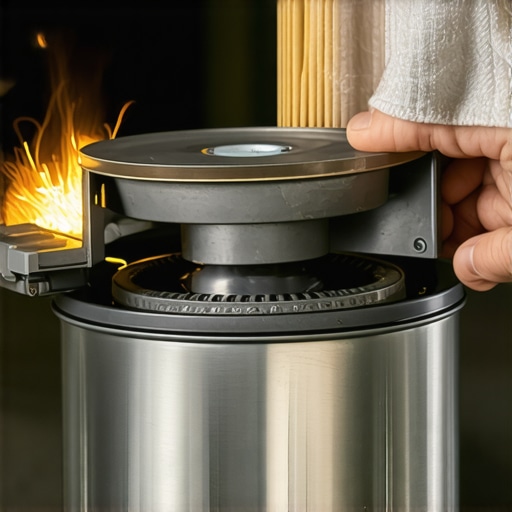
First, shut off the gas. I don’t care if you think you’re fast; Sparky might survive a zap, but a gas leak is a one-way ticket to a bad day. Use a vacuum with a brush attachment to clear the exterior. Then, locate the pilot assembly. This is the heart of the unit. Do NOT stick a needle or a wire into the burner orifices. These are precision-drilled to a specific BTU rating. If you wallow out that hole, you’ve just turned your heater into a blowtorch. Use a can of clean, dry compressed air. Blast it through the pilot air intake. You’ll likely see a cloud of gray fluff emerge. That’s the ghost of your carpet and your Golden Retriever. Next, check the transformer and wiring for any signs of heat stress. If your heater is part of a smart thermostat setup, ensure the WiFi thermostat integration isn’t cycling the unit too frequently. Short-cycling is the enemy of any heating system, causing rapid expansion and contraction of the metal, which flakes off more debris into the burner. Once everything is blown out, relight the pilot. The flame should be steady, hitting the thermocouple perfectly. This simple act of ‘preventative medicine’ is what separates a homeowner who understands their castle from one who is at the mercy of the $15,000 replacement quote.
“Carbon monoxide is the silent byproduct of a lazy technician and a dusty burner.” – ASHRAE Safety Standards
Beyond the Burner: The Total System View
Cleaning the burner is just one piece of the puzzle. In my 30 years, I’ve seen people obsess over the heater while their house leaks air like a sieve. If you have a ventless unit, you need to be aware of the latent heat (moisture) it releases. For every gallon of gas burned, you’re putting moisture into the air. In a tight house with a high-efficiency furnace installation, this can lead to mold if you aren’t careful. This is why I always check the HEPA filter systems and overall ventilation during a service call. Whether I’m doing commercial furnace repair or a simple residential check-up, the goal is always the same: balance. You want enough heat to be comfortable, enough airflow to be safe, and enough tech (like smart thermostat setup) to keep the bills from skyrocketing. If you find yourself constantly needing emergency heating repair, it’s time to stop patching and start looking at the ‘Airflow Manifesto.’ Is the room too small for the BTU output? Is there enough ‘makeup air’? These are the questions a ‘Sales Tech’ won’t ask because they’re too busy looking at your credit score. But a tin knocker who knows his Pookie and a tech who knows his juice will tell you: respect the physics, clean the dust, and your heater will outlast the mortgage.