
The Sound of a 2 AM Freeze
The silence of a dead furnace in the middle of a January cold snap has a specific weight to it. It’s not just the absence of the blower motor’s hum; it’s the heavy realization that the thermal mass of your home is currently losing its war against the second law of thermodynamics. I’ve spent thirty years crawling through crawlspaces and balancing on joists in the dark, and I’ve seen every ‘high-tech’ gadget promised to save a homeowner from this fate. My old mentor, a man who could sniff out a cracked heat exchanger from the driveway, used to scream, ‘You can’t cool what you can’t touch, and you can’t heat what you won’t control!’ This was his physics lesson for the ages: airflow and control are the twin pillars of comfort. Whether you are using remote thermostat access or yelling at a smart speaker to bump the temp, the underlying mechanical reality doesn’t change. If your furnace repair needs are ignored, no amount of silicon valley wizardry will keep your pipes from bursting.
“The most expensive equipment in the world cannot overcome a bad duct system.” – Industry Axiom
The Anatomy of Control: Voice vs. App
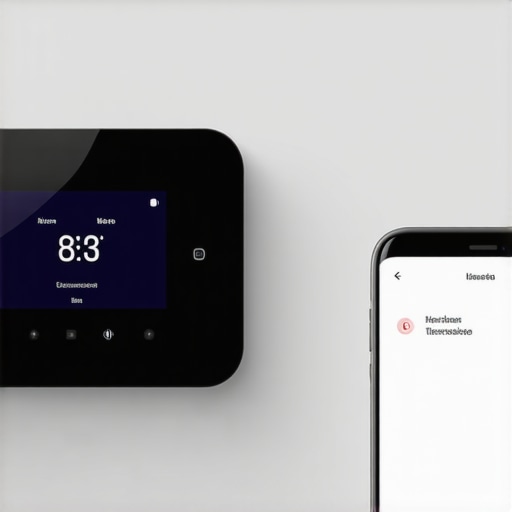
When we talk about thermostat installation in the modern era, we aren’t just swapping out a bimetal strip for a digital display. We are installing a localized computer that manages the cycle rate and staging of your equipment. Users today are split into two camps: the ‘Voice Command’ enthusiasts and the ‘App Logic’ strategists. Voice control is for the immediate, sensory adjustment. You’re tucked under a blanket, the floor feels like ice, and you don’t want to move. ‘Alexa, set the heat to 72.’ It’s convenient, but it’s reactionary. App control, however, is where the real efficiency lives. This is about remote thermostat access from thirty miles away because you realized you left the hydronic heating systems running at full blast while the house is empty. The app allows for scheduling that reacts to your life, not just your vocal cords. In my experience, the serious homeowners—the ones who actually read their warranty service plans—prefer the app because it provides data. They want to see the run-time. They want to know if the furnace repair they paid for last month is actually resulting in shorter cycles and better AFUE performance.
The North Zone: Fighting the Polar Vortex
Up here in the cold corridor, we don’t play with humidity. When the temperature drops below zero, the air turns into a desiccated sponge, sucking moisture out of your skin and your hardwood floors. This is why steam humidifiers are the unsung heroes of the mechanical room. A voice-controlled thermostat can tell the furnace to fire, but if it isn’t integrated with a humidistat, you’re just blowing hot, dry desert air through your house. Steam humidifiers work by boiling water and injecting that vapor directly into the airflow, providing latent heat that makes 68 degrees feel like 72. But here’s the kicker: if your HVAC duct sealing is a mess, all that expensive moisture is just leaking into your attic, feeding mold and rotting your rafters. I’ve seen hospital HVAC zoning techniques applied to residential homes lately, and while it’s impressive, it requires a level of ductless mini-split installation precision that most ‘trunk and branch’ systems just can’t handle without a dedicated tin knocker fixing the static pressure first.
The Forensic Diagnosis: Why Your Smart Tech Fails
I followed a ‘Sales Tech’ last week—one of those guys in a shiny polo who doesn’t own a set of manifold gauges—who tried to sell an elderly couple a $12,000 system because their ‘smart’ thermostat wouldn’t turn on the heat. I stepped in, pulled the cover, and found a common wire (C-wire) that had rubbed raw against the cabinet, blowing a three-amp fuse on the control board. A ten-cent fix and some electrical tape. This is the reality of thermostat installation: if the ‘Sparky’ or the HVAC tech doesn’t understand low-voltage wiring, the smartest tech in the world is just a plastic brick on the wall. We have to look at the mechanical anatomy. The capacitor starts the motor, the contactor closes the circuit, and the heat exchanger transfers the energy. If you’re hearing a rhythmic clicking or a metallic scraping, your furnace repair is urgent. You can find more about how to identify when furnace repair is urgent to avoid a total system meltdown. Don’t let a fancy app mask a mechanical failure. If your inducer motor is screaming like a banshee, no amount of remote thermostat access will quiet it down; it just means you’re monitoring the death of your furnace from your phone.
“Standard 62.1-2019: Ventilation for Acceptable Indoor Air Quality requires specific air exchange rates that many residential systems fail to meet due to restricted ductwork.” – ASHRAE Standards
The Airflow Manifesto and the Mastic Myth
Let’s talk about ‘Pookie.’ In the trade, that’s what we call duct mastic. If your installer used nothing but silver tape, they did you a disservice. Tape dries out, the adhesive fails, and suddenly your HVAC duct sealing is non-existent. You lose 20-30% of your conditioned air to the ‘unconditioned space’—that’s the attic or the crawlspace. When people ask about swamp cooler maintenance in the summer or hydronic heating systems in the winter, I always point back to the envelope. Is the air staying where you put it? If you’re considering a ductless mini-split installation, you’re bypassing the duct problem entirely, which is why they are so efficient. But for those with central air, you need to ensure your return air drops are sized correctly. A pinched return is like trying to run a marathon while breathing through a cocktail straw. It will kill your compressor and turn your ‘gas’ (refrigerant) into an acidic sludge that eats the motor windings from the inside out. This is why top HVAC repair strategies always include a deep dive into static pressure, not just checking the ‘juice’ levels.
The 2025 Transition: R-454B and Beyond
We are standing on a regulatory cliff. The ‘gas’ we’ve used for years, R-410A, is being phased out for A2L refrigerants like R-454B. These are ‘mildly flammable,’ which sounds scary but really just means we need better sensors and better training. If you are looking at ultimate guide to ac installation for the coming years, you need to be aware that the price of equipment is going up because the tech inside is getting more complex. This makes warranty service plans more valuable than ever. You don’t want to be the one paying out of pocket for a proprietary sensor that detects a refrigerant leak in your new 2025-compliant coil. Whether you prefer voice control or an app, the future of HVAC is about precision. We are moving away from the ‘oversize it just in case’ mentality. An oversized unit ‘short cycles’—it turns on, blasts the house with heat, and turns off before it can manage the steam humidifiers or clear the hydronic heating loops. It leaves the house feeling like a cold swamp in the summer and a dry kiln in the winter.
The Final Verdict: Physics Over Phony Promises
At the end of the day, remote thermostat access is a tool, not a cure. I’ve seen people spend $500 on a thermostat while their furnace repair needs were so dire the heat exchanger looked like a piece of Swiss cheese. Comfort is a result of balanced airflow, proper combustion, and tight ducts. Use the voice control for your ‘lazy’ Sunday mornings, but use the app to monitor your system’s health. And for heaven’s sake, if you haven’t had a pro look at your HVAC duct sealing in the last decade, stop worrying about the app and start worrying about the ‘Pookie.’ You can check our preventative hvac repair tips to see where your money is actually being wasted. HVAC isn’t magic; it’s thermodynamics. And thermodynamics doesn’t care how many apps you have on your phone if the ‘suction line’ isn’t beer-can cold or the heat exchanger is cracked. Stay warm, keep your filters clean, and remember: if a ‘Sales Tech’ quotes you a new system without ever looking in your attic, show them the door.