The Physics Lesson: Why Airflow Dictates Your Survival
My old mentor used to scream at me until he was purple in the face: ‘You can’t burn what you can’t breathe, and you can’t cool what you can’t touch!’ He’d stand over me in a cramped, dark basement while I poked at a 40-year-old cast iron beast, his finger wagging at the draft hood. He wasn’t just being a cranky old tin knocker; he was teaching me the fundamental law of the trade. If the physics of airflow and draft pressure aren’t perfect, the most expensive boiler maintenance services in the world won’t keep a family safe or warm. Draft is the invisible engine of any combustion system. It is the pressure differential between the air inside the flue and the air outside the house. Get it wrong, and you aren’t just wasting fuel; you’re flirting with a cracked heat exchanger and a house full of carbon monoxide.
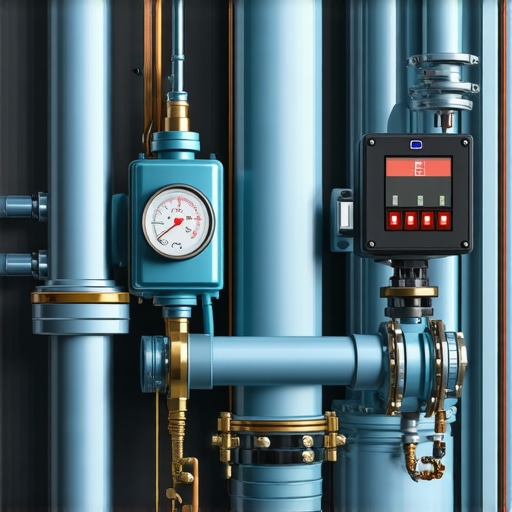
When we talk about draft pressure, we are measuring in inches of water column (WC), and we are usually looking for a tiny, specific negative pressure. If that pressure is too weak, those toxic flue gases linger in the heat exchanger, soot starts to build up, and the efficiency of your system falls off a cliff. If the draft is too strong, you’re literally sucking the money out of your wallet and throwing it over the roof because the heat is moving too fast for the metal to absorb it. This is why a proper combustion analysis is the only way to know if a furnace or boiler is actually working. You can’t just look at a blue flame and say ‘it looks good.’ That’s what the sales techs do right before they try to sell you a $15,000 system you don’t need. Real pros look at the numbers.
“The most expensive equipment in the world cannot overcome a bad duct system.” – Industry Axiom
The Forensic Anatomy of a Burner
To understand draft, you have to understand the mechanical anatomy of the system. Imagine the furnace as a living organism. The burners are the lungs, the heat exchanger is the heart, and the flue is the throat. If you have a blockage in the throat, the whole system suffocates. During a deep-dive combustion analysis, we look at the ‘vitals’: Oxygen (O2), Carbon Monoxide (CO), Carbon Dioxide (CO2), and stack temperature. If I see O2 levels spiking, I know we have too much excess air diluting the fire. If the CO is climbing, we have incomplete combustion—which is the smell of a ‘sour’ burnout waiting to happen. This is why identifying when furnace repair is urgent is a matter of life and death, not just comfort.
In the North, where the polar vortex turns every vent into a potential ice sculpture, draft pressure is even more volatile. The cold, dense air outside creates a massive pressure difference compared to the hot gases in the vent. If your venting isn’t sized correctly—if the ‘tin knocker’ who installed it didn’t understand choosing the right HVAC fixes—you end up with ‘flame rollout.’ That’s when the fire literally backs out of the furnace because it has nowhere else to go. It’ll melt your wires, trip your limits, and if you’re lucky, it won’t burn the house down. This is also why HVAC duct sealing is critical; if the return air is sucking in basement air near the flue, it can actually pull the exhaust gases back into the house. We call that back-drafting, and it’s a silent killer.
The Math of the Modern Mechanical Room
We are currently in a massive transition period in the industry. As we move toward 2025, the old-school atmospheric boilers are being replaced by high-efficiency condensing units and hyper-heat heat pumps. These new systems don’t rely on natural buoyancy to move air; they use inducer motors to force the draft. However, even with a fancy app-controlled heating system, the physics don’t change. If the static pressure in your ductwork is too high because you haven’t had proper duct design services, that hyper-heat unit is going to ‘short cycle.’ It’ll ramp up, realize it can’t move the air, and shut down to protect itself. It’s like trying to run a marathon while breathing through a cocktail straw.
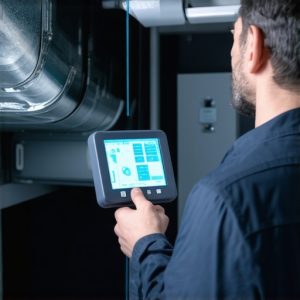
For those sticking with gas or oil, heating service hacks for 2025 all revolve around precision. We’re not just ‘checking the juice’ anymore. We are measuring the exact flow of gas and the exact pressure of the air. If you’re considering a ductless mini-split installation or an infrared heater installation for a garage or workshop, you’re dealing with different physics, but the goal is the same: thermal equilibrium. Infrared doesn’t heat the air; it heats the objects. But in a standard home, we need that air moving perfectly across the coil or through the heat exchanger. If you want to avoid the ‘sales tech’ trap, ask your technician for a printout of the combustion analysis. If they don’t have a digital analyzer in their bag, they aren’t a technician; they’re a part-changer.
“Carbon monoxide is the result of incomplete combustion. Without proper draft and air-to-fuel ratios, every flame is a hazard.” – EPA Section 608 Supplemental Manual
The Humidity Trap and High-Tech Solutions
In the colder climates of the Northeast and Midwest, we deal with the ‘Cracked Heat Exchanger’ bogeyman every winter. When a heat exchanger cracks, it’s usually because of poor airflow causing it to overheat and stress the metal over years of service. This is where preventative HVAC repair tips come into play. A simple step like programmable thermostat programming can actually save your equipment. If you set your thermostat to swing five degrees every hour, you are thermal-stressing that metal. Consistent, steady run times are much easier on the system than constant ‘banging’ on and off. If you’re using HEPA filter systems, you need to be even more careful. Those thick filters are great for cleaning the air, but they are ‘static pressure killers.’ They can restrict the airflow so much that your furnace or heat pump installation fails prematurely because it simply can’t breathe.
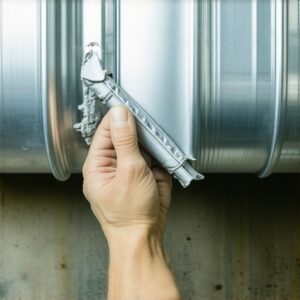
If you’re upgrading, don’t just look at the AFUE rating. A 96% efficient furnace is a waste of money if it’s connected to 50% efficient ductwork. This is why I always recommend expert tips for 2025 success that focus on the whole-home envelope. Seal the ducts with pookie (mastic), ensure your return air drops are sized for the actual CFM (cubic feet per minute) the blower is pushing, and never, ever close your vents in unused rooms. Closing vents doesn’t save energy; it just increases the pressure in the system, makes the blower motor work harder (using more ‘juice’), and can actually cause your heat exchanger to overheat and crack. It’s a classic homeowner myth that costs thousands in the long run. If you really want to save money, invest in duct design services rather than a flashier box in the basement. Physics always wins. [{“@context”:”https://schema.org”,”@type”:”HowTo”,”name”:”How to Verify Proper Draft Pressure”,”step”:[{“@type”:”HowToStep”,”text”:”Ensure the heating system is running and has reached steady-state operation.”},{“@type”:”HowToStep”,”text”:”Use a calibrated manometer to measure the draft pressure in the flue pipe, typically looking for -0.02 to -0.04 inches WC.”},{“@type”:”HowToStep”,”text”:”Perform a combustion analysis to check O2 and CO levels to ensure the burner is firing efficiently.”},{“@type”:”HowToStep”,”text”:”Inspect the heat exchanger for any signs of soot or stress that indicate poor draft history.”}]}]