The Physics of Comfort: Why Your Furnace is Only Half the Battle
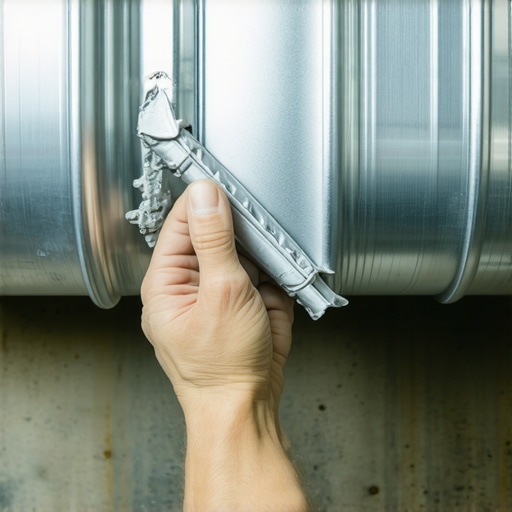
My old mentor, a man who had been installing cast iron boilers since the Truman administration, used to grab me by the collar of my sweat-soaked uniform and scream, ‘Kid, you can’t heat what you can’t touch!’ He wasn’t talking about some metaphysical philosophy; he was talking about static pressure and airflow. You see, most homeowners think their furnace is the heart of the house. It is not. The furnace is just the lungs. The ductwork? That is the circulatory system, and most of yours are currently hemorrhaging money faster than a ‘Sales Tech’ at a boat show. If those seams aren’t sealed with ‘Pookie’—that messy, gray mastic that stays flexible for decades—you are basically trying to inflate a balloon with a needle hole in it. You are heating your attic or crawlspace while your toes freeze in the living room. This is the reality of the Airflow Manifesto.
“The most expensive equipment in the world cannot overcome a bad duct system.” – Industry Axiom
In the frigid North, where furnace repair calls peak during the first polar vortex, I see the same tragedy every year. A homeowner buys a high-efficiency 96% AFUE furnace, but their ductwork is so leaky and undersized that the unit short cycles. The heat exchanger gets too hot because the air can’t pull the heat away fast enough, and the limit switch trips. It is a slow death for the blower motor. People call for furnace repair when they should be calling a ‘Tin Knocker’ to fix the static pressure. We use combustion analysis to ensure the gas is burning clean, but if the air isn’t moving, that clean heat is just radiating into your basement joists through unsealed seams.
The Thermodynamic Reality of the ‘Pookie’ Seam
When we talk about ductwork seams, we are talking about sensible heat. In a cold climate like Chicago or the Northeast, your furnace works to raise the temperature of the air. If your return air ducts are leaking in the garage, you are sucking in cold, carbon-monoxide-tinged air and forcing your system to work double-time. This is why leak detector integration and proper sealing are not just about bills—they are about survival. Most ‘Sales Techs’ will try to sell you a whole new system when you have a hot room. I look at the suction line and the static pressure. Often, a simple ductless mini-split installation in that stubborn bonus room is more effective than trying to force air through a 4-inch pipe that was never meant to handle the CFM (Cubic Feet per Minute) required for modern comfort.
[IMAGE_PLACEHOLDER]
Smart Tech vs. Dumb Physics: Geofencing and Occupancy Sensors
I get asked all the time about geofencing temperature control and voice control setup Alexa Google. Look, I love tech. Having occupancy sensor installation to tell the system you are in the den is great, but it doesn’t change the laws of thermodynamics. If your duct seams are open, your smart thermostat is just a very expensive way to watch your money disappear. However, when paired with a sealed system, geofencing is a powerhouse. It prepares the home for your arrival without wasting ‘gas’ (refrigerant) or fuel all day. We also see a rise in garage heater installation where people try to bridge the gap, but without a combustion analysis, you’re just begging for moisture issues and rusted tools. You need to treat the home as a sealed envelope.
“Designers shall use Manual D for duct sizing to ensure the blower can move the required air volume against the system’s internal resistance.” – ACCA Manual D
The Mechanical Anatomy: More Than Just a Box in the Basement
Think of your HVAC system like a human body. The thermostat is the brain, the furnace is the lungs, and the ducts are the arteries. If you have a 120,000 BTU furnace but only 800 CFM of duct capacity, you are ‘choking’ the lungs. This leads to hot water heater repair issues when backdrafting occurs due to improper house pressure. We often find that boiler repair services are needed because the circulation pumps are fighting against air pockets—just like a blower fights against a dirty filter or a crushed flex duct. If you want to extend your system’s life, you start by measuring the Delta T across the coil and checking the seams. If it isn’t ‘beer can cold’ on the suction line in summer or ‘scorching’ at the plenum in winter, you have an airflow problem, not a ‘juice’ problem.
Preventive Logic and the Scam of the ‘Free Tune-Up’
Never trust a guy who offers a $29 tune-up and spends the whole time looking at your 20-year-old compressor with a somber face. A real tech checks the capacitor, the contactor, and then gets in the crawlspace to check the Pookie on the boots. They look for hot water heater repair signs like scorched venting. They check if your ductless mini-split installation was done with a vacuum pump or if the previous guy just ‘purged’ the lines (which is a crime against the EPA). True comfort comes from the details: the mastic on the seams, the combustion analysis on the burners, and the geofencing that manages the load. Don’t be the homeowner who pays $15,000 for a new unit when $200 worth of mastic and a proper static pressure adjustment would have solved the problem. Comfort is physics, not magic. Stop letting the ‘Sales Techs’ tell you otherwise.