The Sound of a House Breathing Cold Air
You know that sound? It isn’t the wind rattling the storm windows. It’s the sound of money whistling up your chimney. I’ve spent thirty years crawling through spider-infested crawl spaces and balancing on icy rooftops in the dead of a Chicago winter, and if there is one thing I’ve learned, it’s that most homeowners are fighting a losing battle against physics. You think that crackling fireplace is keeping you warm? Unless you’ve got a properly installed and maintained fireplace insert, you’re essentially running a giant vacuum cleaner that sucks the expensive, conditioned air from your furnace and tosses it out into the night. My old mentor, a grizzly guy who could smell a cracked heat exchanger from the driveway, used to scream at me, ‘You can’t heat what you can’t contain!’ He was right. Airflow isn’t just about the furnace; it’s about the entire envelope of the building. If you don’t understand the stack effect, you’re just a ‘Tin Knocker’ playing with shiny metal.
The Thermodynamic Trap: Why Your Fireplace is a Heat Thief
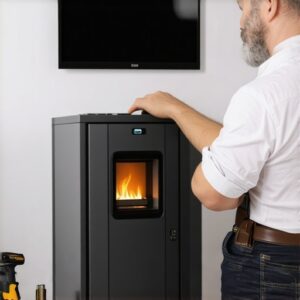
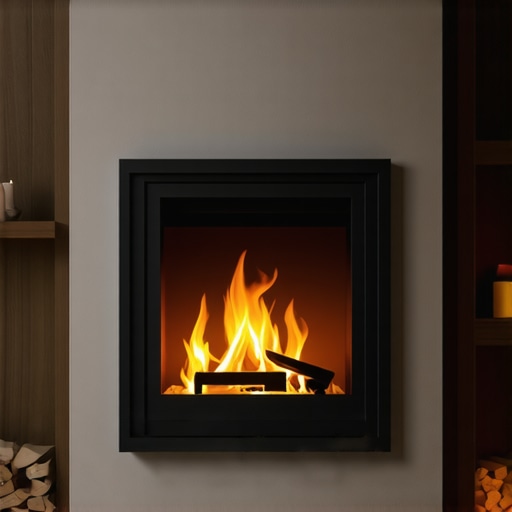
Let’s talk about sensible heat and the myth of the open hearth. When you light a fire in a traditional masonry fireplace, you’re creating a low-pressure zone. As the hot gas rises, physics demands a replacement. Where does that air come from? It’s pulled from the cracks under your doors, your windows, and even through your crawl space heating solutions. This is where the HVAC repair world meets the fireplace world. You’re literally forcing your furnace to work harder to heat the cold air being sucked into the house to replace what went up the flue. This is why fireplace insert services are the only way to stop the bleed. A sealed insert turns that decorative hole in the wall into a closed-loop heat exchanger. It uses the fire to heat the air via conduction and convection without mixing the house air with the combustion exhaust. It’s the difference between a high-efficiency furnace ignition repair and just throwing matches at a pile of wood.
“The most expensive equipment in the world cannot overcome a bad duct system or an unsealed building envelope.” – Industry Axiom
The Anatomy of Heat Retention: Beyond the Hearth
When I’m called out for furnace tune-up services, I’m not just looking at the flame color. I’m looking at the pressure balance. If you’re struggling with heat retention, we need to look at baseboard heater repair and how your hydronic or electric systems are supplementing the load. In cold climates, especially in older homes or church heating systems, you have massive thermal mass that takes forever to warm up. If your fireplace is fighting your HVAC system, your control board diagnostics are going to show constant cycling. This ‘short cycling’ is a silent killer for compressors and blower motors. You want ‘suction line’ cold in the summer, but in the winter, you want your furnace to hit its steady-state efficiency. If the house can’t hold the heat, the furnace never reaches that peak performance window. I’ve seen homeowners spend thousands on HVAC maintenance plans only to ignore the fact that their crawl space is a refrigerator and their chimney is an exhaust fan.
Crawl Spaces and the Invisible Heat Sink
If your feet are cold, your furnace doesn’t care how high you crank that programmable thermostat programming. In the North, the crawl space is the frontline of the war on cold. Crawl space heating solutions, like proper insulation and even small, dedicated duct runs, are essential. If that space is at 35 degrees, your floors are acting as a giant heat sink, pulling the sensible heat out of your living room. When we perform top hvac repair strategies to extend your systems life, we often find that the furnace is sized perfectly, but the heat loss through the floor is so high that the unit can’t keep up. It’s not a equipment failure; it’s a physics failure. My mentor’s mantra of ‘touching the air’ meant that the air must be in contact with a heat source or a controlled surface, not just drifting through a drafty basement.
The Brain of the Beast: Control Boards and Ignition
Modern furnaces are a lot smarter than the old gravity-fed boilers I started on. We now have predictive maintenance alerts that can tell me a secondary heat exchanger is starting to plug up before you even smell the soot. But with that intelligence comes fragility. Control board diagnostics are the most common reason for a 2 AM emergency call. A tiny bit of moisture or a voltage spike from a ‘Sparky’ (electrician) working on another circuit can fry the logic. And don’t get me started on furnace ignition repair. If your hot surface igniter is cracked, it doesn’t matter how much ‘gas’ (fuel) you’ve got; you’re not getting heat. These components are the organs of your system. If you want to know how to identify when furnace repair is urgent and why, listen for the click-click-click of a failed ignition sequence. That’s the sound of a lockout coming your way.
“Design heating loads shall be determined in accordance with the procedures described in the ACCA Manual J.” – ASHRAE Standards
Church Heating Systems: The Ultimate Challenge
If you think a drafty house is hard to heat, try a 100-year-old cathedral. Church heating systems are where we really see the impact of fireplace-style heat loss. These buildings have massive ceilings and ‘pookie’ (mastic) hasn’t been applied to a duct in decades. We use programmable thermostat programming to pre-heat these spaces because the thermal lag is so significant. You can’t just flip a switch and expect 60,000 square feet of stone and stained glass to be comfortable in twenty minutes. It requires a strategic approach to airflow and heat retention, much like how a fireplace insert manages the smaller volume of a home. We often implement HVAC maintenance plans specifically tailored for these high-volume spaces to avoid the disaster of a frozen pipe in the organ loft.
Repair vs. Replace: The Forensic Math
I hate Sales Techs. You know the ones—they walk in with a clean uniform, spend five minutes at your furnace, and tell you that you need a $15,000 New-Age-Super-Unit because your capacitor is weak. That’s a scam. Most of the time, HVAC repair is perfectly viable. If your heat exchanger is intact and your control board diagnostics are clear, a furnace tune-up services visit can usually buy you another five years. However, when the cost of repairs exceeds 50% of the value of the unit, or when you’re dealing with obsolete refrigerants like R-22 (the old ‘juice’), it might be time to look at the ultimate guide to ac installation expert tips for 2025 success. The new 2025 standards are changing everything, especially with the move to A2L refrigerants. Buying a cheap unit now might cost you a fortune in parts later when the industry shifts.
The Final Verdict on Heat Retention
Comfort isn’t about the temperature on the wall; it’s about the temperature of your skin. If your fireplace is sucking air past your legs, you’ll be miserable at 75 degrees. If you seal that fireplace with a high-quality insert, maintain your baseboard heater repair needs, and keep your furnace ignition in top shape, you can be cozy at 68. Stop letting your home breathe like a marathon runner. Seal the leaks, check the ‘pookie’ on your ducts, and treat your HVAC system like the precision machine it is. For more advice on keeping the cold at bay, check out these efficient hvac repairs the blueprint for cooler summers and warmer winters. Physics doesn’t care about your feelings, but it definitely cares about your airflow.