The Sound of Silence at 3 AM: Why Your Furnace Quits When the Mercury Drops
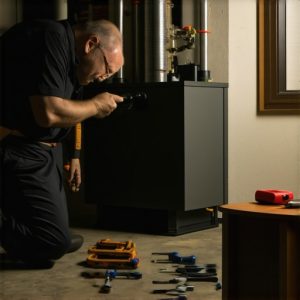
It’s 3 AM in the dead of January. The temperature outside is hovering somewhere between ‘unpleasant’ and ‘frozen tundra,’ and you wake up not to the comforting hum of your blower, but to a silence that feels heavy. That silence is the sound of a failed furnace, and in my thirty years of crawling through crawlspaces and balancing on ladders in the wind, it is the most expensive sound a homeowner can hear. As a veteran technician, I’ve seen it all, and I can tell you right now: the furnace didn’t just ‘give up.’ It was likely murdered by poor airflow, a neglected furnace filter replacement, or a relay services failure that had been brewing since October.
“My old mentor, Smitty, used to scream at me while I was head-deep in a cabinet, ‘You can’t burn what you can’t breathe!’ This is why airflow matters more than horsepower.” — The Physics of Combustion
Smitty was a ‘tin knocker’ from the old school. He didn’t care about shiny brand names or high-tech thermostats. He cared about static pressure. He knew that 90% of the furnace repair services calls we get during a polar vortex are the result of the system choking to death. When the air can’t move, the heat exchanger overheats, the limit switch trips, and you’re left shivering. This is the Forensic Diagnosis of why your heat fails when you need it most.
The Mechanical Anatomy: Why Relays and Pilots Fail
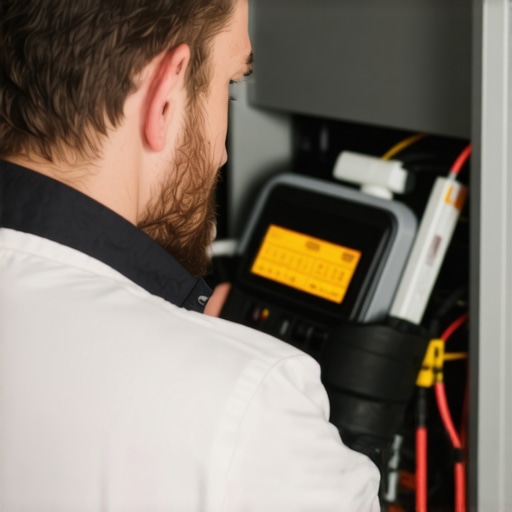
When I crack open a furnace cabinet in mid-January, I’m looking at the ‘organs’ of the machine. The first suspect is often the induction motor. If that little motor doesn’t pull a vacuum, the pressure switch won’t close, and the whole sequence of operation stops before it even starts. It’s a safety feature, but after fifteen years of vibrating in a cold basement, those bearings start to screech like a banshee before they finally seize up. Then you have the relay services. These are the electrical ‘switches’ that tell the blower to kick on. If a relay is pitted or charred, the blower stays dormant while the burners are roaring, leading to a ‘lockout’ that requires professional furnace repair services.
In older systems, you might still be dealing with pilot light relighting issues. Modern systems use hot surface igniters (HSI)—essentially a glowing filament that gets white-hot to ignite the gas. These filaments are brittle. If you touch one with your bare finger, the oils from your skin will create a hot spot that causes the igniter to shatter the next time it heats up. It’s physics, not bad luck. If you’re wondering why your system won’t kick over, it might be time to identify when furnace repair is urgent.
Thermodynamic Zooming: The Heat Exchanger Crisis
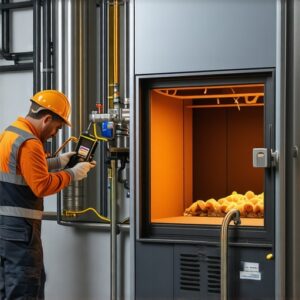
Let’s talk about the heart of the beast: the heat exchanger. This is a series of metal tubes where the actual combustion happens. On the other side of that metal is the air you breathe. In a Northern climate, where the furnace runs for eighteen hours a day in January, the metal expands and contracts constantly. If your system was never subjected to proper HVAC load calculation services, it might be oversized. An oversized furnace ‘short-cycles’—it turns on, gets the house hot in five minutes, and turns off. This rapid heating and cooling cycles the metal too fast, leading to stress fractures. A cracked heat exchanger isn’t just a repair; it’s a death sentence for the unit because it can leak carbon monoxide into your home.
“Unvented or improperly vented combustion appliances can result in the accumulation of harmful gases, including carbon monoxide, which is a leading cause of accidental poisoning.” — ASHRAE Standards
This is where IAQ improvement services become critical. It’s not just about comfort; it’s about survival. A cracked exchanger is the ultimate ‘red tag’ event where I have to shut off the gas for your safety. Many homeowners think I’m trying to sell them a new unit, but they should read about furnace repair myths debunked by industry experts to understand the gravity of a CO leak.
The Airflow Manifesto: Pookie, Static Pressure, and the Tin Knocker’s Secret
Airflow is king. If your ducts are leaking, you are heating your attic or your crawlspace while your toes freeze in the living room. I’ve walked into ‘cold’ houses where the furnace was burning perfectly, but the HVAC duct sealing was non-existent. We use ‘Pookie’ (a thick, grey mastic sealant) to close those gaps. Duct tape is for ‘Sales Techs’ who want to look busy; Pookie is for real technicians who want to fix the problem. By sealing those leaks, we ensure the ‘gas’ (the fuel) you’re paying for actually turns into heat in your bedroom.
Furthermore, if you haven’t performed a furnace filter replacement lately, you’re basically putting a plastic bag over your furnace’s mouth. The static pressure rises, the blower motor works twice as hard (drawing more ‘juice’ and increasing your electric bill), and eventually, the motor burns out. I always tell my clients that preventative HVAC repair tips like changing a $20 filter can save them a $800 blower motor replacement in the middle of a blizzard.
Repair vs. Replace: The Mid-Winter Math
When I’m standing in front of a 20-year-old furnace with a failed control board, I have to give the homeowner the ‘math.’ A modulating furnace repair on a high-efficiency unit can cost upwards of $1,000 for parts and labor. If the unit is already past its life expectancy, you’re just throwing good money after bad. However, if the issue is just a relay service or a dirty flame sensor, you’d be crazy to replace it. This is why HVAC maintenance plans are worth their weight in gold. We catch the soot buildup on the sensor in October so you aren’t calling me on a Sunday in January. For those looking for supplemental heat, infrared heater installation can bridge the gap in cold spots, but it’s no replacement for a healthy central system. Always check heating service hacks for comfort and savings before making a major purchase decision.
Conclusion: Don’t Be a Victim of the Polar Vortex
Physics doesn’t care about your budget or your schedule. It only cares about enthalpy, pressure, and combustion ratios. If you want to keep your home warm this January, respect the machine. Get your HVAC load calculation services done if you’re replacing a unit, never skip your furnace filter replacement, and keep a sharp eye on your IAQ improvement services. If your furnace starts making a sound like a bag of marbles in a dryer, don’t wait for it to stop. Silence in January is the most expensive sound you’ll ever hear.