The Invisible Killer and the ‘Pretty’ Blue Flame
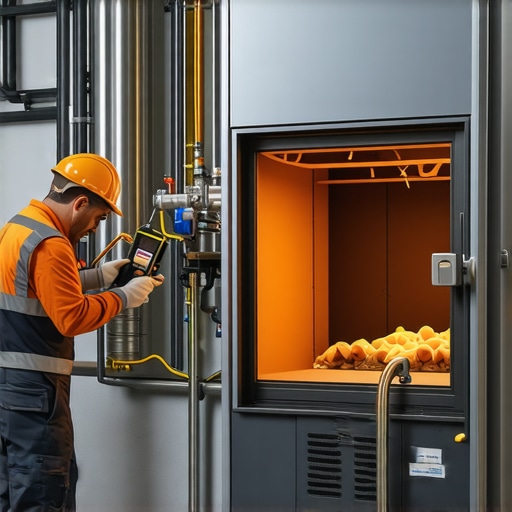
Most techs walk up to a unit, see a blue flame, and tell the homeowner they are good to go. Those guys are the reason I have a job. My old mentor, a grizzly veteran who spent more time in crawlspaces than his own living room, used to scream at me, ‘You can’t cool what you can’t touch, and you can’t trust what you can’t measure!’ He was talking about gas furnace repair, and he was right. If you aren’t sticking a calibrated probe into the flue, you aren’t doing a safety check; you’re just guessing with people’s lives. In the North, where the polar vortex turns every furnace into a marathon runner, a visual inspection is as useless as a screen door on a submarine. We aren’t just looking for fire; we are looking for the chemistry of combustion.
“The presence of carbon monoxide in the flue gas is a clear indicator of incomplete combustion, often caused by improper venting, lack of combustion air, or a compromised heat exchanger.” – ASHRAE Standards
When I’m out on a commercial furnace repair or even a standard furnace repair call, I start with the physics. A furnace is a controlled explosion. To get that explosion right, you need the perfect ratio of fuel to oxygen. If that ratio is off, you get ‘incomplete combustion.’ This produces Carbon Monoxide (CO), an odorless, colorless gas that doesn’t care about your new construction heating design if the venting is botched. I’ve seen wiring repair for heating systems that looked like a bird’s nest, but the real danger was the cracked heat exchanger hiding behind a clean cabinet. You can’t see a hairline crack with a flashlight and a mirror; you see it in the oxygen levels on a digital analyzer. If the O2 levels spike when the blower fan kicks on, you’ve got a hole. Period.
The Thermodynamic Zoom: Why Efficiency Doesn’t Equal Safety
Let’s talk about the secondary heat exchanger in those high-efficiency 90% units. We’re zooming into the latent heat recovery process. As the flue gases cool down to extract every bit of heat, they reach the dew point. This creates acidic condensate. If your boiler repair services aren’t checking the pH of that water or the stack temperature, they are missing the boat. I’ve followed ‘Sales Techs’ who try to push a $12,000 AC installation and furnace combo when the real issue was a clogged condensate trap causing the relay services to trip. They want the commission; I want the system to run safely. For a deeper look at what the pros won’t tell you, check out these AC installation secrets that most companies keep hidden.
In a restaurant kitchen exhaust repair scenario, the stakes are even higher. You have massive hoods pulling air out of the building. If the makeup air isn’t balanced, the restaurant goes under ‘negative pressure.’ This can actually suck the flue gases back down the chimney of the water heater or furnace. This is why furnace repair myths debunked by real experts always focus on the house as a system, not just the box in the basement. A HEPA filter systems installation can even change the static pressure enough to affect combustion if the blower isn’t adjusted correctly. You need to know your ‘pookie’ from your duct tape, and you need to know how to read a manometer.
The Anatomy of a Combustion Test
When I perform a gas furnace repair, I’m looking at four critical numbers: CO (undiluted), Oxygen (O2), Stack Temperature, and Excess Air. If your tech isn’t talking about these, they’re a ‘parts changer,’ not a technician. High CO means the flame is ‘starving’ or ‘chilling’ against the cold metal of the exchanger. High stack temp means you’re literally throwing money out the roof. Understanding when furnace repair is urgent is often a matter of measuring these invisible gases before the alarm sounds. If you wait for the CO detector to beep, you’re already in the ‘red zone.’ This is why top HVAC repair strategies always include an annual combustion analysis.
“Combustion analysis is the only way to verify that a fuel-burning appliance is operating safely and efficiently. Visual flame inspection is insufficient to ensure the absence of CO.” – EPA Section 608 Technical Supplement
We’ve seen a shift in 2025 with heating service innovations, but the basic laws of thermodynamics haven’t changed since the first ‘tin knocker’ hung a piece of galvanized pipe. Whether it’s a boiler repair services call for a residential unit or a massive commercial furnace repair, the goal is the same: keep the fire inside the box and the gases out of the lungs. For more tips on keeping your system running, look into these heating service hacks for 2025. Don’t let a ‘Sparky’ or a ‘Sales Tech’ tell you that a ‘clean and check’ is enough. Demand the printout from the analyzer. It’s the only receipt that proves your family is safe.