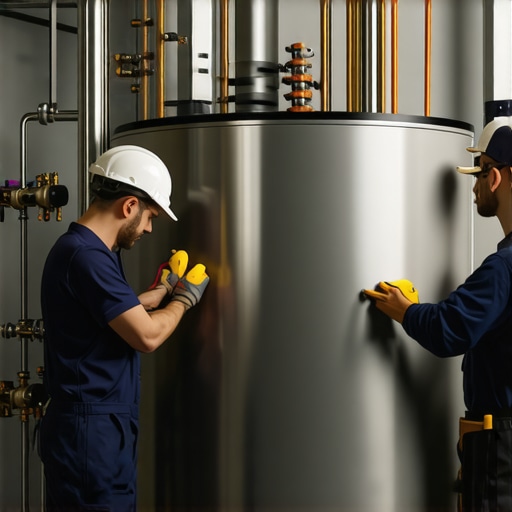
The boiler room of a high-rise hotel at 4:00 AM in the middle of a January cold snap is a place of profound mechanical drama. While guests sleep soundly under high-thread-count linens, there is a silent war being fought against the laws of thermodynamics. My old mentor, a man who had more soot in his lungs than blood in his veins, used to scream at me over the roar of a 2-million BTU burner, ‘You can’t heat what you can’t touch!’ He was talking about the boundary layer of air on a heat exchanger, but the lesson applied to everything. If your maintenance staff isn’t touching the equipment—cleaning the sensors, checking the combustion, and scrubbing the scale—the heat stays in the fuel and never makes it to the guest rooms. This is the reality of commercial boiler uptime: it is a battle of physics won by those who respect the equipment.
The Anatomy of Hotel Heating Failure
In the world of multi-family heating upgrades and commercial hospitality, the boiler isn’t just a tank of hot water; it is the beating heart of the facility. When it fails, you aren’t just losing comfort; you are losing revenue and risking litigation. Most ‘catastrophic’ failures I have diagnosed over three decades weren’t actually catastrophic; they were the inevitable result of a $20 part being ignored. A simple thermocouple replacement or a sticking relay can shut down a system that costs more than a suburban house. I’ve seen hotel managers weep because a $100 relay services call wasn’t made, leading to a frozen pipe in a penthouse suite. When we talk about modulating furnace repair or boiler maintenance, we are talking about preventing the ‘death by a thousand cuts’ that scale and soot inflict on your heat exchanger. If you aren’t performing a deep heat exchanger cleaning at least once a year, you are essentially insulating your water from the fire with a layer of mineral stone. That’s not just inefficient; it’s a recipe for a cracked vessel.
“The most expensive equipment in the world cannot overcome a bad duct system or a neglected heat transfer surface.” – Industry Axiom adapted from ACCA Manual J
The Thermodynamic Zoom: Why Efficiency Dies in the Dark
Let’s talk about sensible heat versus latent heat in a hydronic system. In a hotel, you have a massive demand for domestic hot water (showers) and space heating (guest rooms). A modulating boiler is designed to match this load exactly, but that logic only works if the sensors are accurate. If your airflow measurement services show that the combustion air intake is restricted by ‘Pookie’ (mastic) or debris, the fuel-to-air ratio goes sideways. This leads to incomplete combustion, which produces carbon monoxide and soot. Soot is a better insulator than fiberglass. Even 1/16th of an inch of soot on the fireside of a heat exchanger can drop your AFUE rating by 10% or more. This is why hospital HVAC zoning and hotel zoning require such precise calibration; you are moving energy through fluid, and any resistance in that path results in a ‘short cycle’ where the boiler turns on and off rapidly, killing the gas valve and the igniter. To avoid this, maintenance staff should look at top hvac repair strategies to extend your systems life, focusing on the small mechanical components before they cascade into a total shutdown.
The Cold Reality: Northern Climate Physics
For hotels in Northern climates, the enemy is the polar vortex and the resulting ‘thermal shock.’ When a boiler has been sitting idle or on low-fire and suddenly has to ramp up to 100% capacity because the outside air temperature dropped 30 degrees in four hours, the metal expands. If that expansion is uneven due to scale buildup inside the tubes, the metal cracks. This is why multi-family heating upgrades often include high-efficiency condensing boilers, but these require even more care. These units produce acidic condensate that will eat through floor drains if not neutralized. It’s a different world than the old cast-iron ‘donkeys’ I used to work on. Today, you need to be checking the pH of the water and ensuring your MERV filter upgrades on the air handlers are kept fresh to prevent the coils from becoming a bottleneck. You can’t separate the boiler from the air delivery system. If the air side is choked, the water side stays hot, the boiler modulates down, and the guests start calling the front desk because their rooms are 62 degrees.
“Improperly maintained combustion equipment is the leading cause of carbon monoxide incidents in commercial residential structures.” – Safety Standard Context, EPA Section 608
The Maintenance Checklist: Beyond the Basics
Maintenance staff shouldn’t just be looking for leaks; they should be listening for the ‘kettling’ sound—that popping and banging that indicates localized boiling within the heat exchanger due to scale. It’s the sound of money burning. You also need to pay attention to your auxiliary systems. Hotels often require spa heater services and evaporative cooler services for the common areas. These are all part of the same thermal ecosystem. If the spa heater relay fails, does your staff know how to bypass it without tripping the main loop? Probably not. That’s why having a relationship with a pro for how to identify when furnace repair is urgent is critical. Don’t wait for the ‘no heat’ call. Watch the ‘gas’ (refrigerant or fuel) pressures and the delta-T (temperature difference) across your pumps. If your delta-T is shrinking, you aren’t moving heat; you’re just moving lukewarm water. That is a failure of physics, not just a failure of a machine. From thermocouple replacement to complex hospital HVAC zoning logic, the goal is always the same: keep the energy moving from the flame to the guest, with as little interference as possible.
{“@context”:”https://schema.org”,”@type”:”HowTo”,”name”:”Commercial Boiler Maintenance for Hotels”,”step”:[{“@type”:”HowToStep”,”text”:”Conduct a visual inspection for soot or ‘Pookie’ around combustion vents.”},{“@type”:”HowToStep”,”text”:”Test all relay services and control boards for proper modulation signals.”},{“@type”:”HowToStep”,”text”:”Flush the heat exchanger to remove mineral scale and improve thermal transfer.”},{“@type”:”HowToStep”,”text”:”Verify airflow measurement services are within spec for combustion air intake.”}]}