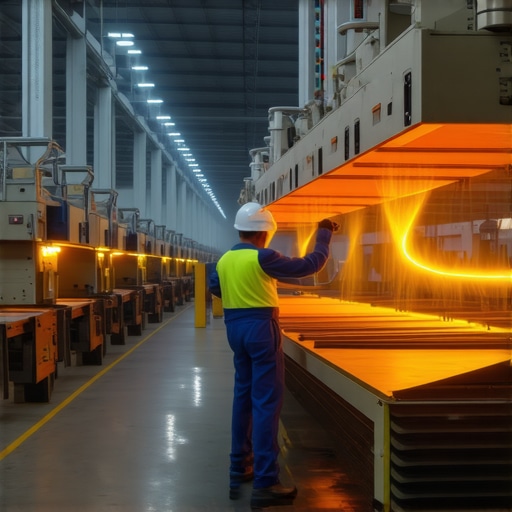
I followed a ‘Sales Tech’ last November into a massive furniture refinishing plant outside of Chicago. The owner was frantic; her industrial drying line was lagging, and the sales guy from a big-box franchise had just quoted her $42,000 for a total boiler replacement and new air handlers. He told her the ‘juice’ was gone from her old system. I spent ten minutes looking at the setup and realized the ‘Sales Tech’ hadn’t even pulled a panel. The issue wasn’t the boiler. It was a fouled furnace flame sensor cleaning requirement and a series of misaligned infrared reflectors. A $200 service call saved her $40,000. That’s the difference between a salesman and a tech who understands the physics of heat transfer. If you’re trying to dry industrial coatings or cure concrete with forced air, you’re fighting a losing battle against thermodynamics.
The Sound of a Dying Line: Why Forced Air Fails Industrial Drying
When an industrial drying line stops, the silence is expensive. In most warehouses, they try to use massive forced-air furnaces to achieve drying. It’s a joke. You’re heating the air, which is a terrible conductor, hoping the air will then heat the product to evaporate the moisture. This is where infrared heater installation changes the math. Unlike a standard commercial furnace repair where we’re just trying to keep people warm, infrared is about the electromagnetic spectrum. It’s radiant heat. It doesn’t care about the air temperature; it hits the product and vibrates the molecules directly. It’s like the difference between sitting in the sun on a cold day versus standing in a windy hallway. The sun hits you, and you’re warm instantly. That is sensible heat transfer at its finest.
“The most expensive equipment in the world cannot overcome a bad duct system—or an incorrect application of heat transfer physics.” – Industry Axiom (Adapted from ACCA Manual D)
In the North, specifically during a polar vortex, your factory’s air is bone-dry but freezing. If you rely on forced air, you’re just blowing cold, dry air that causes ‘skinning’ on paints and coatings—where the top dries but the bottom stays wet. Infrared penetrates. But when these systems fail, it’s usually something stupid. I’ve seen flue pipe installation jobs where the ‘tin knocker’ didn’t account for the vacuum pressure, causing the heaters to trip on the pressure switch every time the wind kicked up. You don’t need a new system; you need a tech who knows how to read a manometer.
The Forensic Anatomy of an Infrared System
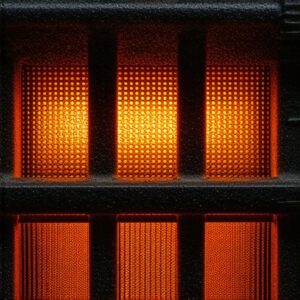
To understand why infrared is king for industrial drying, you have to look at the anatomy. You’ve got the burner box, the vacuum pump (if it’s a pulsed system), and the radiant tubes. If the burner isn’t firing, 90% of the time it’s a furnace flame sensor cleaning issue. These industrial environments are filthy. Dust, overspray, and metal shavings coat that sensor until it can’t see the flame anymore. The control board thinks there’s no fire and shuts the gas off. The ‘Sales Tech’ will tell you the board is fried. I’ll tell you to grab a piece of Scotch-Brite and five minutes of your time.
Then there’s the refrigerant leak detection paradox. Wait, why do we care about refrigerant in a heating article? Because many of these plants are running HEPA filter systems and large-scale AC to control humidity during the summer. If your refrigerant leak detection reveals a low charge in your dehumidification circuit, your infrared heaters are going to work twice as hard to dry the product because the ambient latent heat (humidity) is too high. It’s all connected. You can’t look at the heater in a vacuum. You have to look at the psychrometrics of the whole room. This is why we perform HVAC load calculation services that actually account for the moisture load of the product, not just the square footage of the building.
The Regulatory Cliff and 2025 Standards
We are hitting a wall with R-410A being phased out, and while that mostly affects your cooling, the ripple effect on financing for heat pump installs is real. Many industrial players are looking at hybrid systems. But for drying? Electricity is too expensive for resistive heat, and heat pumps can’t always hit the high-intensity discharge needed for rapid curing. Gas-fired infrared remains the powerhouse, provided your flue pipe installation is up to code. I’ve seen ‘Sparky’ (the electrician) try to wire these things up without understanding the interlock with the exhaust fans. If that fan doesn’t pull, that heat stays in the burner box and melts the wiring. That’s a ‘thermal event’—or as we call it, a fire.
“Radiant heating systems shall be designed and installed in accordance with their listing and the manufacturer’s instructions to ensure proper clearance to combustibles.” – ASHRAE Standard 15 (Modified for Radiant Safety)
If you’re in a specialized environment, like hospital HVAC zoning, you know that airflow is managed to the millimeter. Industrial drying needs that same level of precision. If your zoning is off, one end of your drying rack is scorched while the other is tacky. We use new construction heating design principles to ensure the radiant ‘footprint’ overlaps perfectly. If you’ve got cold spots, your ‘tin knocker’ didn’t angle the reflectors right. It’s not magic; it’s geometry.
Maintenance vs. The Scam Tune-Up
I hate ‘Value Plans’ that are just a guy with a rag wiping down the cabinet. A real industrial tune-up involves checking the combustion analysis. I want to see the CO levels in the flue. If your infrared burner is running ‘lean,’ it’s not getting hot enough, and you’re wasting gas. If it’s ‘rich,’ you’re coating your radiant tubes in soot, which acts like an insulator and stops the heat from reaching your product. This is why preventative HVAC repair tips are vital—not for the equipment’s health, but for your bottom line.
In drier climates, like the Southwest, I’ve seen people try to use evaporative cooler services in the same room as a drying line. That is pure insanity. You’re adding water to the air while trying to pull it out of a product. In the North, we have the opposite problem. The air is so dry that the infrared can actually work too fast. You have to cycle the heaters to allow the moisture to migrate from the center of the product to the surface. Understanding this is the difference between a quality finish and a product that cracks three weeks later. For more on this, check out top HVAC repair strategies that actually focus on system longevity rather than just quick fixes.
Why Infrared Beats the Competition
Let’s talk about the ‘Pookie’ (mastic). In a forced air system, you’re losing 20% of your heat through duct leaks if you haven’t sealed them properly. With infrared, there are no ducts. The ‘gas’ (refrigerant or natural gas, depending on who you’re talking to) goes straight to the burner at the point of use. There is no transit loss. That’s why infrared is often 30-50% more efficient for large-volume buildings. If you’re looking for efficient HVAC repairs, sometimes the best repair is a total redesign of how you deliver heat.
If your system is tripping, don’t let a salesman talk you into a $50,000 upgrade until you’ve checked the basics. Is the flame sensor clean? Is the vacuum pump pulling the right inches of water column? Is your flue pipe obstructed by a bird’s nest? Most of the time, the fix is technical, not financial. For those looking at a new setup, ensure your new construction heating design includes a dedicated circuit for the heaters to prevent ‘nuisance tripping’ when other industrial motors kick on and sag the voltage. And if you’re worried about the cost, there are plenty of options for financing that can be applied to high-efficiency industrial upgrades.
Final Thoughts from the Attic
Industrial drying is a science of latent heat removal. Infrared heaters are the most surgical tool we have for that job. They bypass the air and go straight for the molecules. But like any high-performance tool, they need a tech who knows the difference between a ‘Sales Tech’ pitch and a thermodynamic reality. Don’t buy a new boiler when a bottle of sensor cleaner and a level-headed tech can get your line moving again. Comfort is physics, but industrial drying? That’s an art form backed by a whole lot of BTUs.