The Airflow Manifesto: Why Your Filter is Killing Your Furnace
I’ve spent three decades crawling through fiberglass-filled attics and dodging spider crickets in crawlspaces, and if there’s one thing that makes my blood boil more than a 115-degree afternoon in a tin-roofed mechanical room, it’s a ‘Sales Tech’ telling a homeowner they only need to change their 4-inch media filter once a year. That’s a lie designed to get your heat exchanger to crack so they can sell you a $15,000 system. My old mentor used to scream at me, ‘You can’t cool what you can’t touch!’ This is why airflow matters more than horsepower. If that 4-inch pleated filter is choked out, your air isn’t touching the heat exchanger in the winter or the evaporator coil in the summer. You’re just burning gas and spinning the meter for nothing. Airflow is the lifeblood of thermodynamics. When we talk about furnace repair, we aren’t just talking about pilot light relighting or swapping a capacitor; we’re talking about the fundamental physics of moving mass to move energy.
“The most expensive equipment in the world cannot overcome a bad duct system.” – Industry Axiom
The Anatomy of the 4-Inch Advantage
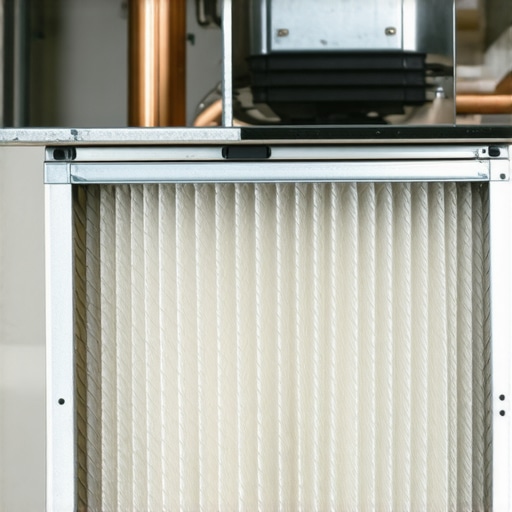
Most folks are used to those flimsy 1-inch fiberglass filters—the kind that look like they couldn’t stop a gnat, let alone microscopic dander. A 4-inch media filter is a different beast. It has significantly more surface area because of the deep pleats. This design is supposed to allow for a higher MERV rating without the massive pressure drop that would kill a blower motor on a 1-inch setup. But here is the catch: because they are ‘high capacity,’ people forget they exist. In my 30 years, I’ve seen 4-inch filters so heavy with dust they’ve bowed inward, almost getting sucked into the blower wheel. [IMAGE_PLACEHOLDER] This causes the static pressure to skyrocket. Think of it like trying to breathe through a wet towel while running a marathon. In the North/Cold climate, where we rely on high-efficiency furnaces, restricted airflow leads to ‘short cycling.’ The furnace gets too hot because it can’t shed that heat into the air stream, and the high-limit switch trips. Do that enough times, and you’ll be looking for urgent furnace repair before the first real blizzard hits.
The Thermodynamic Reality of Pressure Drop
When we talk about AI-driven HVAC optimization, we’re usually monitoring the external static pressure. A clean 4-inch filter might have a pressure drop of 0.10 to 0.15 inches of water column. A dirty one? I’ve seen it hit 0.60 or higher. That’s where the trouble starts. For those using hyper-heat heat pumps, the defrost cycle and the heat exchange efficiency are entirely dependent on moving a precise volume of air over the indoor coil. If the filter is restricted, your ‘hyper-heat’ becomes ‘lukewarm-at-best.’ Even with modern WiFi thermostat integration, which can sometimes alert you to filter changes based on run-time, these systems don’t actually ‘see’ the dirt. They only see the calendar or the hours. If you have three Golden Retrievers and a wood-burning fireplace, your ‘six-month filter’ is a ‘two-month filter.’ Period.
“Designers shall use a maximum of 0.08 inches of water column for the effective length of the ductwork in accordance with Manual D standards to ensure proper velocity.” – ACCA Manual D
Static Pressure and the Death of the Heat Exchanger
If you’re in a climate where you’re dealing with wall furnace installation or traditional forced air, you have to respect the heat exchanger. In the trade, we call it the ‘heart’ of the system. When airflow is restricted by a 4nd-inch filter that hasn’t been touched since the last Super Bowl, the heat exchanger expands and contracts too violently. This leads to metal fatigue. Eventually, it cracks. Now you’ve got carbon monoxide potentially entering the home. This isn’t one of those furnace repair myths; this is life and death. I’ve seen industrial heater services shut down entire warehouses because the ‘tin knockers’ didn’t size the return air properly for the filter depth. You need to check that 4-inch filter every 90 days. If it’s grey or chocolate brown, it’s done. Throw it out. Don’t try to vacuum it. You’ll just ruin the electrostatic charge of the fibers.
Integrating Modern Tech: From Air Purifiers to Pool Heaters
We’re seeing a massive shift in 2025 toward air purification integration. These systems often utilize the existing filter rack. If you add a UV light or an electronic air cleaner on top of a 4-inch filter, you are adding even more resistance to the ‘gas’ (the air). My advice? Use a MERV 11 filter. It’s the sweet spot. MERV 13 and 16 are basically bricks that happen to let some air through. If you want hospital-grade air, buy a standalone HEPA unit; don’t kill your blower motor trying to turn your house into a clean room. This applies to everything from pool heater repair (where airflow on heat-pump models is critical) to evaporative cooler services in the dry Southwest. In those dry zones, the ‘monsoon effect’ can gum up a filter with dust and moisture in a single weekend. Even for a heat pump installation, the rule remains: Airflow is king. If you’re looking for preventative HVAC repair tips, the number one tip is to buy a box of filters and actually use them. Don’t wait for the screech of a bearing or the smell of a hot motor to remind you. If you need help sizing your return air or integrating a more robust filtration system, you should contact us before the peak season hits.
The Final Verdict for 2025
The truth is that a 4-inch filter is a superior product, but it is not a ‘set it and forget it’ solution. Between heating service innovations and the move toward more sensitive AI-driven HVAC optimization, the tolerance for error is shrinking. If you’re running your system 24/7 in the dead of winter or the height of summer, check that filter monthly. At a minimum, change it every 3 to 4 months. If you see ‘Pookie’ (mastic) leaking around the filter cabinet, it means your static pressure is so high it’s literally trying to blow the ductwork apart. Get a pro out there to check your TESP (Total External Static Pressure). It’s cheaper than a new compressor, and it’ll keep your house from feeling like a cold swamp or a dry oven. Trust the veteran, not the salesman: change the damn filter.