The Ghost in the Machine: Why Your Thermostat Is Robbing You
I remember my old mentor, a guy who had been crawling through crawlspaces since the Eisenhower administration, used to grab me by the collar and scream, ‘You can’t heat what you can’t touch, and you can’t control what you don’t understand!’ We were looking at a 1970s boiler at the time, but the physics haven’t changed. He was obsessed with the idea that the thermostat isn’t just a switch; it is a brain, and most homeowners are giving that brain a lobotomy through bad programming. People think they are being savvy by cranking the heat up to 85°F when they get home, thinking it’ll warm the house faster. It doesn’t. That’s like flooring the gas pedal in a car to get to a destination that’s only a mile away; you’re just burning ‘juice’ and stressing the engine. In the HVAC world, we call this the ‘recovery trap.’ If you’re making these mistakes, you aren’t just uncomfortable; you’re handing over two hundred bucks a year to the utility company for absolutely nothing.
The Thermodynamic Reality of Heat Recovery
Let’s talk about sensible heat versus latent heat. In a cold climate like the Northeast or Chicago, your furnace—whether you need a gas furnace repair or a simple tune-up—is fighting an uphill battle against the second law of thermodynamics. Heat wants to move from where it is to where it isn’t. When you let your house drop to 55°F while you’re at work, you aren’t just cooling the air; you’re cooling the walls, the furniture, and the 2,000 pounds of flooring. When you finally trigger that relay services signal at 5:00 PM, the furnace has to run for three hours straight just to satisfy the set point because it has to overcome the thermal mass of the building. This is where attic insulation for heating becomes your best friend. If your ‘tin knocker’ didn’t seal the ducts with ‘Pookie’ (mastic), and your insulation is thin, that thermostat is going to cycle the unit until the heat exchanger cracks from thermal fatigue.
“Design heating and cooling loads shall be determined in accordance with the procedures described in the ASHRAE Handbook of Fundamentals or an equivalent computation procedure.” – ASHRAE Standard 90.1
Mistake #1: The Manual Overdrive Obsession
The biggest mistake I see is the ‘Hold’ button. People treat their programmable thermostat like a manual one. They hit ‘Hold’ and leave it. This kills the efficiency of electric heater services and gas furnaces alike. When you override the program, you lose the Energy Recovery Ventilators‘ ability to balance the air exchange properly. A thermostat should be a ‘set it and forget it’ device. If you find yourself constantly adjusting it, the problem isn’t the programming—it’s likely your wall furnace installation was sized incorrectly or your relay services are failing to communicate with the blower motor. I’ve seen homeowners spend $15,000 on a new system and then wonder why their bills didn’t drop, all because they kept the ‘fan’ setting to ‘ON’ instead of ‘AUTO,’ which just circulates cold air and kills the humidity balance.
Mistake #2: The ‘Extreme Swing’ Strategy
Setting your thermostat to 60°F at night and 72°F in the morning seems logical, but it creates a massive static pressure load. Your furnace works hardest during the start-up phase. If you have a high-efficiency system, it’s designed to run in long, low-intensity cycles. Forcing it into a ‘sprint’ every morning causes the inducer motor to pull maximum amps, shortening the life of the capacitor. If you’re worried about the health of your system, checking out top HVAC repair strategies to extend your system’s life is a better move than trying to outsmart the physics of the machine. Also, if you’re running HEPA filter systems, a long recovery period can clog those filters faster because the blower is moving massive volumes of air through a cold, dense medium.
The Anatomy of Control: Relays and Sensors
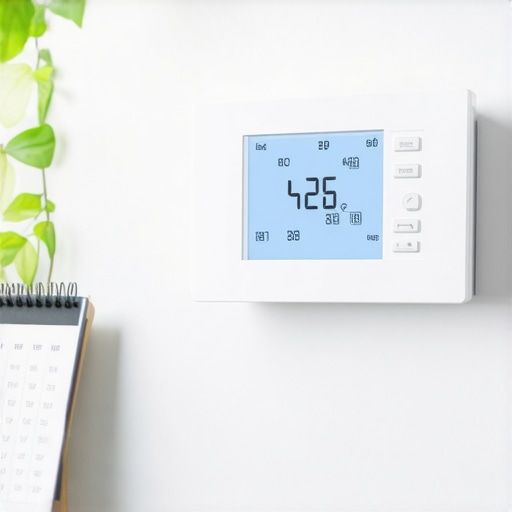
Inside that plastic box on your wall is a series of electronic switches. When the thermostat calls for heat, it sends 24 volts to a relay. If that relay is pitted or carbon-tracked, you get ‘short cycling.’ This is the sound of your furnace clicking on and off every five minutes. It’s the sound of money leaving your pocket. Most ‘Sales Techs’ will tell you that you need a new furnace when you hear that. In reality, you might just need leak detector integration or a simple thermostat recalibration. I’ve seen many a ‘Sparky’ (electrician) miswire a carbon monoxide detector installation into the same circuit as the HVAC, causing interference that makes the thermostat go haywire. Proper preventative HVAC repair tips always start with the control circuit. If the ‘brain’ is confused, the ‘heart’ (the compressor or burner) will eventually fail.
“The most expensive equipment in the world cannot overcome a bad duct system or an improperly calibrated control interface.” – Industry Axiom
Mistake #3: Ignoring the Environment
Where is your thermostat? If it’s near a window, a lamp, or a kitchen, it’s lying to you. A thermostat near a drafty window will think the whole house is 50°F and keep the burner screaming. Conversely, if it’s near a 500-watt TV, it thinks it’s 80°F and shuts down, leaving you freezing in the bedroom. This is why furnace tune-up services aren’t just about cleaning the burners; they’re about checking the placement of the sensors. If you have a gas furnace repair need every winter, look at your thermostat location first. Sometimes the fix is as simple as moving the unit five feet away from the sunlight. You can read more about furnace repair myths debunked to see how often the simple stuff is overlooked.
The Role of Air Quality and Safety
When you program your thermostat for maximum efficiency, you also need to consider air changes per hour. Energy Recovery Ventilators (ERVs) need consistent run times to exhaust stale air and bring in fresh, filtered air. If you program your system to stay ‘OFF’ for 10 hours a day, the CO2 levels in your home rise, and the air becomes stagnant. This is where carbon monoxide detector installation becomes critical. A furnace that only runs in short, violent bursts during ‘recovery’ periods is more likely to develop a cracked heat exchanger due to the rapid expansion and contraction of the metal. If you suspect a crack, you need leak detector integration immediately. Don’t gamble with your family’s safety to save a few pennies on the gas bill. Instead, focus on heating service hacks for comfort and savings that prioritize system health over extreme setbacks.
The Bottom Line: Precision over Power
To save that $200, stop the ‘seesaw’ programming. A 3-to-5 degree setback is the sweet spot. Anything more and the furnace spends all its ‘saved’ energy just getting back to the starting line. Ensure your attic insulation for heating is up to par so the heat you pay for stays inside. If you’re using electric heater services for supplemental heat, make sure they aren’t fighting the main thermostat. If you are unsure if your system is operating at peak efficiency, scheduling efficient HVAC repairs can identify the bottlenecks in your airflow. HVAC is a game of inches and degrees. Treat your thermostat with respect, understand the thermodynamics of your home, and quit letting the ‘Sales Techs’ talk you into equipment you don’t need when a simple program change would solve the problem. Comfort isn’t magic; it’s physics, and now you have the blueprint to master it.