The End of the On-Off Era: Why Your Next Unit Won’t Sound Like a Freight Train
My old mentor, a man who had more refrigerant oil in his veins than blood, used to stand over a rattling 10 SEER condenser and scream, ‘You can’t cool what you can’t touch!’ He was talking about heat transfer, the fundamental physics of moving BTUs from inside a house to the outdoors. Back then, we only had two speeds: 100% or Off. It was crude, loud, and frankly, a thermodynamic disaster. Today, we are standing on the edge of a regulatory cliff, and the only way over is through inverter-driven compressors. If you are still looking at single-stage equipment, you are buying yesterday’s headache. For those navigating the 2025 shift, understanding this tech is the difference between a comfortable home and a ‘cold swamp’ nightmare.
“Equipment capacity must be matched to the peak load, but the reality of operation is that systems spend 90% of their time at part-load conditions.” – ASHRAE Fundamentals Handbook
The Physics of the ‘Soft Start’ and Thermodynamic Zooming
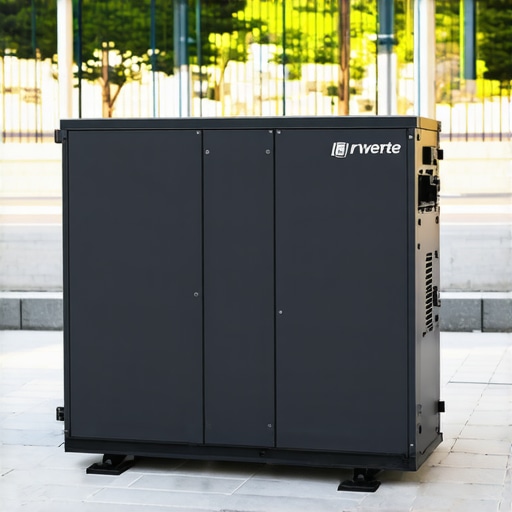
When a standard compressor kicks on, it pulls LRA (Locked Rotor Amps)—a massive surge of electricity that makes your lights flicker and puts immense mechanical stress on the scroll or piston. It’s like flooring a car to 60 MPH and then slamming on the brakes every five minutes. Inverter technology changes the game by using a Variable Frequency Drive (VFD). Instead of a fixed 60Hz cycle from the grid, the inverter converts AC to DC and then back to a simulated AC at whatever frequency is needed. If the house only needs 3,000 BTUs of cooling to maintain a setpoint, the compressor runs at a whisper-quiet 15Hz. This is AI-driven HVAC optimization in its purest form. By modulating the ‘juice,’ the evaporator coil temperature stays just below the dew point, allowing for continuous dehumidification without over-cooling the space.
Why 2025 Changes Everything: The A2L Transition
We are currently witnessing the death of R-410A. The new mildly flammable refrigerants, like R-454B, require more precise control systems. This is why ultimate guide to ac installation expert tips for 2025 success emphasizes the shift toward high-efficiency logic. Inverter systems are built to handle these new pressures with surgical precision. Unlike the old ‘tin knocker’ days where you just slapped a unit in, modern heat pump installation requires a deep dive into system performance testing. If your static pressure is too high, an inverter will ramp up to compensate, but it will scream like a jet engine if the ductwork isn’t sized right. This is where most ‘Sales Techs’ fail; they sell the fancy box but ignore the ‘Pookie’ (mastic) and the return air drop.
The Cold Climate Reality: Heat Pumps in the Polar Vortex
In Northern climates, the fear has always been that heat pumps die at 30°F. That was true for single-stage ‘gas-and-go’ units. But inverter-driven heat pump installation allows the system to over-speed the compressor in sub-zero temps, extracting latent heat from the air even when it feels bone-chilling. This is a massive upgrade for church heating systems or industrial heater services where massive volumes of air need to be tempered without the astronomical costs of traditional electric heater services. We are talking about maintaining a 110°F discharge temperature when it’s 10°F outside—that’s not magic, it’s variable-speed physics.
The Hidden Cost of ‘Cheap’ Repairs
I’ve followed behind too many techs who quoted a $15,000 replacement for a gas furnace repair when the issue was actually a communication error on a thermostat wiring upgrade. However, there comes a point where the ‘gas’ (refrigerant) leaks on an old R-22 or R-410A system make it a financial sinkhole. Using efficient hvac repairs the blueprint for cooler summers and warmer winters can help you decide when to patch and when to pull the plug. If you’re looking at a $2,000 repair on a 15-year-old compressor, you’re throwing money into a furnace. Modern financing for heat pump installs makes the jump to an inverter system much easier than it was five years ago.
“The most expensive equipment in the world cannot overcome a bad duct system.” – Industry Axiom
The Airflow Architect’s Verdict
Comfort isn’t just about the temperature on the wall; it’s about the velocity and sound of the air. A single-stage unit is a blunt instrument. An inverter system is a scalpel. Whether you are looking at infrared heater installation for a warehouse or a residential split-system, the goal is the same: match the load. We no longer live in a world where ‘bigger is better.’ Oversized units ‘short cycle,’ meaning they turn off before they can pull the humidity out of the air, leaving you with a house that feels like a damp basement. Proper system performance testing ensures that your inverter is actually doing its job. Don’t let a ‘Sales Tech’ push you into a base-model clunker. If you want silence and actual humidity control, the inverter is the only path forward. For more on extending your current system’s life, check out top hvac repair strategies to extend your systems life.
Mastering the Install: A Technical Checklist
- Check the communication wires: Inverters don’t use 24V ‘calls’ like old units; they talk in data.
- Verify the line set: If you’re reusing old copper, it needs to be flushed of all mineral oil to prevent ‘acidic’ compressor burnout with the new synthetic oils.
- Check the ‘Sparky’s’ work: Inverters are sensitive to power surges. A dedicated surge protector at the disconnect is mandatory, not optional.