The Sticky Truth About Modern Cooling
You’ve seen the thermostat hit 72 degrees, yet you’re sitting on your leather sofa feeling like you’re glued to a wet pool noodle. That’s not a temperature problem; that’s a physics problem. Most folks think an air conditioner is just a giant ice cube in a box. It’s not. It’s a moisture-wicking machine. If your system is a standard single-stage clunker, it’s either 100% on or 100% off. It roars to life, drops the sensible heat (the temperature you see on the wall) in ten minutes, and then shuts down. Meanwhile, the latent heat—the heavy, swampy moisture in the air—is still hanging around because the evaporator coil didn’t stay cold long enough to squeeze the water out. This is where the inverter-driven compressor changes the game, and if your tin knocker didn’t explain this, they did you a disservice.
“Equipment shall be sized to satisfy the calculated sensible and latent loads… Oversized equipment can result in poor humidity control.” – ACCA Manual S
The Mentor’s Lesson: You Can’t Cool What You Can’t Touch
I remember my old mentor, a guy who had been installing warehouse heating solutions since the Korean War, yelling at me in a cramped mechanical room. ‘You can’t cool what you can’t touch!’ he’d bark, pointing at a filthy evaporator coil. He wasn’t just talking about dirt. He was talking about the boundary layer of air passing over those fins. If the air is moving too fast, or if the coil isn’t at the right temperature for long enough, the moisture stays in the vapor state. This is why air handler repair is so critical—if your blower isn’t dialed in to the exact CFM (cubic feet per minute) required for your climate, you’re just moving hot, wet air around. Inverter technology fixes this by slowing the compressor down to a crawl. Instead of a ‘Sledgehammer’ approach, it uses a ‘Scalpel.’ It keeps the coil just below the dew point for hours, trickling that condensate down the drain pan instead of leaving it in your lungs.
Thermodynamic Zooming: The Inverter’s Secret Sauce
Let’s talk about the refrigerant leak detection process for a second. When we look for a leak, we’re looking for a loss of ‘juice.’ In a standard system, that juice is either pumping full tilt or not at all. An inverter-driven system uses a variable-frequency drive (VFD) to change the speed of the motor. When the compressor slows down, the pressure differential changes. This allows the system to match the heat load of the house exactly. If it’s a mild 80-degree day with 90% humidity, the inverter runs at 30% capacity. This long, slow run cycle is the ‘secret sauce’ for dehumidification. It’s the difference between a quick splash of water and a long, deep soak. For homeowners looking into geothermal heat pump systems, this level of control is standard, but bringing it to traditional air-source units has been the biggest shift in the last decade. You can learn more about these shifts in our guide on heating service innovations transforming 2025 climate control.
The South’s Greatest Enemy: Latent Heat
In humid zones, we fight a war against latent heat. Every time your high-efficiency furnace installation is paired with an oversized AC, you lose. The unit ‘short cycles.’ It satisfies the thermostat so fast that the ‘beer can cold’ suction line never gets a chance to truly stabilize the indoor environment. You end up with ‘cold and clammy’ syndrome. To prevent this, we look at the entire envelope. This includes duct cleaning services to ensure zero restriction and occupancy sensor installation to manage loads in specific rooms. If your gas line installation for furnaces was done right, but your AC was an afterthought, you’re only comfortable six months a year. Proper hot water heater repair and maintenance also play a role, as a leaking water heater can add gallons of moisture to the utility closet, fighting against your AC’s dehumidification efforts. For those struggling with these issues, checking efficient HVAC repairs is the first step toward a dry home.
“The removal of latent heat requires the cooling surface to be maintained at a temperature below the dew point of the entering air.” – ASHRAE Fundamentals Handbook
Static Pressure and the ‘Pookie’ Factor
You can have the most expensive inverter unit on the block, but if your tin knocker didn’t seal the ducts with ‘pookie’ (mastic), you’re cooling your attic. High static pressure is the silent killer of inverter systems. These smart motors will ramp up to overcome restricted ducts, but that uses more ‘juice’ and wears out the bearings. I’ve seen infared heater installation jobs in warehouses where the airflow was so poorly planned that the heat just pooled at the ceiling. The same happens in your home. If your return air is undersized, that inverter compressor can’t do its job. We often find that a simple air handler repair involving a larger return drop can do more for humidity than a whole new unit. If you’re wondering about the cost-benefit, check out choosing the right HVAC fixes before you sign a contract.
Why 2025 is the Year of the Inverter
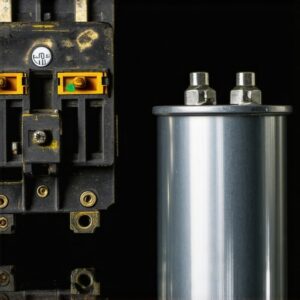
With the transition to A2L refrigerants and the push for higher SEER2 ratings, the ‘on-off’ compressor is becoming a dinosaur. The cost of electricity and the demand for comfort are driving everyone toward variable speed. If you are considering a high-efficiency furnace installation, you should be looking at how that furnace’s blower motor interacts with an inverter AC. They need to speak the same language (communicating thermostats). Don’t let a sparky or a cut-rate tech tell you that a standard capacitor-start motor is ‘just as good.’ It’s not. It’s like comparing a rotary phone to a smartphone. For more insider tips, read about AC installation secrets that most companies won’t share. Ultimately, comfort isn’t about the temperature; it’s about the math of moisture removal. If your tech doesn’t own a psychrometric chart, find a new one.