The Sound of a Dying Summer
You know the sound. It is a blistering Tuesday in the high desert, 114 degrees in the shade, and your condensing unit is making a noise like a trapped bumblebee in a tin can—a low, rhythmic hum-click. That is the sound of a compressor trying to overcome inertia and failing miserably. I once followed a ‘Comfort Advisor’—which is just a fancy name for a guy in a polo shirt who’s better at math than mechanics—who told a retired schoolteacher she needed a $14,000 full-system replacement because her compressor was ‘electrically grounded.’ I walked in, pulled the side panel, and saw a capacitor that was swollen like a dead tick. A twenty-dollar part and ten minutes of work, and that unit hummed back to life. He wasn’t looking for a fix; he was looking for a commission. In this industry, if you don’t know the difference between a failed start component and a dead compressor, you’re going to get taken for a ride. Understanding the physics of a capacitor is the first step in choosing the right HVAC fixes instead of falling for a sales pitch.
The Thermodynamic Zoom: Why We Need the Kick
To understand why we test capacitors, you have to understand the ‘Start’ in ‘Start Capacitor.’ An AC compressor is essentially a heavy-duty electric motor. When it is sitting still, it has massive rotational inertia. To get it moving, we need a phase shift in the electricity. A capacitor doesn’t just store ‘juice’; it creates a temporary second phase of power by shifting the voltage-to-current relationship. This creates the magnetic torque required to throw that rotor into motion. If the capacitor loses its ability to store and release that energy—measured in microfarads (MFD)—the motor just sits there, drawing Locked Rotor Amps (LRA), heating up until the internal thermal overload trips. This is sensible heat at its most destructive. In our dry, Southwest climate, the high head pressure caused by 115-degree ambient air means that the compressor has to work even harder to start against the refrigerant pressure. That is why we see so many ‘popped’ caps here compared to the humid East Coast. It’s also why I recommend top HVAC repair strategies like installing hard start kits to give the unit a fighting chance.
“The most expensive equipment in the world cannot overcome a bad duct system, but a bad capacitor can kill the best equipment in a single afternoon.” – Industry Axiom
Step-By-Step: The Forensic Diagnosis
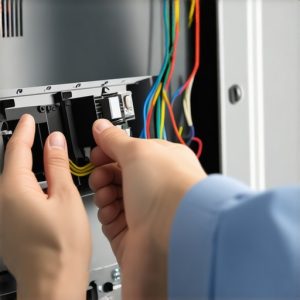
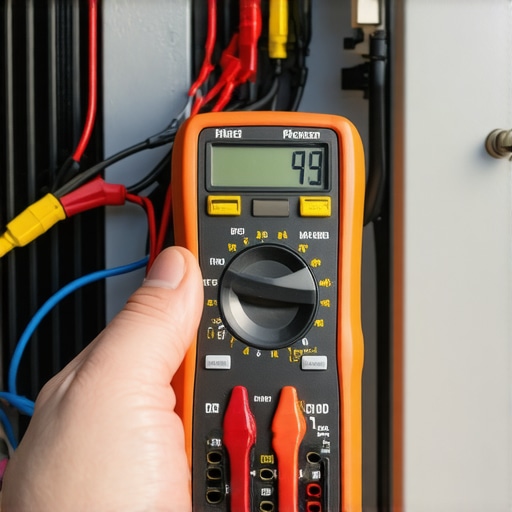
Before you even touch your multimeter, you need to respect the ‘Sparky’ side of this trade. A capacitor is a storage device. Even with the power off, it can hold a charge that will knock you off your ladder. Step 1: Power Down. Pull the disconnect at the outdoor unit. Step 2: Discharge. Use a resistor or a well-insulated screwdriver to short the ‘Herm’ terminal to the ‘Common’ terminal. You might see a spark—that’s the latent energy leaving the building. Step 3: Disconnect the wires. Take a photo first so you don’t mess up the wiring; if you swap the ‘Fan’ and ‘Herm’ wires, you’re going to have a bad day. Step 4: Set your multimeter to MFD. Most basic meters have a symbol that looks like two parallel lines. Step 5: Measure. Place one probe on ‘C’ (Common) and the other on ‘Herm’ (Compressor). Read the display. If your capacitor is rated for 45/5 MFD and you’re reading 32, it’s a ‘walking ghost.’ It’s still working, but it’s going to fail when the sun hits that cabinet at 3 PM. This is part of the preventative HVAC repair tips that keep you from calling for a 24/7 heating emergency response or AC failure in the middle of a heatwave.
The Contactors and the Transition to R-454B
While you’re in that cabinet, look at the contactor. If the points are pitted and black, it’s like trying to run a marathon while breathing through a straw. A bad contactor repair is often overlooked by ‘parts changers’ who just swap the cap and leave. We are also entering a massive shift in the industry with the R-454B refrigerant transition services. The new A2L refrigerants are mildly flammable, which means the electronics in these newer units are becoming more complex. You won’t just be testing a simple run cap; you’ll be looking at integrated inverter boards and sensors that talk to a voice control setup Alexa Google. But the physics of the motor remains the same. Whether you are dealing with industrial heater services, shop heater services, or a standard residential split system, the fundamental law of thermodynamics applies: heat moves to cold, and motors need torque. If your system is struggling, it might not just be the electrics; poor airflow from a neglected system can cause high pressures that cook these components. That’s why efficient HVAC repairs often involve checking duct cleaning services and dehumidification services to ensure the system isn’t fighting itself.
“Test, don’t guess. A multimeter is the only tool that doesn’t lie to you in a hot attic.” – EPA Section 608 Field Guide
Conclusion: Don’t Be a Victim of the ‘Sales Tech’
If a technician walks up to your unit, doesn’t pull his meter out, and tells you that you need a new compressor because it ‘sounds bad,’ show him the gate. A compressor burnout has a distinct, acidic smell—if it hasn’t tripped the breaker or smelled like a chemical fire, there is a 90% chance it’s a start component or a contactor issue. Whether you’re maintaining a fireplace insert services setup or a massive boiler repair services job, the diagnostic process is sacred. Keep your coils washed, keep your ‘Pookie’ (mastic) on your duct seams to prevent air leaks, and always check your MFDs. Physics doesn’t care about your service contract; it only cares about the load. Keep the airflow moving and the capacitors fresh, and you’ll survive the summer. For more on keeping your system running without the fluff, check out our guide on ultimate AC installation tips for the upcoming year.