The Anatomy of a Roof Leak: It’s Not Rain, It’s Physics
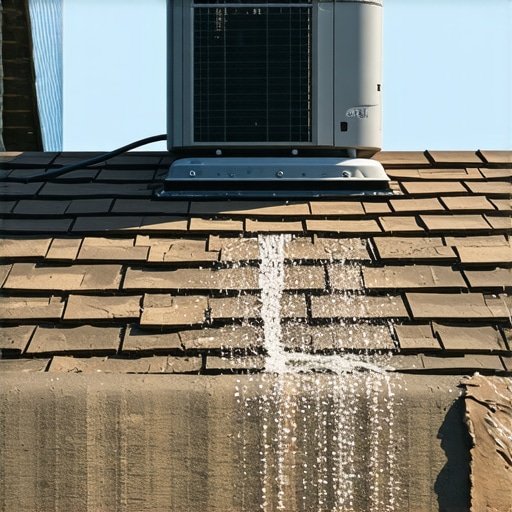
I remember my old mentor, a man who smelled like WD-40 and spent forty years in crawlspaces, screaming at me during a service call in late July: ‘You can’t cool what you can’t touch!’ He was hammering home the point that in HVAC, airflow is the only thing that matters. If the air isn’t moving across a surface, you’re just spinning a fan and wasting the customer’s money. When you hear that steady drip-drip-drip of water hitting your shingles from a swamp cooler, you aren’t just looking at a plumbing leak; you’re looking at a failure of the thermodynamic cycle and a total breakdown of fluid dynamics. That ‘juice’ you think you’re saving by using evaporative cooling is literally running down the drain.
Swamp coolers, or evaporative coolers for the uninitiated, are simple beasts, but that simplicity is exactly why they fail. In the dry heat of the Southwest, these units rely on sensible heat being converted into latent heat through the evaporation of water. But when you find a puddle on your roof, the culprit is usually a scaled-up float valve or a cracked distribution header. This isn’t magic; it’s basic mechanics. If your float valve is gummed up with calcium deposits, it won’t seat properly, and the pan will overflow. Worse yet, if your pump is pushing too much water for the pads to handle, you’ll get ‘blow-by,’ where water is sucked directly into the blower and sprayed out the side of the cabinet.
“The most expensive equipment in the world cannot overcome a bad duct system.” – Industry Axiom
The Forensic Diagnosis: Why Your Roof is Wet
When I step onto a roof and see a white calcium trail leading from a cooler to the gutter, I know exactly what I’m dealing with. First, we look at the float valve. This is the ‘sparky’ of the plumbing world—it’s supposed to cut off the water once the pan is full. If the water level is too high, it hits the overflow standpipe. This isn’t a bug; it’s a feature designed to prevent your ceiling from caving in. However, it means you’re wasting gallons of water every hour. If your unit is leaking, check the standpipe first. Often, it’s cracked or not threaded in tight enough with the ‘Pookie’ (mastic) or Teflon tape it needs to stay sealed.
Second, we check the distribution tubes. These are the small lines that feed the pads. Over time, they get brittle from UV exposure and crack. Instead of wetting the pads, they spray the inside of the cabinet like a broken sprinkler. This water then finds a seam and leaks onto your roof. This is why airflow measurement services are critical. If your pads are dry in spots because of a leak, your static pressure drops, but your cooling capacity vanishes. You’re moving air, but you aren’t changing its temperature. It’s like trying to cool a room by blowing a fan over a dry sponge.
Transitioning to the Winter: Gas Furnace Repair and Safety
While you’re worrying about the swamp cooler now, the same airflow principles apply when the ‘Monsoon’ ends and we head into heating season. A gas furnace repair often stems from the same lack of maintenance I see on rooftops. If you haven’t looked at your furnace since last Christmas, you’re asking for a cracked heat exchanger. In our dry climate, the metal expands and contracts violently. If your duct design services weren’t done right, the furnace ‘short cycles,’ getting too hot because it can’t move enough air to shed the heat. This eventually leads to a two-stage furnace installation being your only viable option to restore comfort.
For those in high-stakes environments, like a commercial kitchen, restaurant kitchen exhaust repair is even more critical. You aren’t just moving air for comfort; you’re moving grease and combustion products. If that exhaust fan fails, the building becomes a pressure cooker. We use the same forensic approach there as we do with your home cooler: check the belts, check the bearings, and ensure the static pressure is within the manufacturer’s spec. If you’re seeing smoke linger, your ‘tin knocker’ probably didn’t size the return air correctly.
Modern Comfort: Variable Speeds and Voice Control
We’ve come a long way from the manual ‘hi-lo’ switches of old swamp coolers. Today, we’re integrating voice control setup Alexa Google into even the most basic systems. But don’t let the shiny tech fool you. A variable speed furnace services package or a two-stage furnace installation only works if the underlying physics are sound. You can have the smartest thermostat in the world, but if your chimney liner installation is crumbling or your filters are clogged, that programmable thermostat programming is just a fancy way to watch your utility bill climb.
“Ventilation systems shall be designed to provide the required outdoor air-flow rate.” – ASHRAE Standard 62.1
If you’re dealing with a house that feels like a tomb, you might need heat recovery ventilators. These units swap out stale indoor air for fresh outdoor air without losing your hard-earned cooling or heating. It’s about balance. If you’re curious about how to manage these costs, checking out heating service hacks for comfort and savings in 2025 can give you a leg up before the next cold snap hits.
When to Repair vs. When to Replace
I hate sales techs who walk in with a clipboard and a pre-printed contract for a $15,000 system when a $50 part would fix the issue. However, there is a line. If your swamp cooler cabinet is rusted through at the bottom, ‘Pookie’ isn’t going to save it. The metal has lost its structural integrity. At that point, you’re better off looking at ultimate guide to ac-installation expert tips for 2025 success to see if a high-efficiency refrigerated system makes more sense for your long-term budget. If you’re constantly calling for gas furnace repair every January, the ‘repair’ is just a band-aid on a hemorrhage.
Proper maintenance is the only way to avoid the emergency call. For those who want to stay ahead of the game, I recommend reading up on preventative hvac repair tips for year-round efficiency. Understanding the ‘suction line’ (which should be beer can cold on an AC unit) and the health of your chimney liner installation can save you thousands. Don’t wait until you see water dripping through your ceiling or smell the sour, acidic scent of a compressor burnout. If your swamp cooler is leaking now, fix the float, check the pads, and ensure your airflow measurement services are up to date. Comfort isn’t a luxury; it’s the result of respected physics. If you’re stuck, contact us before a small drip becomes a major flood.