Why a Heating and Cooling Emergency Repair in Farr West Usually Starts with a Neglected Filter
Living in Farr West, Utah, means experiencing the full spectrum of the Intermountain West’s climate. From the bone-chilling winter winds whipping off the Great Salt Lake to the parched, dusty heat of a July afternoon, our HVAC systems are the unsung heroes of our homes. However, as a resident of Farr West and an active member of our community – whether I’m coaching track at South Ogden Jr High or running my local business – I’ve seen a recurring pattern that costs homeowners thousands of dollars. Most calls for a heating and cooling emergency repair don’t start with a major mechanical failure or a manufacturing defect. They start with a humble, often forgotten $15 piece of pleated fabric: the air filter.
It is a staggering reality in the HVAC industry that dirty filters are the #1 cause of system breakdowns. While it seems like a minor maintenance task, neglecting your filter sets off a catastrophic chain reaction that stresses every internal component of your furnace and air conditioner. In this comprehensive guide, we will explore the physics of why your system fails, the specific environmental challenges we face here in the South Ogden area, and why a simple filter swap is the best insurance policy for your home’s comfort.
The Physics of Airflow: How a Filter Protects Your System
To understand why a neglected filter leads to a hvac system maintenance crisis, you first have to understand that your HVAC system is a “breathing” machine. It doesn’t just create cold or hot air; it moves it. The volume of air moving through your home is calculated with precision during the initial hvac ductwork installation. When that airflow is restricted, the physics of the entire system changes.
Think of your air filter as the lungs of your home. Its primary job isn’t actually to clean the air for you to breathe (though higher MERV ratings do help with that); its primary job is to protect the internal components of the machine. When dust, pet dander, and local Farr West allergens clog that filter, the system experiences a spike in “static pressure.” This is essentially the resistance the blower motor must overcome to move air through the ducts.
When static pressure rises because of a clogged filter, the blower motor has to work twice as hard to maintain the same CFM (cubic feet per minute) of airflow. This extra work generates excess heat within the motor itself. Over time, this leads to premature motor failure. If you hear a high-pitched whistling or a deep humming coming from your utility closet, your system is likely suffocating. Ignoring these signs is the fastest way to end up searching for a heating and cooling emergency repair on a Sunday night when temperatures are dropping below zero.
Winter Crisis: Why Your Furnace Quits When You Need It Most
In the dead of a Utah winter, your furnace is under immense pressure. When air cannot pass through a dirty filter, the heat produced by the burners stays trapped inside the furnace cabinet. This is where the “Limit Switch” comes into play. The limit switch is a safety device designed to shut the furnace down if the internal temperature gets too high. If your furnace is “short-cycling” – turning on and off frequently without reaching the thermostat setting – it’s likely tripping the limit switch because of restricted airflow.
The danger here goes beyond just a cold house. Constant overheating and cooling cycles cause the metal of the heat exchanger to expand and contract violently. As we often discuss in our technical briefs, how a dirty furnace filter actually cracks your heat exchanger is a matter of thermal fatigue. Once a heat exchanger cracks, your furnace is no longer safe to operate. A crack allows carbon monoxide to leak into your home’s airstream, turning a simple maintenance issue into a life-threatening emergency.
When we arrive for a heater repair service near me and discover a cracked heat exchanger, the only legal and safe recourse is often a full system replacement. This is why neglecting a filter leads directly to the need for furnace installation services. To prevent this, we always recommend a professional combustion analysis. Why combustion analysis is the only way to prove your furnace is safe is because it measures the actual byproduct of the flame, detecting cracks that the naked eye might miss during a standard visual inspection.
Summer Meltdown: Frozen Coils and Compressor Death
The transition from heating to cooling doesn’t make the filter any less important. During a Farr West summer, your air conditioner relies on a steady stream of warm return air to pass over the evaporator coil. The refrigerant inside the coil absorbs the heat from that air, cooling the house. However, if the filter is clogged, there isn’t enough warm air passing over the coil to keep it from getting too cold.
When the temperature of the evaporator coil drops below freezing, the moisture in the air (humidity) condenses and freezes instantly. This creates a block of ice on your indoor unit. Many homeowners see ice on their AC and think they need more refrigerant, but more often than not, they just need a new filter. A frozen coil creates a secondary, more expensive problem: liquid slugging. Air conditioners are designed to compress gas, not liquid. If the refrigerant doesn’t evaporate because of a lack of airflow, it can flood back to the outdoor compressor in liquid form, destroying the “heart” of your AC unit.
This is a primary reason why air conditioning system repair becomes so costly. Replacing a compressor is one of the most expensive repairs in the industry. Furthermore, if the restriction has caused significant damage to the indoor portion of the system, you might find yourself looking at an air conditioning ductwork replacement to ensure the new unit can actually breathe properly. A clean filter prevents this entire downward spiral.
The Farr West Factor: Local Dust and Pet Dander
Geography plays a massive role in how often you should change your filter. Here in Farr West and South Ogden, we deal with specific environmental factors that homeowners in other states might not face. We are surrounded by agricultural land and construction projects. When the wind picks up, it carries fine silt and dust that finds its way into our homes. This outdoor particulate matter ends up in your return air vents and, eventually, your filter.
Additionally, many of our neighbors are pet owners. Whether it’s a Golden Retriever or a cat, pet hair and dander are the natural enemies of HVAC airflow. If you have multiple pets, a standard 1-inch filter can become fully impacted in as little as three weeks. We often point clients toward resources like “The best furnace filter replacement for homes with shedding pets” to help them select a filter with a higher surface area that can handle the extra load without choking the system.
Being a local resident, I know that we take pride in our homes. But we often forget that the “unseen” parts of the home – the air moving through the walls – require just as much attention as the lawn or the paint. If you live near the newer developments in Farr West, the construction dust alone is enough to necessitate a monthly filter check during the first year of occupancy.
Beyond the Filter: When Ductwork Becomes the Problem
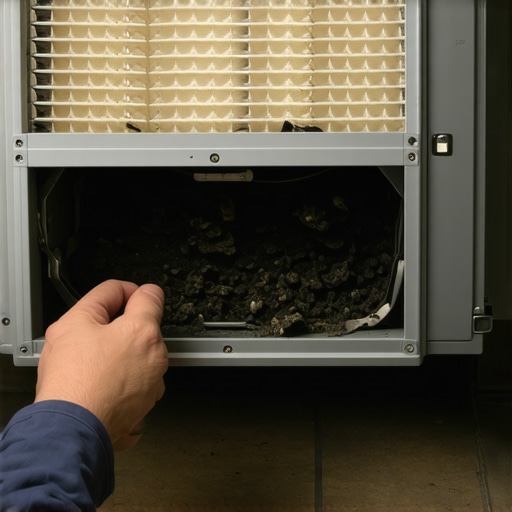
Sometimes, the damage from a neglected filter extends into the very “veins” of your home. When a filter is so dirty that it begins to “blow through” – meaning the pressure becomes so high that dust is forced through or around the filter media – that debris settles on the blower wheel, the secondary heat exchanger, and inside the ductwork. Over years of neglect, this buildup can reduce the diameter of your ducts and create a breeding ground for biological growth.
In these cases, simply changing the filter is no longer enough to restore performance. This is why Farr West homeowners are choosing ductwork replacement over simple repairs. If the internal lining of your ducts is coated in a decade’s worth of “bypass dust,” your static pressure will remain high regardless of how clean your filter is. This leads to a situation where hvac ductwork installation becomes a necessary part of a total home comfort restoration.
A professional technician can use a static pressure gauge to determine if the restriction is at the filter, the coil, or within the ducts themselves. If your energy bills are skyrocketing but your home still feels “stuffy,” it’s a sign that your system is fighting against its own infrastructure to move air.
Preventive Steps: The Homeowner’s 2025 Maintenance Checklist
To avoid a heating and air conditioning services emergency, you need a proactive strategy. Maintenance isn’t just about calling a pro once a year; it’s about the small habits you form as a homeowner. Here is a simple checklist to keep your system running efficiently through 2025:
- The Light Test: Hold your filter up to a bright light. If you cannot see light passing through the media, your furnace can’t “see” the air it needs. Change it immediately.
- Check Your MERV: Don’t just buy the highest MERV rating available. A MERV 13 filter is great for allergies but can be too restrictive for older blower motors. Consult with hvac companies to find the “sweet spot” for your specific equipment.
- Know Your Size: There is a big difference between a 1-inch and a 4-inch filter. The truth about how often you should change a 4-inch furnace filter is that while they can last 6-12 months, they should still be inspected every quarter, especially in dusty areas like South Ogden.
- Clear the Returns: Ensure that furniture, rugs, or curtains aren’t blocking your return air grilles. A blocked return is just as bad as a dirty filter.
- Schedule a Tune-Up: A professional tune-up includes cleaning the flame sensor, checking refrigerant levels, and performing that crucial combustion analysis.
By following these steps, you significantly reduce the likelihood of a mid-winter lockout or a mid-summer freeze-up. It turns a potential multi-thousand-dollar repair heating & cooling bill into a simple, affordable maintenance routine.
Conclusion: Don’t Wait for the Lockout
In the world of HVAC, an ounce of prevention is truly worth a pound of cure. A neglected filter is the “gateway drug” to major mechanical failure. It strains the motor, cracks the heat exchanger, freezes the coils, and pollutes the ductwork. As your neighbor here in Farr West, I want to see you spending your hard-earned money on things you enjoy – like supporting our local athletes or improving your property – rather than on an avoidable heating and cooling emergency repair.
If you haven’t checked your filter in the last 30 days, let this be your sign. Go to the utility closet, pull that filter out, and perform the light test. If it’s gray, fuzzy, or blocked, replace it today. And if your system is already making strange noises or struggling to keep up, don’t wait for it to quit entirely. Contact reputable hvac companies for a comprehensive hvac system maintenance visit. A professional eye can spot the damage caused by past neglect and get your system back to peak efficiency before the next Utah weather extreme hits.