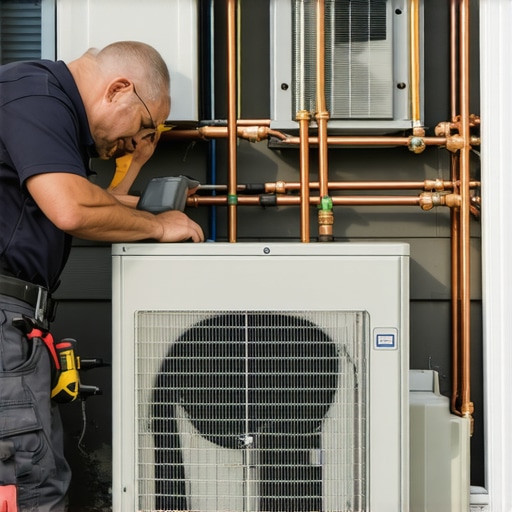
The wind is howling at twenty knots, the temp is dropping below zero, and that old heat pump outside is screaming like a banshee with a stubbed toe. Most homeowners think they can just call a guy, have him drop a new ‘box’ on the pad, and call it a day. That’s the kind of thinking that keeps ‘Sales Techs’ in new trucks and leaves you with a sky-high electric bill and a compressor that’ll burn out before the next season hits. I’ve spent thirty years in the trade, from crawling through spider-infested crawlspaces to diagnosing multi-stage inverters in a blizzard, and if there is one thing I’ve learned, it’s that a heat pump is a system, not a toaster. You don’t just ‘plug it in’ and expect it to work.
The Mentor’s Lesson: Airflow is the Alpha and Omega
My old mentor, a grizzled tin knocker who could smell a refrigerant leak from three blocks away, used to scream at me, ‘You can’t cool what you can’t touch!’ He was talking about the boundary layer of air on the evaporator coil, but it applies to everything we do. If your duct design services weren’t handled properly thirty years ago, putting a high-efficiency 2025 unit on that same ‘pookie’ smeared, undersized ductwork is like putting a Ferrari engine in a lawnmower. It’ll run, sure, but it’ll shake itself to death within a year because it can’t breathe. You’re fighting physics, and physics never loses.
“The most expensive equipment in the world cannot overcome a bad duct system.” – Industry Axiom
When we talk about a heating service in a cold climate, we are talking about moving BTUs from the freezing outdoor air into your living room. It sounds like magic, but it’s just the vapor-compression cycle. When you swap the outdoor unit but leave the old indoor coil, you are asking for a ‘franken-system’ disaster. The indoor coil—the evaporator—has to be perfectly matched to the outdoor condenser’s capacity and the specific refrigerant flow rates. With the industry moving toward A2L refrigerants like R-454B and R-32, the old copper you have in your attic might as well be scrap metal if it isn’t rated for the higher pressures and different oil types of modern cold climate heat pumps.
The Regulatory Cliff: 2025 and the Death of R-410A
We are standing on a regulatory cliff. The EPA is phasing out R-410A, and the new ‘mildly flammable’ refrigerants require sophisticated leak detector integration within the air handler itself. If a tech tells you they can just ‘juice it up’ with whatever gas they have on the truck, run. They are setting you up for a transformer replacement or worse—a total system lockout. Modern AC installation isn’t just about brazing pipes; it’s about software, sensors, and safety protocols. These new units feature sensors that will shut the whole system down if they detect a leak, protecting your home from the A2L gas, but also requiring a level of expertise that most ‘tailgate’ contractors simply don’t have. For a deeper look at these shifts, check out heating service innovations transforming 2025 climate control.
Thermodynamic Zooming: The Physics of the Defrost Cycle
In a cold climate, the ‘Heat’ in heat pump is a bit of a misnomer. We are actually performing refrigeration in reverse. As the outdoor coil drops below the dew point, it pulls moisture out of the air. When it’s freezing out, that moisture turns to frost. A quality HVAC repair specialist knows that if your limit switch replacement wasn’t done correctly or your defrost board is shot, that ice will build up until the fan blade hits it, sounding like a machine gun. Swapping the outdoor unit doesn’t fix the underlying issues of why the unit iced up in the first place—which is usually poor airflow or a restricted suction line. The thermodynamics of latent heat are unforgiving; you have to manage that phase change or the unit will eventually experience a ‘slugging’ event where liquid refrigerant hits the compressor. That’s the ‘death rattle’ you hear right before the system dies.
“Proper equipment sizing shall be based on heat loss and heat gain calculations performed in accordance with ACCA Manual J.” – ANSI/ACCA Standard 5
Most ‘Sales Techs’ just look at the old unit and say, ‘Yeah, looks like a 3-ton, I’ll sell you a 3-ton.’ They don’t do the math. They don’t check if the electric heater services—those backup heat strips that save your butt during a polar vortex—are actually compatible with the new blower’s CFM (cubic feet per minute) output. This is why you see so many homeowners complaining about ‘cold blows’ during the winter. It’s not the machine; it’s the installation. If you’re curious about how to avoid these pitfalls, read up on AC installation secrets that HVAC pros won’t tell you.
The Anatomy of the Replacement: Beyond the Box
When I go into a house for a replacement, the outdoor unit is about 30% of my concern. I’m looking at the transformer replacement history—is something eating capacitors? I’m checking the spa heater services if they are tied into the same electrical sub-panel, because ‘Sparky’ might not have left enough headroom for a new variable-speed inverter. I’m checking the static pressure in the ducts. If the static pressure is too high, that fancy new motor will burn itself out trying to push air through a straw. It’s about the whole ‘Mechanical Anatomy.’ Replacing a heat pump without checking the limit switch replacement needs or the integrity of the plenum is like getting a heart transplant but keeping your clogged arteries. You’re just wasting money.
Then there’s the leak detector integration. Modern units are smarter than us, sometimes. They have micro-channel coils that are incredibly efficient but also incredibly sensitive to acid and moisture. If a tech doesn’t pull a proper vacuum—down to 500 microns—and hold it, moisture stays in the system. That moisture mixes with the ‘gas’ (refrigerant) and the POE oil to create hydrofluoric acid. That acid eats the motor windings from the inside out. You won’t know it for two years, but by then, your warranty might be a headache to claim because the ‘installation was improper.’ This is why expert AC installation is the only way to go.
Conclusion: Don’t Buy a Box, Buy a Result
At the end of the day, you aren’t buying a Trane, a Carrier, or a Goodman. You are buying a ‘Climate.’ You are buying the ability to sit in your underwear in January while it’s snowing outside and feel perfectly warm. That doesn’t happen by just swapping a box. It happens through duct design services, proper heating service, and ensuring every component—from the transformer to the limit switch—is synchronized. Don’t fall for the ‘sweet old lady’ scam where a tech quotes you $15k for a new system when you just need a $20 capacitor, but conversely, don’t think a $4,000 ‘box swap’ is going to solve your comfort issues. It’s physics, it’s sweat, and it’s about doing the job right the first time. If you’re ready to stop guessing and start fixing, contact us for a real diagnosis from people who know what ‘beer can cold’ actually means for a suction line.