The Physics of the Frozen Man-Cave
My old mentor used to scream, ‘You can’t heat what you don’t circulate!’ This was back when I was a green helper carrying toolbags up 20-foot ladders in a blizzard. He was right then, and he’s right now. Most homeowners think they can just crack the door to the kitchen and let the ‘extra’ heat from the house wander into the garage. That’s not just a thermodynamic fantasy; it’s a recipe for a cracked heat exchanger and a carbon monoxide disaster. When you try to bleed off your home’s HVAC system into a cold, uninsulated garage, you’re destroying the static pressure balance of your entire house. You’re asking a system designed for 2,000 square feet to suddenly handle a cavernous space with a giant uninsulated metal door. The result? Your furnace runs a marathon, never hits the setpoint, and your main living room feels like a meat locker because you’ve robbed it of its ‘juice’ (refrigerant or gas flow). To do it right, you need dedicated equipment, proper duct design services, and an understanding of the combustion process.
“The most expensive equipment in the world cannot overcome a bad duct system.” – Industry Axiom
The Forensic Diagnosis: Why Your Garage is a Heat Thief
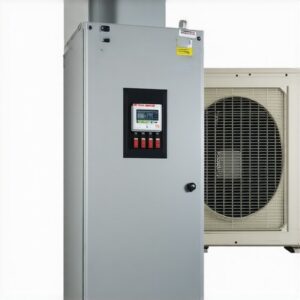
In the North, where the mercury drops faster than a lead weight, the garage is the front line of the war against sensible heat loss. Most garage workshops are ‘thermal holes.’ If you aren’t using a dedicated gas heater, you’re likely struggling with a space that fluctuates 40 degrees in an hour. When we look at the mechanical anatomy of a garage heating solution, we aren’t just looking for ‘hot air.’ We are looking for Energy Star heating certification performance that can handle the high delta-T (temperature difference) of an outdoor-adjacent space. A two-stage furnace installation in a workshop is a game-changer because it allows the unit to run at a lower, quieter capacity for maintenance, only kicking into high gear when you open that big overhead door and dump all your BTUs onto the driveway. This prevents the constant cycling that kills capacitors and wear out the contactors. If you’re pushing for the ultimate setup, radiant floor heating installation offers a consistent thermal mass that doesn’t care about drafts, though it lacks the fast recovery of a forced-air unit heater.
Combustion Science and the Flame Sensor Trap
Let’s talk about the ‘guts’ of these machines. A common service call involves a workshop heater that ‘starts then stops.’ Usually, it’s a dirty flame sensor. In a garage, where you’re sawing wood or spraying finishes, the air is thick with particulates. These particles coat the sensor, preventing the millivolt signal from reaching the board. Regular furnace flame sensor cleaning is the difference between a productive Saturday and a frozen afternoon. Furthermore, with the industry shifting toward low-GWP refrigerant retrofits and high-efficiency gas standards, the complexity of these ‘simple’ garage heaters has skyrocketed. You aren’t just lighting a match; you’re managing a precise air-to-fuel ratio. This is where predictive maintenance alerts become invaluable. Modern systems can actually tell you if the inducer motor is drawing too many amps before it seizes up, saving you from an emergency midnight repair when the temp is -10°F.
The Airflow Manifesto: Humidity and Comfort
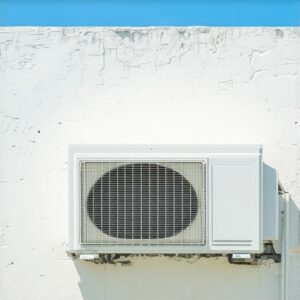
One thing the ‘Sales Techs’ won’t tell you is that heating a garage workshop makes the air drier than a desert bone. Dry air feels colder than moist air at the same temperature because of evaporative cooling on your skin. That’s why a humidifier installation integrated into your workshop’s HVAC is crucial if you do any fine woodworking. Without it, your wood stock will shrink, crack, and warp before you can even get a coat of poly on it. We also have to consider dual fuel heat pump systems for those ‘shoulder seasons.’ A heat pump can efficiently keep the chill off in October, while the gas furnace takes over the heavy lifting in the dead of January. It’s about using the right tool for the job. For more on maximizing your system’s longevity, check out these top HVAC repair strategies.
“Properly sized equipment shall be installed in accordance with the manufacturer’s instructions and the requirements of the International Mechanical Code.” – ACCA Manual S
Strategic Maintenance and Priority Memberships
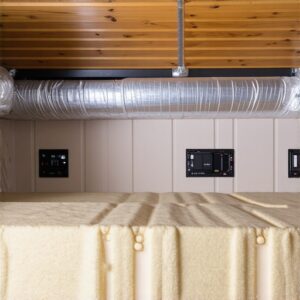
I’ve seen too many ‘tin knockers’ slap a unit on the ceiling and walk away. That’s how you end up with a soot-covered heat exchanger in three years. You need a priority service membership to ensure someone is checking the gas pressure and the venting every season. If your venting isn’t perfect, you’re courting a ‘backdraft’ scenario where CO enters your workspace. This isn’t something to DIY with some duct tape and a prayer. You need real ‘pookie’ (mastic) on those joints and a professional who understands the physics of a chimney effect. If you’re wondering how to spot a real emergency, you should read about identifying urgent furnace repairs. Don’t wait until you’re shivering in your parka to call a ‘sparky’ (electrician) or an HVAC pro. Get the duct design services done now so your workshop remains a sanctuary, not a meat locker. For further insights on modern climate control, explore heating service innovations for 2025 and ensure your setup is ready for the long haul.