
The Physics of Airflow: Why Your Mentor Was Right
My old mentor, a grizzled tin knocker who could smell a cracked heat exchanger from the driveway, used to scream at me, ‘You can’t heat what you can’t touch!’ I was twenty-two, covered in fiberglass itch, and trying to figure out why a brand-new furnace wasn’t keeping a master bedroom above sixty-two degrees. He grabbed my manometer and pointed to the return drop. ‘This blower is suffocating, kid. You can put a Ferrari engine in a lawnmower, but if you don’t give it gas and air, it’s just scrap metal.’ He was talking about static pressure, the silent killer of efficiency. Most techs today just want to swap a box and collect a commission, but comfort is physics, not magic. If the air isn’t moving across that heat exchanger at the right velocity, you aren’t getting the AFUE you paid for. You’re just burning money and venting it out the flue.
We live in an era where ‘Sales Techs’ push 98% high-efficiency units like they are candy, yet they leave the original, undersized 1970s ductwork in place. This is the fundamental lie of the HVAC industry. To actually realize energy savings, we have to look at the system as a singular thermodynamic organism. This starts with combustion analysis and ends with rigorous performance testing. If you don’t have a ‘before’ and ‘after’ snapshot of your static pressure and temperature rise, you don’t have an installation; you have a guess.
“The most expensive equipment in the world cannot overcome a bad duct system.” – Industry Axiom
The Bloodwork of Your Furnace: Combustion Analysis
When I walk up to a unit, I don’t just look at the blue flame and say it’s ‘good to go.’ That’s amateur hour. I perform a full combustion analysis. This is the bloodwork of your heating system. We’re measuring oxygen, carbon monoxide, stack temperature, and excess air. In our cold northern climate, a gas line installation for furnaces must be sized perfectly to maintain manifold pressure. If your gas pressure drops when the water heater kicks on, your combustion goes lean, your flame temperature spikes, and you’ll be looking for urgent furnace repair before the first polar vortex hits. A proper analysis ensures we aren’t creating a ‘slow kill’ scenario for the heat exchanger through condensation or overheating.
HVAC Duct Sealing and the ‘Pookie’ Defense
You can spend $12,000 on geothermal heat pump systems, but if your attic ducts are leaking 20% of your conditioned air into the insulation, you’ve effectively neutralized the efficiency of the ground-loop heat exchange. This is where HVAC duct sealing comes in. We don’t use that shiny ‘duct tape’—which ironically is the one thing you should never use on a duct. We use mastic, or what we call ‘Pookie’ in the field. It’s a messy, grey, fiber-reinforced soul-sealing paste that ensures every CFM (cubic foot per minute) the blower pushes actually reaches the register. When we perform efficient HVAC repairs, sealing the return air is often more important than the supply. If the return is sucking in unconditioned basement air or attic dust, it’s trashing your indoor air quality and forcing the coil to work double-time to remove latent heat or add sensible heat.
The Geothermal Reality and Sensible Heat
In the North, we deal with extreme temperature differentials. Geothermal heat pump systems are the gold standard because they leverage the constant 55-degree temp of the earth. But the thermodynamics of a water-to-air heat pump are sensitive. Without demand-controlled ventilation, you’re either over-ventilating and drying out the house or under-ventilating and letting VOCs build up. During wall furnace installation or heat pump commissioning, we use flow meters to ensure the brine solution is moving heat at the exact rate the refrigerant cycle requires. If the flow is off by even half a gallon per minute, your COP (Coefficient of Performance) drops through the floor.
“Design heating and cooling loads shall be determined in accordance with ACCA Manual J or other approved methods.” – ANSI/ACCA Standard 5
Smart Building Management and the Myth of ‘Set It and Forget It’
Technology like geofencing temperature control and smart building management has changed the game, but only if the underlying mechanicals are sound. Integrating voice control setup Alexa Google is great for convenience, but the real savings come from the logic boards. A smart system knows when the outdoor ambient temp is too low for the heat pump and needs to switch to the gas furnace. This is ‘Dual Fuel’ logic. However, I’ve seen smart building management systems fight against poor physics. If your humidifier installation isn’t interlocked with the blower speed, you’ll end up with ‘sweat’ (condensation) inside your ducts, leading to mold. We use performance testing to calibrate these sensors. A geofence won’t save you money if your system short-cycles because the ‘Sparky’ wired the C-wire wrong and the thermostat is rebooting every ten minutes.
The Proof is in the Manometer
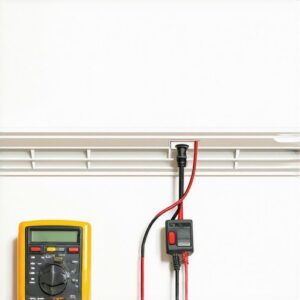
To prove energy savings, we do a total system ‘stress test.’ First, we measure the External Static Pressure (ESP). If the data plate says the max is 0.5 inches of water column and we’re hitting 0.9, that blower motor is drawing double the amperage it should. After we perform strategic repairs—perhaps adding a return drop or sealing the plenum—we measure again. Seeing that drop to 0.4 is the only way to guarantee the motor will last twenty years instead of five. We also look at the ‘Delta T’ (temperature difference). For a furnace, we want to see a rise that falls right in the middle of the manufacturer’s spec. Too high? You’re cooking the limit switch. Too low? You’re condensing flue gases and rotting the secondary heat exchanger. For more on this, check out ac installation secrets that most shops won’t share because they don’t own the tools to measure it.
Humidity: The Latent Heat Factor
In winter, humidifier installation isn’t just about itchy skin; it’s about the thermodynamic properties of air. Moist air holds heat better than bone-dry air. By maintaining 35-45% relative humidity, you can actually set your thermostat two degrees lower and feel just as warm. This is the ‘Apparent Temperature’ effect. When we install a bypass or steam humidifier, we aren’t just ‘adding water’; we are changing the enthalpy of the indoor environment. It’s a calculated move to reduce the load on the primary heating source, whether that’s a high-efficiency furnace or a wall furnace installation in a back room.
Final Verdict: Don’t Trust the Sticker
The yellow EnergyGuide sticker is a laboratory estimate. Real-world efficiency is earned in the field through HVAC duct sealing, precise combustion analysis, and smart building management. If a tech comes to your house without a combustion analyzer and a digital manometer, he’s just a parts changer. True energy savings are verified through numbers, not promises. If you’re ready to stop guessing and start measuring, you can contact us for a real performance audit. Understanding the innovations of 2025 means realizing that the ‘how’ of the installation is more important than the ‘what’ of the brand name.