The Invisible Killer in Your Ductwork
My old mentor, a man who had more refrigerant in his blood than iron, used to scream at me every time I grabbed a wrench before a manometer: ‘You can’t heat what you can’t touch, and you can’t touch it if the air is standing still!’ He was right. Most homeowners think that if the furnace is running, everything is fine. But there is a silent, invisible force—high static pressure—that is currently eating your blower motor from the inside out. In my 30 years of crawling through spider-infested crawlspaces and balancing on frozen rooftops, I have seen more ‘dead’ units killed by bad ductwork than by actual mechanical failure. If your blower motor sounds like a jet engine taking off, or if you find yourself calling for 24/7 heating emergency response every time the temp drops below zero, you aren’t dealing with a ‘bad brand.’ You are dealing with bad physics.
What is Static Pressure? (The Blood Pressure Analogy)
Think of your HVAC system like your body. The blower motor is the heart, and the ductwork is the circulatory system. Static pressure is the ‘blood pressure’ of your home’s air. When you have high static pressure, the ‘heart’ has to work twice as hard to push air through a system that is either too small, too dirty, or poorly designed. In the cold North, where we rely on heat exchanger cleaning and heavy-duty furnace cycles to survive the winter, high static pressure is the leading cause of premature equipment death.
“The most expensive equipment in the world cannot overcome a bad duct system.” – Industry Axiom
The Mechanical Anatomy of a Burnout
When I talk about ‘Thermodynamic Zooming,’ I’m looking at the relationship between air volume and heat transfer. In a northern climate, your furnace burns gas to heat up a metal box called a heat exchanger. The blower motor’s job is to strip that heat off the metal and move it into your living room. If the static pressure is too high—maybe because you used a high-MERV filter in a tiny 1-inch slot, or because some ‘tin knocker’ 40 years ago undersized your return air—the air slows down. This causes the heat exchanger to get dangerously hot. This is why top hvac repair strategies always start with airflow. If that heat exchanger gets too hot, it cracks. Now you aren’t just looking at a blower replacement; you’re looking at a carbon monoxide risk. For those still using older hydronic systems, radiator replacement might be on your mind, but for forced-air owners, the blower motor is the most vulnerable component.
ECM vs. PSC: The Modern Blower Battle
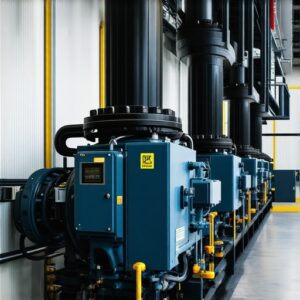
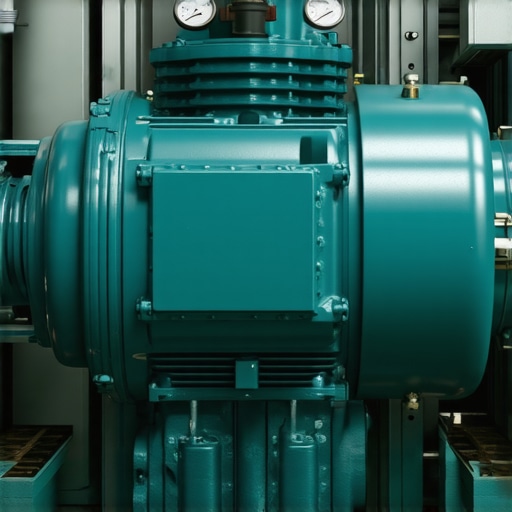
In the old days, we had PSC (Permanent Split Capacitor) motors. If static pressure got high, the motor just slowed down. It was inefficient, but it didn’t kill itself immediately. Today, we have ECM (Electronically Commutated Motors). These things are ‘smart,’ but they are also suicidal. If an ECM motor senses high static pressure, it will ramp up its RPMs to maintain the airflow target. It will fight and fight until the windings literally cook. I’ve walked into mechanical rooms where the air smelled like a burnt toaster—that’s the smell of a $1,200 ECM motor giving up the ghost because the ducts were ‘choking’ it. This is why duct design services are more important than the brand name on the box outside. You can’t just slap a high-efficiency unit on 1970s ductwork and expect it to live.
The Solution: Airflow Management and System Integrity
So, how do we fix it? It starts with HVAC duct sealing. We use ‘Pookie’ (mastic) to ensure that the air we are paying to heat actually gets to the registers instead of leaking into the attic. We also look at energy recovery ventilators to balance the air pressure in the home, especially in tightly sealed modern houses.
“Duct systems shall be sized in accordance with ACCA Manual D, and the air distribution system shall be designed to provide the required airflow.” – ASHRAE Standards
If you’re struggling with high bills, don’t just look for rebate application assistance for a new unit; look at your static pressure. A smart thermostat setup or WiFi thermostat integration can give you data, but it won’t fix a crushed return duct. You need a tech who understands that comfort is physics, not magic. Whether it’s dehumidification services for a damp basement or a full system overhaul, if you don’t respect the static pressure, you’re just throwing ‘juice’ at a broken machine. Stop the suffocation. Let your blower breathe.