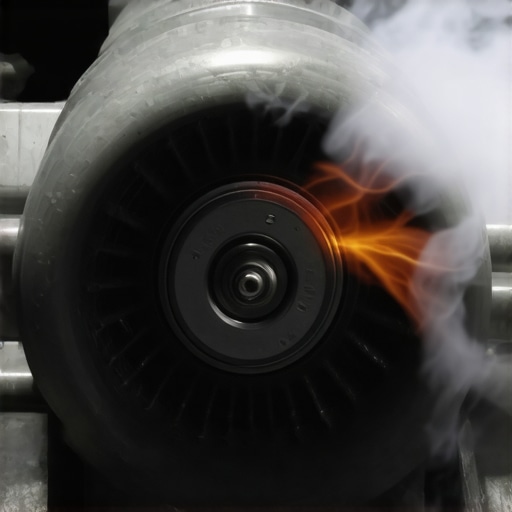
You hear it at 3 AM when the house is quiet. It starts as a faint, rhythmic chirp, like a cricket caught in the returns, but within a week, it’s a full-blown, ear-piercing banshee wail. That is the sound of a sleeve bearing that has surrendered its last drop of oil, and it’s the mechanical equivalent of a heart attack for your HVAC system. As a tech who has spent thirty years crawling through fiberglass-filled attics in the dead of a Chicago winter, I can tell you that sound isn’t just annoying; it’s expensive. Most homeowners ignore it, hoping it’ll ‘settle in,’ but physics doesn’t take days off. When that motor shaft starts scoring the housing, you aren’t just losing air; you’re flirting with a cracked heat exchanger and a very dangerous situation.
The Physics of the Failure: Airflow is King
My old mentor used to scream, ‘You can’t cool what you can’t touch, and you can’t heat what you can’t move!’ He’d stand over me while I was sweating through a service call, making sure I understood that a furnace is just a box of fire until the blower motor decides to do its job. The blower motor is the heart of the system, responsible for overcoming the static pressure of your ductwork to move treated air across the heat exchanger or evaporator coil. If that motor is screeching, it’s because the friction has reached a point where the motor’s internal torque can no longer maintain its RPMs. This leads to a drop in CFM (Cubic Feet per Minute), which causes the heat exchanger to overheat. In the North, where we deal with sub-zero polar vortexes, a blower failure isn’t just a comfort issue—it’s a pipe-bursting emergency.
“The most expensive equipment in the world cannot overcome a bad duct system.” – Industry Axiom
When the airflow drops, the temperature rise across the heat exchanger skyrockets. Modern furnaces have limit switches to shut things down, but if you’re running an older unit or one with a faulty limit, that screeching motor is pushing your heat exchanger toward a structural failure. Once that metal cracks, you have a direct path for carbon monoxide to enter your living space. This is why identifying when furnace repair is urgent is a matter of life and death, not just a line on a sales sheet. I’ve seen ‘Tin Knockers’ (duct installers) try to fix airflow issues by just bumping up the motor speed, but that just masks the problem until the motor finally seizes and burns out the start capacitor in a puff of acrid, ozone-smelling smoke.
[IMAGE_PLACEHOLDER]
The Forensic Diagnosis: Anatomy of a Dying Blower
Let’s talk about the mechanical anatomy. Most residential blowers use Permanent Split Capacitor (PSC) motors or the newer, more efficient ECM (Electronically Commutated Motors). If you have a PSC motor, that screech is often the result of dried-out bearings. These motors use a thin film of oil to keep the shaft spinning at 1075 RPMs. Once that oil is gone—due to heat, age, or a lack of maintenance—the metal-on-metal contact creates a ‘galloping’ effect. The shaft begins to wobble, which throws the blower wheel (the squirrel cage) out of balance. If you don’t catch it early, that vibration will shake the entire furnace cabinet, eventually loosening gas line installation for furnaces connections or cracking the solder on your control board.
We often see this in homes where the owner thinks they are doing a favor by using those thick, purple ‘allergy’ filters without a proper MERV filter upgrades assessment. Those filters are like trying to breathe through a piece of plywood. They increase the static pressure so high that the motor has to work twice as hard to pull air. This ‘choking’ effect creates heat within the motor windings. I’ve seen motors so hot you could fry an egg on the casing. This is why a simple furnace filter replacement with the correct MERV rating is the cheapest insurance you can buy. If you want better air quality, don’t just shove a thick filter in a 1-inch slot; look into HEPA filter systems that are designed for the high-static loads of a residential blower.
Thermodynamic Zooming: Sensible Heat vs. Latent Heat
In our cold Northern climate, we focus on sensible heat—the actual temperature change we feel. But the blower motor is also the engine behind latent heat removal during the summer. If that motor is dragging and losing speed, the evaporator coil gets too cold. When the coil temperature drops below the dew point without enough airflow to ‘wash’ the cold off, it turns into a block of ice. I’ve walked into basements where the entire A-coil was a 50-pound cube of frozen condensate. This is why refrigerant leak detection is often misdiagnosed; a tech sees low suction pressure and thinks it’s low on ‘gas’ (refrigerant), when in reality, the blower motor is just dying and can’t move enough air to boil the liquid refrigerant back into a vapor.
“Standard 62.1-2022: Ventilation and Acceptable Indoor Air Quality requires specific airflow rates to ensure the health of building occupants.” – ASHRAE Standards
Speaking of ‘gas,’ we are currently facing a massive industry shift. By 2025, the old R-410A refrigerant is being phased out for A2L refrigerants. We are moving toward R-454B refrigerant transition services because the EPA wants lower Global Warming Potential. These new refrigerants are ‘mildly flammable,’ which means the precision of your blower motor and the integrity of your airflow system are more critical than ever. You can’t afford to have a motor sparking or overheating in a system designed for the next generation of HVAC technology. If your unit is more than 12 years old and that motor is screaming, you’re better off looking at heating service innovations rather than sinking $600 into a motor for an obsolete R-22 or R-410A platform.
The Multi-Point Solution: Beyond the Motor
If your blower is failing, don’t let a ‘Sales Tech’ talk you into a whole new system without checking the peripherals. Often, a screeching motor is a symptom of a larger environmental issue. For instance, poor attic insulation for heating causes the furnace to run 20 hours a day, effectively doubling the ‘mileage’ on the motor bearings. If your upstairs is always hot and the downstairs is cold, a zoning system installation might be necessary to balance the load, rather than just forcing one motor to do all the heavy lifting. We also see many older homes in the Northeast with baseboard heater repair needs or boiler maintenance services requirements that go ignored, putting more stress on the forced-air system to pick up the slack.
Before you call a pro, check the simple stuff. Is the ‘Sparky’ (electrician) giving you clean power? Is the capacitor bulging? If you’re lucky, that screeching might just be a piece of debris in the blower wheel. But 9 times out of 10, it’s the bearings. If you ignore it, you’re not just risking a cold house; you’re risking a burnout that will cost triple the price of a proactive repair. You can read more about furnace repair myths debunked to see why ‘oiling a sealed motor’ is a waste of time. When the metal starts talking, you need to start listening.
The Math: Repair vs. Replace
A standard PSC blower motor replacement usually runs between $400 and $700 depending on the horsepower and the ‘Pookie’ (mastic) seal required on the cabinet. An ECM motor can easily top $1,200. If your furnace is 15 years old and the motor goes, you’re at a crossroads. Do you spend a grand on a system that might have a cracked heat exchanger next year? Or do you put that money toward a new 96% AFUE unit? I always tell my customers: if the repair is more than 30% of the cost of a new unit and the machine is over 12 years old, pull the plug. To keep your new investment alive, focus on top HVAC repair strategies like annual cleanings and proper filtration.