The sound of a failing HVAC system isn’t always a bang or a screech; sometimes, it’s a rhythmic, stuttering chatter—the ‘death rattle’ of a contactor that’s given up the ghost. I’ve spent thirty years hauling tool bags up vertical ladders and crawling through fiberglass-filled attics where the heat index hits 130 degrees, and if there is one thing I’ve learned, it’s that homeowners are being fleeced by ‘Sales Techs’ who can’t tell a capacitor from a contactor. They see a system that won’t start and immediately start writing a quote for a $15,000 two-stage furnace installation or a new AC unit. But often, the culprit is a small, silver-plated switch that costs less than a decent steak dinner. Understanding the contactor is the difference between a simple repair and a financial catastrophe.
The Airflow Manifesto: A Lesson from the Old School
My old mentor, a man who smelled perpetually of PVC primer and peppermint schnapps, used to scream at me until his face matched the color of a high-pressure refrigerant tank. ‘You can’t cool what you can’t touch!’ he’d bark, slapping the side of a rusted condenser. This is why airflow matters more than horsepower. He taught me that the electrical components—the contactors and capacitors—are just the brain and the nerves, but the airflow is the blood. If the ‘brain’ (the contactor) isn’t sending the ‘juice’ (240 volts) to the compressor because the points are pitted, the whole organism dies. People focus on the brand name on the cabinet, but as the industry saying goes:
blockquote>”The most expensive equipment in the world cannot overcome a bad duct system.” – Industry Axiom
We see it every day in the North. When the ‘Polar Vortex’ hits and we are doing gas furnace repair in sub-zero temps, or when the humidity spikes in July and the AC is screaming for mercy, the contactor is the unsung hero. It’s a simple electromagnetic switch. When your WiFi thermostat integration calls for cooling, it sends 24 volts to a coil. That coil creates a magnetic field that pulls down a bridge, connecting the line voltage to the load. It’s simple physics, but when those silver contacts arc and spark thousands of times, they develop ‘pitting.’ This resistance generates heat—sensible heat you can feel—and eventually, the points weld shut or carbon up so badly they won’t pass the current. This is when the real trouble starts.
Thermodynamic Zooming: Why Heat is the Enemy
Let’s talk about what’s actually happening inside those copper lines. Your AC doesn’t ‘create cold’; it removes heat. Specifically, it deals with latent heat—the energy required to change water from a gas (vapor) to a liquid (condensate). In our humid North-Central summers, the evaporator coil must drop below the dew point of the indoor air. If your contactor is ‘chattering’—rapidly opening and closing because of a weak coil or a failing ‘Sparky’ (electrician) repair job—the compressor is short-cycling. This prevents the refrigerant from reaching the steady-state pressure needed for the phase change. The result? A house that feels like a cold swamp because you aren’t removing the humidity. This is where IAQ improvement services and whole-home humidifiers come into play during the winter, but in the summer, you need that compressor running smooth to squeeze the moisture out of the air.
The Anatomy of a $3000 Failure
When a $50 contactor fails, it rarely goes quietly. If the contacts weld shut, the outdoor fan and compressor will run forever, even if the thermostat is satisfied. I’ve walked up to units where the suction line was a solid block of ice all the way back to the compressor because the unit never shut off. Conversely, if the contactor is pitted, it creates high resistance. This ‘voltage drop’ forces the compressor to pull more Amps to do the same amount of work. More Amps equals more heat inside the compressor windings. Eventually, the insulation on those windings breaks down, the ‘juice’ shorts to ground, and you’ve got a ‘burnout.’ The refrigerant becomes acidic—you can smell it, a sour, pungent odor that tells a seasoned tech the system is toast. Now, instead of a $50 part, you’re looking at a $3,000 compressor replacement or, more likely, an ultimate-guide-to-ac-installation-expert-tips-for-2025-success conversation because the acid has contaminated the entire lineset.
The North Climate Context: From Boilers to Blowers
In regions where we deal with both extreme heat and bitter cold, the stress on HVAC components is doubled. We aren’t just worried about cooling; we are dealing with radiator replacement and variable speed furnace services. During the transition months, your system might be fighting 40-degree swings. This is why furnace tune-up services are critical. A contactor that’s been arcing all summer is the same one that’s going to fail when you need your two-stage furnace installation to kick in if the system shares a transformer. It’s all interconnected. If you haven’t had a dryer vent cleaning lately, your house is already under positive pressure, forcing your HVAC system to work harder. It’s a chain reaction of mechanical stress.
“Standard 62.1-2022 defines the requirements for ventilation and air quality, but it cannot account for mechanical failure of the primary mover.” – ASHRAE Standards
The Forensic Diagnosis: Testing the Contactor
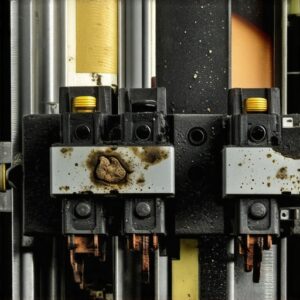
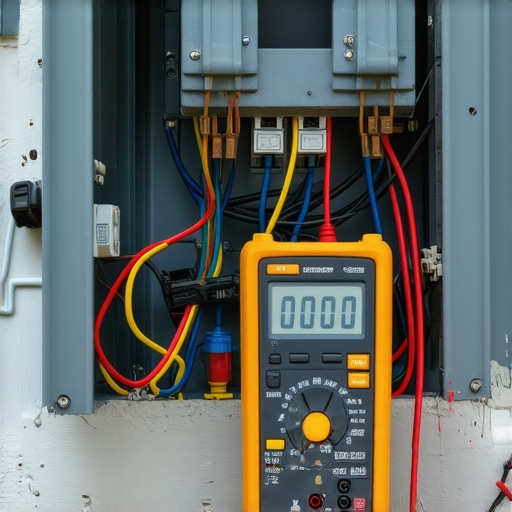
How do we catch this before it kills the compressor? First, we look at the ‘points.’ If they look like the surface of the moon—cratered and black—they’re gone. Second, we use a multimeter to check the voltage drop across the contacts. If I’m seeing more than a 0.1-volt drop, that’s heat being wasted and a compressor being tortured. We also check the coil resistance. If the ‘Tin Knocker’ who installed the ducts didn’t seal them with ‘Pookie’ (mastic), the unit is likely running longer cycles, which means that contactor is under constant load. This is why preventative HVAC repair tips for year-round efficiency always start with the electrical cabinet. It’s the easiest place to find a problem before it finds your wallet.
Repair vs. Replace: The Real Math
Don’t let a Sales Tech tell you that a burnt contactor means you need a new $10,000 system. If the compressor is still healthy—meaning the windings show proper Ohms and there’s no ‘juice’ leaking to ground—you replace the contactor, maybe add a hard-start kit to help the compressor during those 100-degree ‘sensible heat’ spikes, and you keep rolling. However, if the system is 15 years old and running on R-22 (the old ‘gas’), the math changes. With the 2025 transition to A2L refrigerants, keeping an old ‘slug’ alive might be throwing good money after bad. You have to weigh the efficient HVAC repairs against the long-term savings of a new variable speed furnace services package.
Conclusion: Don’t Ignore the Click
The next time you’re outside and you hear your AC unit clicking repeatedly like a frantic telegraph, don’t ignore it. That’s the sound of a $50 part trying to save itself from a $3,000 failure. Whether you need humidifier installation for the dry winter air or a gas furnace repair because your heat exchanger is looking suspect, remember that the small components usually lead to the big failures. Keep your coils washed, your filters changed, and if you’re unsure, check out furnace repair myths debunked by industry experts to see what else the ‘Sales Techs’ are lying to you about. Your comfort isn’t magic; it’s physics. And physics doesn’t care about your budget—it only cares about airflow and electrical continuity. If you’re smelling something sour or hearing that chatter, it’s time to act before the ‘death rattle’ becomes a ‘death silence.'”