The Hard Truth About Airflow and Electrical Arcing
My old mentor, a man who had more refrigerant in his veins than blood, used to grab me by the collar of my work shirt and scream, ‘You can’t cool what you can’t touch!’ This was his way of beating the physics of heat transfer into my head. He wasn’t just talking about the fins on a condenser; he was talking about the thermal energy exchange that happens when a system is running at peak performance. When we talk about how a simple contactor repair saves your AC compressor from a total meltdown, we are talking about the thin line between a $150 service call and an $8,000 equipment replacement. In the HVAC trade, we see it every day: a $30 part fails, and because the homeowner didn’t recognize the ‘chatter,’ the compressor internally shorts, turning the ‘juice’ into a sour, acidic mess that ruins the entire circuit.
“The most expensive equipment in the world cannot overcome a bad duct system or faulty electrical sequencing.” – Industry Axiom
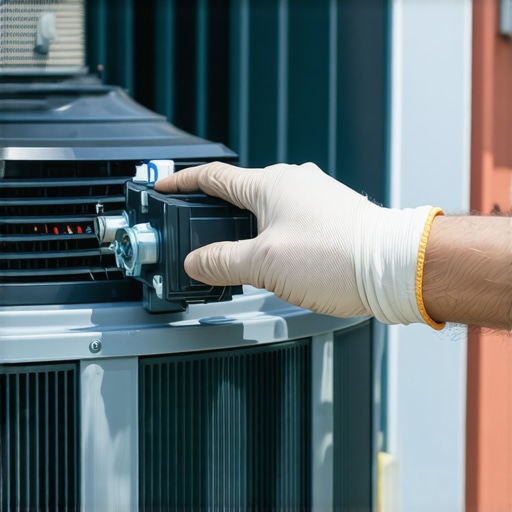
In the North where we transition from heavy-duty furnace repair and school boiler maintenance to the cooling season, the stress on these electrical components is immense. A contactor is essentially the gatekeeper. It’s a heavy-duty relay that takes the 24-volt signal from your thermostat and slams a set of silver-plated contacts together to send 240 volts of ‘sparky’ magic to the compressor and the fan motor. But here is the catch: every time those contacts slam shut, a tiny electrical arc occurs. Over time, this arcing creates pits and carbon buildup. This is what we call ‘pitting.’ Once those contacts are pitted, they create resistance. In the world of thermodynamics, resistance equals heat. Not the good kind of heat we deal with during a baseboard heater repair, but the kind of heat that melts wire insulation and cooks the oil inside your compressor.
The Forensic Diagnosis: Anatomy of a Failure
When I’m performing system performance testing, I’m looking for more than just pressures. I’m looking at the voltage drop across that contactor. If I see a drop, I know that contactor is ‘chattering.’ Chattering is when the magnetic coil inside the contactor is weak, causing the contacts to bounce. This sends a rapid-fire pulse of high voltage to the compressor. Imagine trying to start your car engine fifty times a second. That’s what chattering does to your compressor’s windings. It’s a fast track to a total meltdown. This is why preventative HVAC repair tips for year-round efficiency always emphasize checking the electrical components before the heat wave hits. If we catch it early, it’s a simple swap. If we don’t, we’re looking at a burnt-out motor and a ‘suction line’ that smells like a battery factory fire.
Thermodynamic Zooming: Latent Heat and Compressor Strain
To understand why this electrical failure is so catastrophic, you have to understand the physics of the evaporator coil. The coil must drop below the dew point of the ambient air to remove latent heat—that’s the humidity that makes a room feel like a swamp. When a contactor is failing, it often leads to intermittent power. The compressor starts and stops so rapidly that it never reaches a steady state of operation. This means the pressures never stabilize, and the evaporator coil never stays cold enough to dehumidify. You end up with a house that is ‘cool’ but damp, and a compressor that is screaming for mercy because it’s being hammered by liquid slugging. This is where efficient HVAC repairs become a blueprint for survival. A clean contactor ensures the compressor stays engaged long enough to actually perform the work of phase-change cooling.
“Standard practice for commercial installations requires that all inductive loads be switched via contactors rated for at least 125% of the motor’s full-load amperage.” – ASHRAE Standard 15
In commercial settings, like during commercial furnace repair or school boiler maintenance, the stakes are even higher. You aren’t just cooling a living room; you’re maintaining the structural integrity of a facility. We often integrate leak detector integration and UV light installation for HVAC to keep the air clean, but none of that matters if the primary mover—the compressor—dies because a ‘Sales Tech’ ignored a pitted contactor to try and sell you a whole new ‘tapestry’ of equipment. We don’t do that. We fix the wiring repair for heating systems and ensure the heat pump installation is actually sized for the ductwork it’s attached to. If you’re hearing a buzzing sound from your outdoor unit, that’s not ‘normal’; that’s the sound of a contactor about to weld itself shut. For more on how to spot these issues, check out how to identify when furnace repair is urgent.
The Math of Repair vs. Replace
Let’s talk numbers. A high-quality contactor and the labor to install it might run you a few hundred bucks. Compare that to a compressor replacement. Once a compressor burns out, it releases acid into the lines. You can’t just swap the pump; you have to flush the lines with expensive chemicals, replace the filter drier, and often, if the acid is bad enough, you’re looking at a whole new outdoor unit. This is why top HVAC repair strategies focus on the small stuff. Whether it’s infared heater installation for a warehouse or a simple furnace repair in a bungalow, the electrical connections are the first point of failure. We use ‘Pookie’ to seal the ducts and ensure the static pressure is correct, but we use our multimeters to ensure the compressor isn’t being electrocuted by its own controls. If you’re unsure about the health of your system, it’s time for expert tips for 2025 success and a real professional evaluation.
Don’t be fooled by the guy who walks in and immediately points at the manufacture date on your unit. A 20-year-old Trane with a fresh contactor and clean coils will often outperform a brand-new, bottom-tier unit installed by a ‘tin knocker’ who doesn’t know a capacitor from a contactor. Physics doesn’t care about the brand name; it cares about the flow of electrons and the flow of air. If you want to keep your home comfortable without breaking the bank, focus on the maintenance that actually matters. For help with your system, you can always contact us for a real diagnosis. For more information, visit our privacy policy.