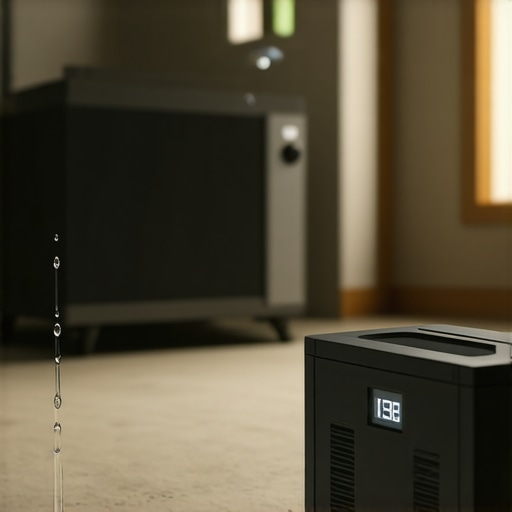
The first thing you hear isn’t the blower motor or the compressor. It is the silence. Then, it is the squish. I have spent three decades crawling through crawlspaces and balancing on joists, and nothing turns a homeowner’s face pale faster than an inch of standing water in a finished basement. We are talking about thousands of dollars in drywall, flooring, and mold remediation—all because a three-quarter-inch PVC drain line decided to get a case of the hiccups. People think their HVAC system is just about moving air, but as an airflow architect, I know it is also a plumbing factory. A high-efficiency modulating furnace or a standard evaporator coil can produce gallons of water a day through condensate. If that water doesn’t have a clear path out, it finds a path down. This is where integrating a leak detector into your control board diagnostics becomes the difference between a dry floor and a disaster.
The Anatomy of the Basement Deluge
Before we get into the nuts and bolts of refrigerant leak detection and float switches, you have to understand the physics of what is happening inside that cabinet. When we talk about cooling, we are really talking about the removal of latent heat. Your evaporator coil is sitting there, hopefully at a temperature well below the dew point of the air hitting it. As that warm, humid air passes over the fins, the moisture undergoes a phase change from gas to liquid. This is the ‘sweat.’ In a properly sized system with correct duct design services, this water drips into a primary pan and slides out the drain. But here is the catch: if your airflow is restricted because some tin knocker didn’t size the return air drops correctly, that coil can actually freeze. When that block of ice finally thaws during the off-cycle, it overwhelms the pan.
“The most expensive equipment in the world cannot overcome a bad duct system.” – Industry Axiom
I followed a ‘Sales Tech’ last summer who quoted a sweet old lady $15,000 for a new system because her basement was flooding. He told her the internal ‘heat exchanger was sweating through.’ Absolute garbage. I took one look at her condensate pump and saw the ‘juice’—the electrical signal—wasn’t reaching the motor because the float was jammed with a dead spider. A five-minute fix vs. a fifteen-thousand-dollar scam. That is why I preach the gospel of the leak detector. If that tech had installed a simple puck sensor or an inline float switch, the system would have shut down before the first drop hit her carpet.
Thermodynamic Zooming: Why High-Efficiency Means High-Moisture
If you are running a two-stage furnace installation or a modulating furnace repair, you are dealing with more than just AC sweat. High-efficiency gas furnaces (90% AFUE and above) use a secondary heat exchanger to pull every bit of sensible heat out of the flue gases. When those gases cool below 127°F, they condense. This condensate is acidic. It eats through copper, it stains concrete, and if your drain line isn’t pitched right, it will back up into the secondary heat exchanger and trip your pressure switches. In a cold climate like Chicago or the Northeast, where basements are the norm, this moisture is constant during the winter. Integrating a leak detector with your control board diagnostics means the furnace can ‘tell’ you there is a blockage before the flame rollout sensors even get warm. This is why preventative HVAC repair tips for year-round efficiency are non-negotiable. You can find more on keeping these systems running at preventative HVAC repair tips for year-round efficiency.
The Logic of the Leak Detector
There are two main ways we stop the flood. First, the inline float switch. This is a mechanical beauty that we break into the ‘R’ wire (the 24-volt power) at the air handler. If the water rises in the trap, the float lifts, breaks the circuit, and the sparky-approved electronics shut the whole system down. No power, no cooling, no more water. The second is the floor-mounted puck sensor. These are vital for ductless mini-split installation or wall furnace installation where a traditional drain pan might not be present. These sensors detect the conductivity of water. The moment moisture touches the gold-plated contacts, it sends a signal to your thermostat or phone.
“Condensate disposal systems shall be provided for equipment and appliances that produce condensate in order to prevent damage to the structure.” – IMC Section 307.2
We also have to look at refrigerant leak detection. People forget that a low charge—missing ‘gas’—causes the evaporator coil to drop below freezing. This creates an ice ball. When that ice melts, it doesn’t always stay in the pan; it ‘overshoots’ and drips directly onto the furnace control board. If you are debating a heat pump replacement, you need to ensure the new installer isn’t just slapping the unit in. They need to verify the duct design services to prevent this static pressure nightmare. You can learn about selecting the right path at choosing-the-right-hvac-fixes-what-homeowners-need-to-know.
Don’t Forget the Dryer Vent and the Pool Heater
You might wonder what dryer vent cleaning has to do with a flooded basement. Everything. In many modern homes, the laundry room and the HVAC closet share a wall or a floor drain. If your dryer vent is clogged, it increases the ambient humidity in that mechanical room to a level where the cold suction line (the one that should be ‘beer can cold’) starts dripping like a leaky faucet. This isn’t ‘gas’ leaking; it’s atmospheric moisture condensing on the exterior of your pipes because the dryer is turning your basement into a sauna. Similarly, if you have a pool heater repair situation where the heater is tied into a common floor drain, a failure there can back up into the HVAC condensate line. It’s a literal ecosystem of fluids down there. For those in the thick of it, understanding [how to identify when furnace repair is urgent and why](https://heatprosservices.com/how-to-identify-when-furnace-repair-is-urgent-and-why) is the first step to staying dry.
The Airflow Manifesto: Physics Over Magic
Ultimately, a dry basement comes down to three things: pitch, protection, and Pookie. ‘Pookie’ (the mastic sealant we use) ensures the plenum is airtight, so moisture isn’t being blown out of the pan by high static pressure. Protection is the leak detector we’ve been talking about. And pitch is the simple reality that water doesn’t run uphill. If your ‘tin knocker’ didn’t level the furnace, that secondary pan is useless. I’ve seen two-stage furnace installations fail in three years because the installer didn’t understand the psychrometrics of the basement environment. They didn’t account for the latent load. If you are seeing moisture, don’t wait for the flood. Check your control board diagnostics, look for the ‘sour’ smell of a damp coil, and get a pro who knows that airflow is king. You can read more about long-term strategies here: top-hvac-repair-strategies-to-extend-your-systems-life. Stop being a victim of gravity and start using the physics of your system to protect your home.
[{“@context”: “https://schema.org”, “@type”: “HowTo”, “name”: “How to Install an HVAC Float Switch Leak Detector”, “description”: “A step-by-step guide for homeowners to integrate a safety float switch into their HVAC system to prevent basement flooding.”, “step”: [{“@type”: “HowToStep”, “name”: “Power Down”, “text”: “Turn off the power to the furnace or air handler at the breaker box to ensure safety during the electrical integration.”}, {“@type”: “HowToStep”, “name”: “Locate the Primary Drain”, “text”: “Identify the 3/4 inch PVC condensate drain line exiting the evaporator coil cabinet.”}, {“@type”: “HowToStep”, “name”: “Install the Switch”, “text”: “Cut the PVC line and install the T-handle float switch. Ensure it is level so the float can move freely with water levels.”}, {“@type”: “HowToStep”, “name”: “Wire to Control Board”, “text”: “Intercept the ‘R’ (Red) wire coming from the transformer. Route it through the float switch so that if the switch opens, the 24V signal to the thermostat is cut.”}, {“@type”: “HowToStep”, “name”: “Test the System”, “text”: “Restore power and manually lift the float. The thermostat should lose power, proving the leak detector is functional.”}]}]