The Sound of a Dying Induction Motor in January
There is a specific, guttural groan a furnace makes right before the inducer motor seizes up and leaves you in a 40-degree living room. As a technician who has spent thirty years in the frozen trenches of the Northeast, I’ve heard that sound more times than I’ve had hot meals. My old mentor used to scream at me in the back of his beat-up van, ‘You can’t heat what you can’t touch!’ He wasn’t talking about the air; he was talking about the physics of the heat exchanger. If the airflow is restricted or the combustion is off, that expensive piece of steel is just a paperweight. This is why I treat every heating service call like a forensic investigation. We aren’t just looking for broken parts; we are looking for the story of why the part broke in the first place.
The Forensic Diagnosis: Why Safety Isn’t a Sales Pitch
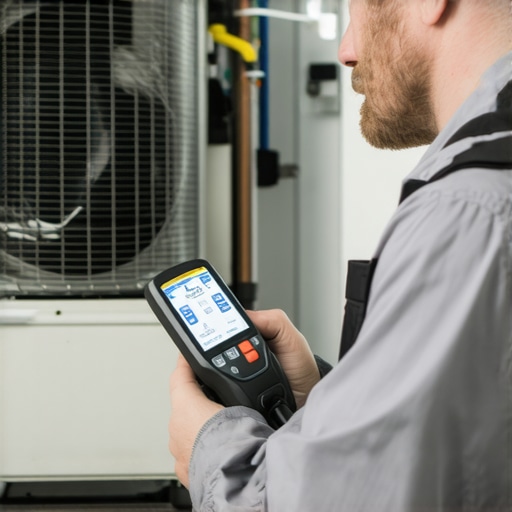
I hate ‘Sales Techs.’ You know the ones—they walk in with a clean uniform, spend five minutes looking at your furnace, and tell you that you need a $12,000 system because of a little dust. In my world, we do a real combustion analysis. This isn’t just looking at the color of the flame (though a dancing yellow flame is a dead giveaway of a cracked heat exchanger). It’s about measuring the actual O2 and CO levels in the flue gas. When we perform a safety check as part of our priority service membership, we are looking for the ‘silent killers.’ A furnace that isn’t burning right is a carbon monoxide factory. Using a calibrated analyzer to check the stack temperature and the ambient CO isn’t an ‘extra’—it’s the job.
“The most expensive equipment in the world cannot overcome a bad duct system.” – Industry Axiom
The Anatomy of Variable Speed Furnace Services
Modern comfort is a game of modulation. When we talk about variable speed furnace services, we are dealing with the ECM (Electronically Commutated Motor). Unlike the old PSC motors that were either ‘on’ or ‘off,’ variable speed blowers ramp up and down to maintain a constant CFM (Cubic Feet per Minute). If your relay services or control board are glitching, that motor won’t know how to talk to your remote thermostat access. The result? Short cycling. This is the enemy of efficiency. Every time your system starts, it pulls a massive ‘inrush’ of current. If it’s turning on and off thirty times a day because a sensor is dirty or the static pressure is too high, you’re basically burning money in your vents. This is a primary reason why how to identify when furnace repair is urgent and why is a critical skill for any homeowner to understand.
Boilers, Schools, and the High Stakes of Wood Stoves
It’s not just residential forced air. I’ve spent weeks in the bowels of old buildings handling school boiler maintenance. When you have a three-section cast iron beast that’s older than the principal, you don’t mess around with boiler repair services. One faulty low-water cutoff and you have a potential explosion on your hands. The same logic applies to wood burning stove installation. People think it’s just ‘venting smoke,’ but if the draft isn’t calculated correctly, you get creosote buildup and house fires. We check the ‘Pookie’ (mastic) on the seams and ensure the ‘Sparky’ (electrician) wired the blowers correctly. In the commercial world, specifically restaurant kitchen exhaust repair, the enemy is grease. A failing exhaust fan doesn’t just make the kitchen hot; it creates a massive fire hazard. A safety check for a restaurant owner is the difference between opening for dinner and an insurance claim.
Thermodynamic Zooming: The HEPA and Airflow Connection
Air is lazy. It wants to take the path of least resistance. When we install HEPA filter systems, we are adding a massive amount of resistance to the return air path. If your ‘Tin Knocker’ (duct guy) didn’t size the return air drops correctly, your blower motor is going to work itself to death trying to pull air through that thick filter. This is why 1-inch pleated filters from big-box stores are often the worst thing you can do for a system. They act like a brick in your ductwork. Our safety checks measure the ‘Static Pressure’—the blood pressure of your HVAC system. If it’s too high, your heating service will never be efficient, no matter how many ‘smart’ gadgets you add.
“Properly performed combustion analysis is the only way to verify the safe and efficient operation of fuel-burning appliances.” – ACCA Standard 12
The 2025 Reality: Refrigerants and Regulations
As we move into 2025, the industry is shifting away from R-410A to A2L refrigerants like R-454B. These are ‘mildly flammable’ (don’t panic, it’s about the same as your hairspray), but it means that the sensors in your system are more complex than ever. If you aren’t getting an annual check, you’re missing out on vital updates to these safety sensors. You can read more about these shifts in our heating service innovations transforming 2025 climate control guide. Whether it is checking a relay service for a secondary heat source or ensuring your remote thermostat access isn’t fighting against your furnace’s internal logic, these checks are about preventing the ‘3 AM Panic Call.’ We check the ‘Suction Line’ to make sure it’s ‘beer can cold’ during the summer and verify that the heat exchanger isn’t leaking ‘gas’ (refrigerant) or exhaust. Maintenance isn’t just about cleaning; it’s about verifying the physics of the machine. For more deep dives into these strategies, check out top hvac repair strategies to extend your systems life. Keeping your system running is easy; keeping it running safely and efficiently is where the veteran experience matters.