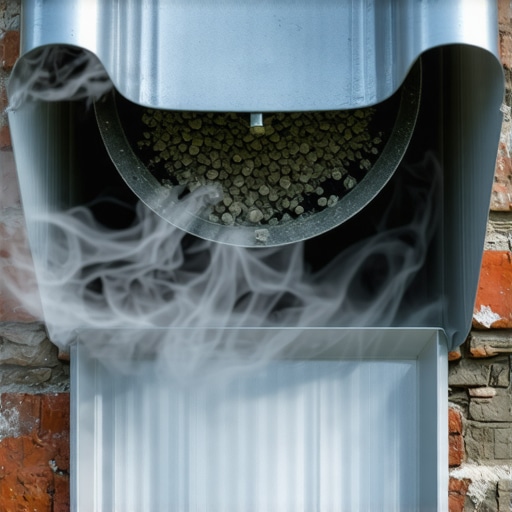
The Physics of a Clogged Lung: Why Airflow is Non-Negotiable
My old mentor used to scream, ‘You can’t cool what you can’t touch, and you can’t dry what you can’t breathe!’ This was back in ’94, standing in a cramped basement in Chicago where a massive steam boiler repair job had me sweating through my Dickies. He pointed at a dryer vent that was pulsating like a dying heart. That’s when I learned that a dryer isn’t just a box that spins clothes; it’s a high-velocity exhaust system that relies on the delicate balance of static pressure. If you choke that exhaust, the physics of latent heat removal go sideways, and you’re no longer drying clothes—you’re pre-heating a tinderbox. In the cold North, we fight moisture every day, and a clogged vent is the quickest way to turn your utility room into a humid swamp that rots your HEPA filter systems and strains your furnace.
“The most expensive equipment in the world cannot overcome a bad duct system.” – Industry Axiom
The Forensic Diagnosis: Anatomy of a Thermal Failure
When I walk into a house for a routine furnace repair and I smell that distinct, acrid scent of toasted lint, I know exactly what I’m looking at. It starts with the thermal fuse. Inside your dryer, there’s a small relay service component—a safety limit—designed to blow when the internal temperature exceeds its rating. If your vent is packed with ‘Pookie’ (mastic) and lint, the heat can’t escape. This isn’t just about ‘sensible heat’—the temperature you feel—it’s about the latent heat of vaporization. Your dryer is trying to boil off gallons of water. If that moist air stays in the drum because the ‘Tin Knocker’ who installed the vent used 25 feet of flex-duct instead of rigid pipe, the dryer has to work four times harder. You’ll notice the top of the machine is ‘burn-your-hand’ hot. That’s a massive red flag. We often see this lead to electric heater services calls where the heating elements have literally sagged and grounded out because they were cooking in their own exhaust.
The Thermodynamic Zoom: Why Humidity is the Enemy
In a cold climate, we care about the dew point. When warm, moisture-laden air from the dryer hits the freezing exterior wall of a vent, it reaches the dew point instantly. This causes condensation. That wet lint then acts like a magnet, catching more lint until the 4-inch pipe is effectively 1 inch. This increases backpressure. If you’ve invested in duct design services for your HVAC, don’t ignore the dryer. High backpressure doesn’t just slow things down; it forces moisture into the dryer’s cabinet, where it can short out the control board. For those of you with modern voice control setup Alexa Google integrations, your smart dryer might throw a code, but a veteran tech knows the real ‘sensor’ is your nose. If you smell burnt toast, shut it down. This is as critical as catching a cracked heat exchanger during a furnace repair; it’s a life-safety issue.
The Math of Risk: Repair vs. Catastrophe
I’ve seen ‘Sales Techs’ try to talk folks into a whole new unit for $1,200 when the fix was a $150 professional vent cleaning. But let’s look at the real math. A clogged vent ruins the drum seals and the bearings—you’ll hear that high-pitched screech of metal-on-metal, like a bearing failing in a blower motor. If you ignore it, the lint eventually migrates toward the heating element. One spark from a failing relay service or a frayed wire, and that lint—which is basically pure cellulose fuel—ignites. At that point, your occupancy sensor installation won’t save you; the fire is inside the walls. This is why how to identify when furnace repair is urgent and why applies to your dryer too; if it’s producing a smell or excessive heat, it’s an emergency. We are seeing a move toward low-GWP refrigerant retrofits in the AC world, but in the dryer world, the ‘greenest’ thing you can do is maintain airflow so the machine runs for 40 minutes instead of 90.
“Failure to clean the dryer vent is the leading cause of home clothes dryer fires (34 percent).” – NFPA Standards
Integrating Modern Tech for Safety
We’re in 2025; your house should be smarter than a box of rocks. When we do a thermostat installation, we often talk about total home monitoring. You can now install sensors that monitor the static pressure in your dryer line. If the pressure exceeds 0.6 inches of water column, you get an alert. This is the same logic we use for top hvac repair strategies to extend your systems life. By monitoring the ‘Suction Line’ equivalents of your dryer, you prevent the machine from ‘slugging’—not with liquid refrigerant, but with stagnant, hot air. If you’re managing a home in the Northeast, ensure your vent hood outside isn’t frozen shut during a blizzard. A frozen flapper is just as dangerous as a lint-clogged pipe. If you need help, contact us before you smell smoke. Proper maintenance is about more than just efficiency; it’s about making sure you don’t wake up to a 5-alarm fire because of a pair of jeans. For more on keeping your home running right, check out preventative hvac repair tips for year-round efficiency and heating service innovations transforming 2025 climate control. Airflow is king—don’t let a handful of lint dethrone your safety.