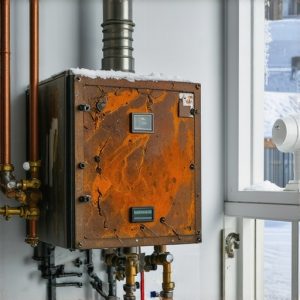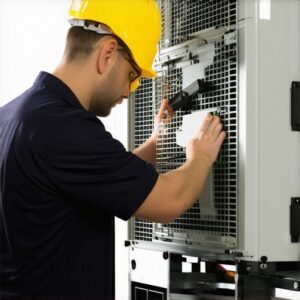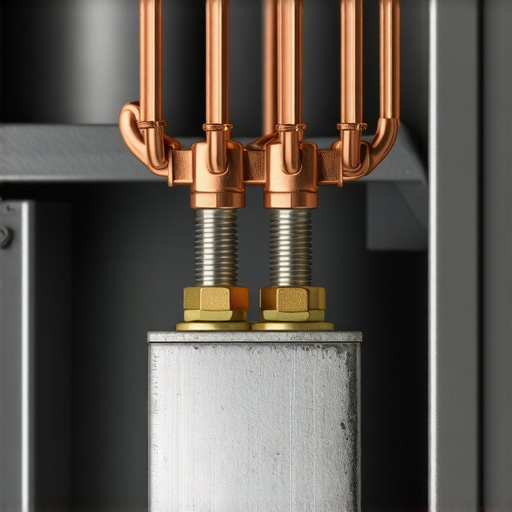
The sound of a dead furnace in the middle of a January freeze isn’t actually a sound at all; it is a heavy, pressurized silence that makes the hair on the back of your neck stand up. I have spent thirty years crawling through crawlspaces and dragging my tool bag across frozen rooftops, and I can tell you that most homeowners don’t realize their entire winter comfort relies on a small, silver cylinder about the size of a soda can. My old mentor, a grizzled guy named Hank who could smell a gas leak from the curb, used to scream at me, ‘You can’t cool what you can’t touch, and you can’t heat what you can’t move!’ This is why airflow matters more than horsepower. If that $50 run capacitor fails, your blower motor stops turning. When the blower stops, the heat exchanger—the very heart of your furnace—turns into a glowing cherry-red bomb of thermal stress because there is no air to strip away the sensible heat. Within minutes, the metal expands beyond its metallurgical limits, and you are looking at a cracked heat exchanger that leaks carbon monoxide into your bedrooms.
“The most expensive equipment in the world cannot overcome a bad duct system.” – Industry Axiom
The Forensic Anatomy of a Furnace Failure
When I show up for an emergency heating repair, I’m not looking at the thermostat first. I’m listening. If I hear a low-frequency hum coming from the cabinet but no air is moving through the registers, I know the ‘Sparky’ work is done, and the physics are failing. That hum is the blower motor trying to create a magnetic field it can’t sustain because the capacitor is dead. In the HVAC trade, we call this the ‘juice’ phase. The capacitor acts like a battery to give the motor the torque it needs to start spinning against the static pressure of your ductwork. If you have been ignoring furnace repair myths and thinking a hum is ‘just the house settling,’ you are begging for a total system replacement. Without that blower moving CFM (Cubic Feet per Minute) over the heat exchanger, the temperature in the plenum spikes to over 200°F in seconds. Most furnaces have a high-limit switch to shut things down, but those switches aren’t meant to be used as a primary control; they are a last-ditch safety. Repeatedly tripping them because of a bad capacitor is like redlining your car engine until it smokes.
Thermodynamic Zooming: Why Heat Exchangers Die
Let’s talk about the physics of the heat exchanger. It is essentially a stainless steel lung. On one side, you have the blue flame of burning gas; on the other, the air your family breathes. The goal is to transfer heat through the metal without letting the gases mix. This is where latent heat and sensible heat come into play. In cold climates like ours, we deal with extreme temperature differentials. If the air isn’t moving because of a failed $50 part, the metal gets too hot, and then, when the limit switch finally kills the flame, it cools too fast. This rapid expansion and contraction leads to ‘fatigue cracks.’ Once that metal cracks, the unit is legally a ‘red-tag’ furnace—it must be shut off immediately to prevent carbon monoxide poisoning. This is how a neglected $50 part turns into a $15,000 heat pump replacement or new furnace installation. I’ve seen it a thousand times: a ‘Sales Tech’ comes in, sees the crack, and instead of explaining the capacitor failure that caused it, just hands the homeowner a quote for a new unit with a 10-year financing plan. It’s predatory, and it’s why I insist on static pressure testing during every visit to ensure the motor isn’t working harder than it has to.
“Standard design practice requires that the duct system be sized to provide the airflow required by the equipment at a static pressure that does not exceed the blower’s capability.” – ACCA Manual D
The Modern Shift: Hyper-Heat and Mini-Splits
As we move into 2025, the game is changing. Many folks are moving away from traditional gas furnaces and looking at ductless mini-split installation or hyper-heat heat pumps. These systems are incredible for efficiency, but they are even more sensitive to electrical fluctuations. A hyper-heat unit can pull warmth out of the air even when it is -13°F outside, but the inverter boards and capacitors inside those cabinets are complex. Whether you are dealing with a boiler maintenance service or a high-tech heat pump, the fundamental rule remains: clean your coils and check your electrical components. Even things like refrigerant leak detection are tied back to airflow; if the evaporator coil freezes because the blower capacitor failed, the ice can physically bend the copper lines, causing leaks that require expensive ‘gas’ (refrigerant) recharges. If you have a wood burning stove installation as a backup, that’s great, but it won’t help your pipes from freezing if the main furnace goes down because of a cheap capacitor. Don’t be the person who spends $800 on a ‘smart’ thermostat but won’t pay $50 for a new run capacitor every five years. It is the cheapest insurance policy you will ever buy for your home.