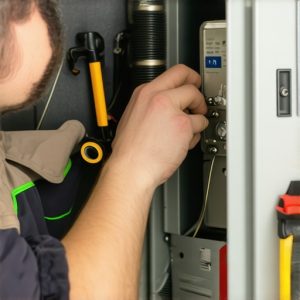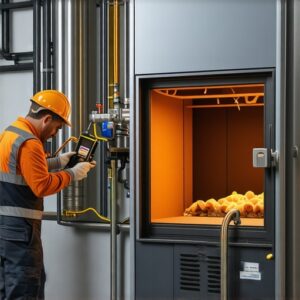
I still remember my old mentor, a man who smelled like a combination of pipe tobacco and burnt contactors, screaming at me in the middle of a frozen basement in January: ‘You can’t heat what you can’t touch!’ I was eighteen, shivering, and trying to figure out why a three-year-old furnace had already eaten through four transformers in a single season. I was looking for a short; he was looking at the dirt on the floor. He taught me right then that most HVAC failures aren’t electrical mysteries—they are failures of physics. When a homeowner tells me their control board keeps blowing transformers, the ‘Sales Tech’ will tell them they need a whole new system for $12,000. Me? I start looking for the hidden restriction that’s turning that 24V circuit into a suicide mission for components.
The Anatomy of a 24V Death Spiral
To understand why your furnace is eating transformers, you have to understand the control board diagnostics of a modern heating system. The transformer is the heart of the low-voltage side, stepping down 120V house power to 24V. It powers your thermostat, your gas valve, and the relays on your board. If that transformer blows, the ‘silence’ isn’t just quiet—it’s expensive. Most techs just swap the part and leave. But a transformer doesn’t just ‘die’ of old age anymore; it gets murdered by excessive load or a short circuit. If you are dealing with frequent failures, you need to look at the heating service history of the unit. Is it a wall furnace installation or a complex central system? The physics remain the same: if the secondary side of that transformer is pulling more than its rated VA (Volt-Amperes), the windings melt, and you are back in the cold.
“The most expensive equipment in the world cannot overcome a bad duct system.” – Industry Axiom
The HEPA Filter Trap: When Clean Air Kills Boards
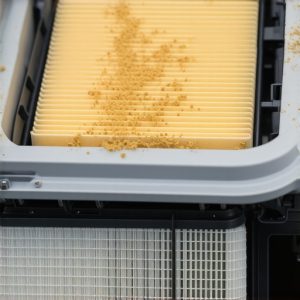
Here is the irony: homeowners trying to do the right thing often cause the most damage. I see it every winter in the North. A customer installs one of those high-end HEPA filter systems designed for hospital HVAC zoning, thinking they are protecting their family. But if the ductwork wasn’t sized by a real Tin Knocker using ACCA Manual D, that filter is basically a brick in your return air. This creates massive Static Pressure. The blower motor has to work twice as hard to pull air through that dense media. When the motor draws more current, the control board gets hot. Heat on a circuit board leads to ‘ghost shorts’ in the relays. That extra heat eventually migrates to the transformer, or worse, causes the limit switch to trip repeatedly. Every time a limit switch cycles, it puts a ‘hit’ on that transformer. If you want high-level filtration without blowing boards, you need HVAC duct sealing to ensure every ounce of air is moving through the coil, not escaping into the attic. You can find more on this in our heating service hacks for comfort and savings.
The Humidifier Short: A Winter Nightmare
In cold climates, a humidifier installation is almost mandatory to keep the skin from cracking and the wood floors from gapping. But I’ve seen countless transformers blown because a humidifier solenoid valve developed a tiny, microscopic leak. That water drips right onto the 24V wiring or, heaven forbid, into the control board housing. Water and 24V ‘gas’ (electricity) don’t mix. It creates a low-resistance path to ground that isn’t quite a ‘hard short’—it doesn’t pop the fuse immediately—but it creates enough ‘vampire draw’ to overheat the transformer over forty-eight hours. This is why preventative HVAC repair tips always include checking the drain lines and solenoid seals. If your board is acting up, check the 24V common wire for moisture. It’s often the culprit in fireplace insert services where the tech accidentally pinched a wire while running a new gas line.
“Standard 62.1 requires ventilation for acceptable indoor air quality, but improper implementation can lead to systemic pressure imbalances.” – ASHRAE Standards
Thermodynamic Zooming: The Limit Switch Cycle
Let’s get technical for a second. Your furnace has a primary limit switch—it’s the ‘brain’ that stops the house from burning down if the heat exchanger gets too hot. In a cold climate like Chicago or the Northeast, if your HEPA filter systems are clogged or your ducts are leaky, the heat exchanger can’t shed its heat fast enough. This is ‘Sensible Heat’ that has nowhere to go. The limit switch opens, killing the gas valve but keeping the fan on. Once it cools, it closes. If your furnace is ‘short cycling’ like this, it is slamming the transformer with an inrush of current every few minutes. Eventually, the insulation on the transformer windings fails. This is a classic case where identifying when furnace repair is urgent becomes the difference between a $150 fuse/transformer fix and a $4,000 cracked heat exchanger. You have to move air to move heat. If you don’t, the physics will find a way to break the weakest link—usually that 24V transformer.
Smart Tech and AI Complications
We are entering the era of AI-driven HVAC optimization and smart building management. These systems are great, but they add ‘noise’ to the electrical lines. If you have a Nest or Ecobee without a ‘C-wire’ (the common wire), the thermostat is ‘power stealing’ from the transformer. This pulses the transformer constantly. Over years, this weakens the component. If you’re upgrading to these systems, make sure your heating service tech actually runs a dedicated common wire instead of using a ‘power extender kit’ which can sometimes confuse older boards and lead to premature failure. If you’re wondering about the latest tech, check out our guide on heating service innovations for the upcoming season.
The Verdict: Repair or Replace?
When I find a blown transformer, I don’t just replace it. I check the static pressure with a manometer. I check the ‘Pookie’ (mastic) on the plenum to make sure we aren’t losing air. I check the 24V draw of the contactor. If the transformer is dead because of a 15-year-old cracked heat exchanger causing flame rollout, it’s time to pull the plug. But 90% of the time, it’s a lack of maintenance or a bad ‘Sales Tech’ installation. Proper HVAC repair strategies can extend your system’s life by decades if you just focus on the airflow. Don’t let a ‘Sparky’ tell you it’s a ‘bad board’ until you’ve checked your filters and your duct sealing. If you need a pro who knows the difference between a real short and a pressure issue, you can always contact us for a forensic diagnosis. Comfort isn’t magic; it’s just moving air correctly.