The Ghost in the Machine: Why Your Thermostat Needs to Talk Back
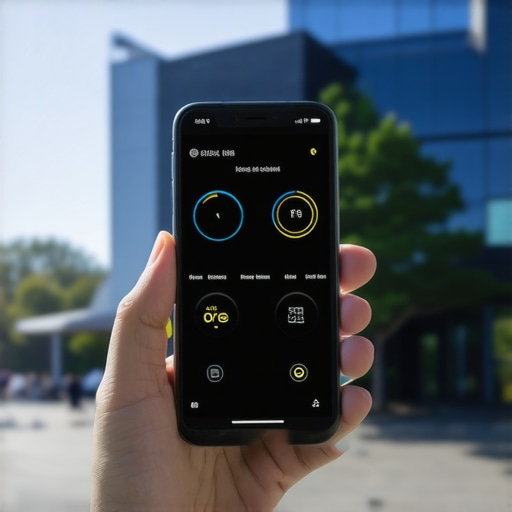
I remember my old mentor, a guy we called ‘Static’ because he could feel a pressure drop just by walking past a register, used to scream at me every time I reached for a manifold gauge without checking the airflow first. ‘You can’t cool what you can’t touch, and you can’t fix what you can’t see!’ he’d bark. He wasn’t just talking about looking at a dirty evaporator coil caked in three years of pet dander. He was talking about the physics of heat transfer. If you don’t know exactly what is happening inside that plenum when you aren’t standing in front of it, you aren’t a technician; you’re just a parts-changer playing a guessing game with a homeowner’s wallet. This is why being able to check your building temperature—and its overall vitals—from anywhere isn’t a luxury for the tech-obsessed; it is the frontline of defense in a modern mechanical system.
The Thermodynamic Reality of ‘Just Checking the Air’
When we talk about temperature, most people think about a simple number on a screen. In the trade, we look at sensible heat (what you feel) and latent heat (the moisture content). In humid climates, your AC is effectively a giant dehumidifier. If your system is oversized or the blower speed is set too high by some ‘tin knocker’ who didn’t read the manual, the air moves too fast across the coil. The evaporator won’t drop below the dew point, meaning you’re cooling the air but leaving the ‘swamp’ behind. Having remote access allows you to monitor how the cycle time correlates with humidity levels. If you see the temp hitting 72 but the humidity climbing to 65%, you have a serious latent heat removal problem that’s going to rot your floorboards and breed mold in your ductwork. This is where preventative hvac repair tips for year-round efficiency become vital, as monitoring these trends prevents a full-scale system meltdown.
“The most expensive equipment in the world cannot overcome a bad duct system.” – Industry Axiom
The 2025 Regulatory Cliff: R-454B and the A2L Transition
We are currently staring down the barrel of a massive industry shift. The ‘gas’ we’ve used for years, R-410A, is being phased out for low-GWP (Global Warming Potential) alternatives like R-454B. Now, here is the kicker: these new refrigerants are classified as A2L, which means ‘mildly flammable.’ Because of this, the new units rolling off the line are packed with leak detector integration and sensors that didn’t exist five years ago. If you have a leak in a residential evaporator coil, the system needs to be able to shut down the compressor and engage the blower to dilute the refrigerant concentration. If you can’t see these alerts on your phone, you’re flying blind. This transition is why R-454B refrigerant transition services and low-GWP refrigerant retrofits are becoming the standard. If your tech isn’t talking to you about system performance testing that includes remote leak monitoring, they are selling you yesterday’s junk at tomorrow’s prices.
The Forensic Diagnosis: Why Sensors Save the Compressor
Listen to the sound of a compressor trying to start against high head pressure. It’s a rhythmic, metallic ‘thunk’ that sounds like a heart murmur. That sound is the sound of money evaporating. Usually, it’s caused by a $20 capacitor that’s drifted out of tolerance or a contactor with pitted points. If you are away for the weekend and your capacitor blows, the indoor blower might keep running, but the ‘juice’ isn’t flowing to the compressor. You’ll see the temp slowly climb from 72 to 85. If you catch that at 74 on your phone, you call for HVAC repair immediately. If you wait until you get home to a 90-degree house, that compressor has been trying to reset on its internal thermal overload for 48 hours. You’ve just turned a $250 repair into an $8,000 replacement. This is the core value of choosing the right hvac fixes—using data to act before the mechanical failure becomes catastrophic.
The Cold Weather Crisis: Furnaces and Flame Rollout
In the winter, the stakes get higher. I’ve seen furnace ignition repair jobs where the homeowner didn’t realize the unit was ‘cycling on high limit’ for weeks. The furnace starts, the heat exchanger gets too hot because of restricted airflow (maybe a dirty filter or a crushed return), and the limit switch kills the flame. Then it cools down and tries again. This ‘short cycling’ beats the hell out of the metal, eventually leading to cracks. A cracked heat exchanger isn’t just a repair; it’s a carbon monoxide factory. When you can monitor your heating cycles remotely, you notice if the furnace is running 20 times an hour. That is a red flag. Whether you need gas line installation for furnaces or electric heater services, the ability to see the run-time data is your early warning system. Many people fall for furnace repair myths debunked by industry experts, but the data from a smart interface doesn’t lie.
“Standard 15-2022 requires mitigation for A2L refrigerants to prevent flammable concentrations.” – ASHRAE Standards
Static Pressure: The Silent Killer
Every ‘Sparky’ knows about voltage drop, but few ‘tin knockers’ understand static pressure. Think of it like blood pressure for your house. If your ducts are too small, your ‘blood pressure’ is high, and your blower motor (the heart) has to work twice as hard. This is where dehumidification services often fail; if the static pressure is wrong, the coil temperature won’t be consistent. When we perform system performance testing, we look at the ‘Total External Static Pressure.’ If you have remote monitoring that tracks blower motor RPM and wattage, we can see the system struggling as the filter loads up with dust. We can literally tell you to change your filter based on the physics of the motor’s power consumption before you even feel the house getting stuffy.
The Myth of the ‘Sales Tech’ and the Priority Solution
I hate sales techs. You know the ones—they show up in a clean uniform, spend five minutes looking at your unit, and tell you that you need a whole new system because the ‘freon’ is low. Here is a trade secret: it’s a sealed system. If the ‘gas’ is low, there is a leak. Period. You don’t ‘top it off’ like an oil change. You find the leak. This is why priority service memberships are actually worth it if they include comprehensive testing and remote monitoring. It keeps the ‘honest grease monkeys’ in charge of your equipment. For those looking at a new install, checking out the ultimate guide to ac installation expert tips for 2025 success will help you avoid the traps of the high-pressure salesman. Real comfort is about physics, not a sales pitch. It’s about ensuring the ‘suction line’ is ‘beer can cold’ and the delta-T across the coil is exactly where the slide rule says it should be. Don’t let your home’s climate be a mystery; get the sensors, monitor the data, and keep the air moving. “