The Deceptive Silence of a Cold Furnace
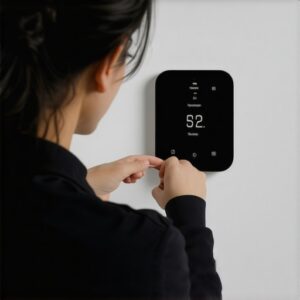
It is 3 AM in the middle of a January cold snap, and the silence is deafening. You do not hear the familiar roar of the draft inducer motor or the click of the contactor repair technician’s work from last season. You look at your glowing smart thermostat. It says it is ‘saving’ you money by keeping the house at 62°F while you sleep. But when the set-point jumps to 70°F at 6 AM, your system begins a violent, high-stress recovery that eats your components alive. This is where the physics of thermodynamics meets the reality of your wallet. Most homeowners think a smart thermostat is a magic wand, but without understanding static pressure and the load on hydronic heating systems or forced air furnaces, you are just fast-tracking a furnace ignition repair bill.
The Narrative Matrix: The $12,000 Flame Sensor
I followed a ‘Sales Tech’ last winter who had quoted a young couple $12,000 for a full system replacement. He told them their control board was fried and their heat exchanger was ‘likely’ cracked because the unit was ‘short cycling.’ I walked in, saw the shiny smart thermostat, and then I looked at the furnace flame sensor. It was covered in carbon buildup. The smart thermostat was programmed with such tight temperature swings that the furnace was firing 15 times an hour. I cleaned the sensor with a piece of emery cloth, adjusted their ‘swing’ settings to allow for longer run times, and charged them for a standard service call. That Sales Tech wanted to junk a perfectly good inverter-driven compressor system because he didn’t understand that the thermostat was the culprit, not the hardware. You have to know the difference between a real failure and a configuration nightmare.
“The most expensive equipment in the world cannot overcome a bad duct system.” – Industry Axiom
The Physics of the Recovery Trap
In Northern climates, we deal with sensible heat. When you let your home drop 8 degrees overnight to save a buck, you aren’t just cooling the air; you are cooling the thermal mass of your home—the drywall, the furniture, the floors. When that smart thermostat kicks in, it calls for ‘Stage 2’ heat immediately. If you have a high-efficiency furnace, the heat exchanger cleaning you skipped last year becomes a bottleneck. The unit runs at maximum capacity for two hours straight to recover that lost heat. This is far harder on the draft inducer motor repair costs you’ll eventually face than if you had just left the temperature steady. Thermodynamics dictates that moving heat is easier than creating it from a dead stop. This is especially true with hydronic heating systems, where the lag time of water-to-air heat transfer can lead to the system overshooting the target and wasting energy.
The MERV Filter and Static Pressure Nightmare
Everyone wants ‘clean air,’ so they buy those thick 1-inch MERV 13 filters. For a 30-year veteran like me, seeing a MERV 13 filter in a standard return is like watching a runner try to sprint while breathing through a wet wool blanket. This MERV filter upgrades obsession, combined with a smart thermostat that keeps the fan running to ‘circulate’ air, leads to massive static pressure. High static pressure kills inverter-driven compressors and blower motors. If your HVAC duct sealing isn’t airtight, that high-pressure fan is just sucking dusty attic air through every crack in your ‘tin’ and blowing it into your lungs. I have seen attic insulation for heating sucked straight into the return because the ‘Pookie’ (mastic) on the duct joints had dried up and failed. Using the right top hvac repair strategies to extend your systems life starts with letting the machine breathe.
“AFUE is the thermal efficiency of combustion equipment… but the delivery system is where the true efficiency is won or lost.” – ASHRAE Standards
The Anatomy of a Smart-Induced Failure
When a thermostat cycles too frequently, the first thing to go is the contactor. It is a mechanical switch, and it only has so many ‘clicks’ in its life. Next is the furnace ignition repair cycle. Every time your furnace starts, the hot surface igniter glows white-hot. If your smart settings cause the furnace to cycle 4 times more than necessary, you are cutting the life of that igniter by 75%. Then there is the furnace flame sensor cleaning issue; frequent short cycles lead to incomplete combustion and faster carbon buildup. [IMAGE_PLACEHOLDER] If you want to avoid these issues, you need to understand how to identify when furnace repair is urgent and why, which often starts with a system that won’t stop clicking or a blower that won’t stop humming. You should also check out our ultimate guide to ac installation expert tips for 2025 success to see how modern controls should actually be integrated.
The Solution: Tuning the Brain to the Body
Stop treating your thermostat like a light switch. If you have a furnace in a cold climate, keep your ‘set-back’ to no more than 3 degrees. Ensure your HVAC duct sealing is handled with real Mastic, not that silver tape ‘Sparky’ uses on electrical boxes. If you are upgrading your system, look for efficient hvac repairs the blueprint for cooler summers and warmer winters that prioritize airflow over ‘gadgets.’ A properly tuned system with a clean heat exchanger and a functional draft inducer motor will always outperform a ‘smart’ home with ‘dumb’ ductwork. Don’t be the homeowner who spends $500 on a thermostat only to cause $5,000 in mechanical damage. Proper preventative hvac repair tips for year round efficiency always start with the fundamentals of airflow and sensible heat management.