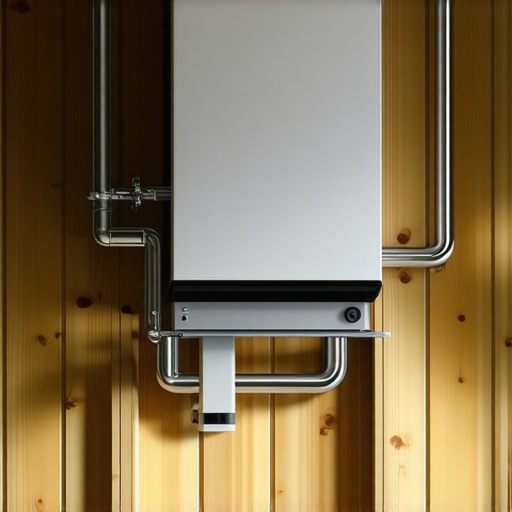
The Sound of a 3:00 AM Ceiling Collapse
I’ve spent three decades crawling through blown-in insulation that feels like fiberglass cotton candy and smelling the distinct, metallic tang of a draft inducer motor repair gone wrong. If you’ve never stood in a dark attic when it’s ten degrees outside, listening to the rhythmic drip-drip-drip of an unmonitored condensate pan, you haven’t lived the HVAC life. In the frozen North, from Chicago to the Northeast, an attic-mounted unit isn’t just a machine; it’s a ticking time bomb of potential water damage and refrigerant loss. Most homeowners think their system is a set-it-and-forget-it appliance. They’re wrong. Without an integrated leak detector, you’re playing Russian roulette with your drywall. My mentor used to scream, ‘You can’t cool what you can’t touch!’ but in the winter, the mantra changes: ‘You can’t heat what’s leaking juice or water into the rafters.’
“The most expensive equipment in the world cannot overcome a bad duct system or a lack of secondary safety controls.” – Industry Axiom
The Anatomy of an Attic Failure: A Forensic Diagnosis
Let’s talk about the ‘Sales Tech’ scam. Last February, I followed a guy who’d just quoted a homeowner $22,000 for a total ac installation and furnace replacement. He told her the evaporator coil was ‘shot’ and the heat exchanger was ‘leaking gas.’ I climbed up there with my sniffer and a flashlight. The unit was bone dry of refrigerant, sure, but it wasn’t a dead compressor. It was a microscopic pinhole in the suction line caused by vibration against a poorly hung ‘tin knocker’ bracket. More importantly, the secondary drain pan was rusted through because the float switch had been bypassed by a previous ‘sparky’ who didn’t want to deal with nuisance trips. All she needed was a proper efficient hvac repair and a $300 leak detector integration. I saved her twenty grand, and that sales tech likely still hasn’t forgiven me.
In cold climates, the physics of an attic unit are brutal. You’re dealing with massive temperature differentials. When you have a two-stage furnace installation in an unconditioned attic, the transition from ‘off’ to ‘high stage’ creates rapid expansion and contraction in the metal. This is where the fatigue happens. We focus on leak detectors because the attic is the one place where a failure isn’t just a comfort issue—it’s a structural disaster. If a refrigerant leak occurs, the ‘juice’ carries oil with it. That oil eats through attic floorboards and stains your ceiling with a yellow ring that no amount of primer can truly hide. If you don’t have an electronic leak detector integrated into the board, that system will keep pumping until the compressor burns out, smelling like a sour, acidic mess that lingers for weeks.
Thermodynamic Zooming: Why Humidity and Pressure Matter
In the North, we worry about the ‘Ice Plug.’ When a furnace runs, it produces combustion byproducts. If your draft inducer motor repair wasn’t done with precision, or if the venting isn’t sloped right, that moisture freezes. But on the AC side, the ‘Monsoon Effect’ happens in the summer. An attic can reach 140°F. The evaporator coil must drop below the dew point to remove latent heat. This is the moisture you feel in the air. If the unit is slightly oversized—a common mistake by hacks—it ‘short cycles.’ It cools the air fast but doesn’t run long enough to pull the humidity out. The result? A cold, swampy house and a condensate line that’s constantly overwhelmed.
“Properly designed HVAC systems must account for both sensible and latent heat loads to ensure occupant comfort and structural integrity.” – ASHRAE Standards
We recommend SEER2 compliant upgrades specifically because they often include better onboard diagnostics. Modern systems can actually sense a drop in pressure and shut the system down before the compressor starts ‘slugging’—trying to compress liquid instead of gas. If you’re still running an old R-22 beast, you’re on borrowed time. The refrigerant alone now costs more than some people’s cars. Integration of a dedicated leak detector (both for refrigerant and for water overflow) is the only way to safeguard against a $10,000 ceiling repair bill. This is especially true for energy recovery ventilators and demand-controlled ventilation systems that pull in outside air. If those sensors fail in the dead of winter, you could be looking at a frozen coil and a flooded hallway by sunrise.
The Mechanical Anatomy: Repair vs. Replace
When I look at a system, I see it as a biological entity. The compressor is the heart, the refrigerant is the blood, and the ductwork is the lungs. Most people focus on the ‘box’ (the furnace or AC), but the ‘box’ is rarely the problem. If you’re considering furnace repair, ask yourself: is the heat exchanger cracked? If so, pull the plug. If it’s just a faulty capacitor or a gummed-up furnace filter replacement issue, fix it. But if that unit is in the attic and lacks a pan switch or a refrigerant leak sensor, you aren’t ‘fixing’ anything; you’re just delaying the inevitable. I’ve seen ac installation jobs where they didn’t even use ‘Pookie’ (mastic) on the plenum. Air leaks out, the attic gets cold, the pipes sweat, and suddenly you have mold. It’s all connected.
For those with specialized systems, like a pellet stove repair or radiator replacement, the logic remains the same: physics doesn’t care about your feelings. Whether it’s an industrial heater service or a restaurant kitchen exhaust repair, if you aren’t monitoring for leaks, you’re failing. In a commercial setting, a leak means lost revenue. In your attic, it means a ruined home. Stop listening to the sales guys who want to sell you a shiny new cabinet without checking your static pressure. Demand a leak detector, check your drain lines, and for heaven’s sake, stop using those cheap fiberglass filters that look like blue spiderwebs. They don’t stop anything but the big chunks, and they’ll lead to a clogged evaporator coil faster than you can say ‘frozen suction line.’ Comfort is physics, not magic. Protect your attic, protect your ceiling, and stop letting the ‘Sales Techs’ get the better of you.