The Ghost in the Machine: Why Your High-Tech Thermostat Is Acting Like a Poltergeist
My old mentor, a man who spent forty years wrestling with galvanized sheet metal and soot-stained burners, used to scream at me, ‘You can’t cool what you can’t touch, and you can’t control what you don’t power!’ This was usually followed by a heavy wrench hitting the floor for emphasis. He wasn’t just being a cranky old tin knocker; he was teaching me the fundamental physics of HVAC control systems. Most homeowners think a thermostat installation is as simple as hanging a picture frame. You click it onto the wall, the screen lights up, and you’re done. But then, two weeks later, in the middle of a sub-zero night where you need your electric heater services to actually work, the furnace starts clicking like a telegraph, the display flickers, and the blower fan won’t engage. This isn’t magic; it’s a failure of the electrical return path.
The Mechanical Anatomy: Why Your Old ‘Mercury’ Logic Doesn’t Work for App-Controlled Heating Systems
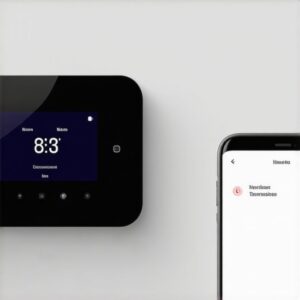
In the old days, a thermostat was a simple mechanical switch. A bimetallic coil reacted to temperature, tilting a glass bulb of mercury to complete a circuit. It didn’t need its own power. However, modern app-controlled heating systems are essentially small computers. They have Wi-Fi radios, color screens, and complex logic boards that calculate HVAC load calculation services in real-time. These components need a constant diet of 24-volt AC power. If your existing wiring only has two or four wires—typically Red (Power), White (Heat), Yellow (Cooling), and Green (Fan)—your new smart gadget is going to try to ‘steal’ power. It pulls a tiny bit of current from the heating or cooling circuit without actually tripping the relay. It’s like trying to sip through a straw that has a dozen tiny holes in it. Eventually, the sparky who wired your house forty years ago is going to haunt you because that ‘power stealing’ method creates electrical noise. This noise can confuse your furnace control board, leading to intermittent failures that even a standard annual heating inspection might miss if the tech isn’t looking for voltage drops.
“Modern control circuits require a stable, continuous power source to maintain logic communication without disrupting the load circuit.” – ASHRAE Standards
The Common Wire (C-Wire): The Unsung Hero of the 24V Circuit
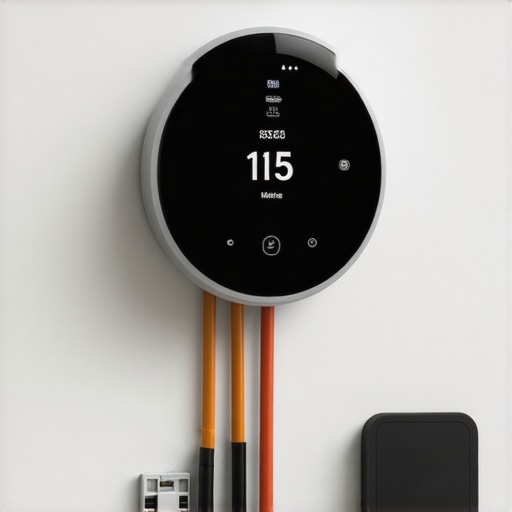
The C-wire, or ‘Common’ wire, completes the electrical circuit. Think of the Red wire as the ‘hot’ side that brings the 24V from the transformer in your furnace or air handler. To have a complete circuit that powers the thermostat itself, that electricity needs a way back to the transformer. That’s the C-wire. Without it, the circuit is open, and your thermostat has to resort to trickery to stay alive. This is especially critical in zoning system installation where multiple thermostats are fighting for the same limited power from a single transformer. If you are dealing with a garage heater installation or a ventless gas heater services setup, you might find that the wiring is even more primitive, often lacking any extra conductors in the wall. When we perform combustion analysis, we often find that short-cycling caused by poor thermostat power leads to incomplete combustion and soot buildup in the heat exchanger.
The Physics of the North: Why Power Reliability is a Safety Issue
In cold northern climates, a failing thermostat isn’t just an inconvenience; it’s a burst pipe waiting to happen. During a polar vortex, your furnace’s heat exchanger expands and contracts under immense thermal stress. If your smart thermostat is ‘power robbing’ and causes the gas valve to chatter or drop out, you risk a flame rollout or a cracked heat exchanger. This is why warranty service plans often have fine print about proper installation. If you haven’t followed the choosing the right HVAC fixes protocol, you might find your claim denied because of an electrical mismatch. A C-wire adapter is a bridge that bypasses the need to pull new wires through your finished walls. It uses a diode splitter to multiplex the signals, providing a dedicated path for power without interfering with the ‘Call for Heat’ signal.
Repair ($500) vs. Replace ($8,000): When to Pull the Plug
I’ve seen ‘Sales Techs’ tell a homeowner they need a whole new $12,000 furnace just because their Nest thermostat was acting up. It’s a scam. Often, the issue is simply that the transformer is undersized for the new electronics, or a $20 C-wire adapter is missing. If your system is under 12 years old and has been maintained with preventative HVAC repair tips, don’t let someone talk you into a full replacement over a thermostat glitch. Check the internal wiring first. If you see ‘pookie’ (mastic) or old electrical tape covering up loose connections behind the wall plate, that’s your first red flag. For more on this, look at efficient HVAC repairs to understand how small electrical components impact overall system longevity. If you’re unsure, a professional thermostat installation usually includes a full system diagnostic to ensure the 24V transformer can handle the load. Don’t let your comfort be compromised by a missing copper strand. For expert help, you can always contact us to ensure your system is wired for the future, not stuck in the ‘mercury’ past. Maintaining your system with heating service hacks for 2025 will keep your home warm and your smart tech actually smart.