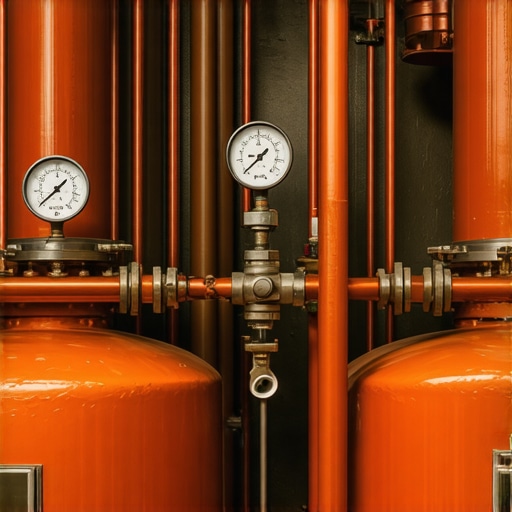
The Sound of a Dying Giant: Why Your School Boiler is Screaming
You know the sound. It is 6:00 AM in a hollowed-out brick schoolhouse in the middle of a January freeze. The radiators are banging like a drum line, and the principal is on the phone complaining that the third-grade wing is 58 degrees while the gym is a sauna. Most ‘Sales Techs’—those guys in crisp white shirts who couldn’t find a manifold if it hit them in the face—would walk in and tell you the whole system needs to be ripped out for $200,000. They see an old cast-iron beast and think ‘commission.’ I see a masterpiece of thermodynamics that just needs someone who actually understands the difference between sensible and latent heat.
“The most expensive equipment in the world cannot overcome a bad duct system.” – Industry Axiom
My old mentor, a guy who had more soot in his lungs than a chimney sweep, used to scream at me, ‘You can’t move heat if you can’t touch the medium!’ He was right. Whether you are dealing with church heating systems or a 1950s elementary school, the physics remains the same. If the steam is trapped by a failed vent or the water is sludge-thick, you are just burning cash. Understanding choosing the right HVAC fixes is the first step in keeping these old systems alive. Let’s get into the guts of it.
The Steam Manifesto: Latent Heat and the Ghost in the Pipes
Steam is a different animal. It relies on the latent heat of vaporization—970 BTUs of energy released when that gas turns back into water inside the radiator. If your school uses steam, you aren’t just moving hot water; you are managing a phase change. The biggest enemy here isn’t the boiler itself; it is the steam traps. When a trap fails open, it blows live steam into the return lines, killing your efficiency and sending your fuel bills into the stratosphere. If it fails closed, that radiator is a cold block of iron. This is why boiler maintenance services are not optional. You need a combustion analysis to ensure that the burner is not just ‘firing’ but actually optimized for the draft conditions of that specific day.
Hot Water Systems: The Physics of Circulation
Hot water (hydronic) systems are gentler but more finicky about system performance testing. Here, we deal with sensible heat. We are just moving liquid, which means the pump is the heart. If your draft inducer motor repair was handled by a ‘Sparky’ who didn’t understand the sequence of operations, your boiler might be short-cycling. Short cycling is a slow death for a boiler. It prevents the heat exchanger from reaching a steady state, leading to condensation—and in the world of heating, condensation is acidic. It eats the cast iron from the inside out. This is where preventative HVAC repair tips become the difference between a 40-year life span and a 15-year catastrophe.
“Standard practice for the commissioning of HVAC systems requires that all components be verified for operational integrity before seasonal peaks.” – ASHRAE Standard 202
The Anatomy of Failure: From Sight Glasses to Mud Legs
In an aging school boiler, the ‘mud leg’—the lowest part of the water jacket—is where the sins of the past accumulate. Scale, rust, and minerals settle there. If you aren’t doing a regular blowdown, you are insulating the water from the fire. You’re literally trying to boil water through a layer of rock. Then there is the wiring repair for heating systems. Old cloth-bound wire becomes brittle. A single vibration from a failing bearing can cause a short that shuts down the whole wing. This is why I always recommend priority service memberships for institutional buildings; you don’t want to be ‘just another ticket’ when the pipes are about to freeze.
Smart Tech on Old Iron: The Geofencing Revolution
Don’t let the rust fool you; these systems can handle 21st-century brains. A smart thermostat setup coupled with geofencing temperature control can save a school district thousands. Why heat the auditorium to 72 degrees on a Tuesday night when the only thing in there is a stray cat? However, you can’t just slap a Nest on a 2-pipe steam system and walk away. You need to understand the lag time. Steam takes time to travel. If your geofencing temperature control is too aggressive, the boiler will lag behind the demand, causing massive overshoots in temperature. It’s about ‘pacing,’ not just ‘switching.’
The Forensic Diagnosis: When to Pull the Plug
So, when is the boiler actually dead? It isn’t when the furnace filter replacement was forgotten (though that’s a different headache). It’s when the heat exchanger is breached. If I see ‘the juice’ (refrigerant) isn’t the issue, but I see water leaking from the internal sections of a cast-iron boiler, we are talking about a major surgery. At that point, you look at the math. A $10,000 repair on a system that is 4% efficient is a bad investment compared to heating service innovations like high-efficiency condensing boilers. But beware: those new units are ‘Tin Knocker’ nightmares if the venting isn’t done right. You can’t just vent a 95% efficient boiler into an old masonry chimney without a liner, or the acidic exhaust will melt the mortar and collapse your flue. For more on these traps, check out furnace repair myths debunked.
The Veteran’s Final Word
Maintenance isn’t just about cleaning a sensor; it’s about respecting the thermodynamics. Whether it’s wiring repair for heating systems or a complex combustion analysis, these machines require an architect’s eye and a mechanic’s hands. Don’t let a ‘Sales Tech’ talk you into a replacement you don’t need, but don’t ignore the screech of a draft inducer motor until it’s a 3 AM emergency. Real comfort is physics, not magic. If you’re ready to stop guessing and start measuring, it’s time to get a real tech on the roof. [{“@context”: “https://schema.org”, “@type”: “HowTo”, “name”: “Aging School Boiler Maintenance”, “step”: [{“@type”: “HowToStep”, “text”: “Perform daily blowdown of the low water cut-off to remove sediment.”}, {“@type”: “HowToStep”, “text”: “Conduct a monthly combustion analysis to check O2 and CO levels.”}, {“@type”: “HowToStep”, “text”: “Inspect steam traps using ultrasonic or thermal imaging tools.”}, {“@type”: “HowToStep”, “text”: “Verify all safety limits and pressure relief valves are operational.”}]}]