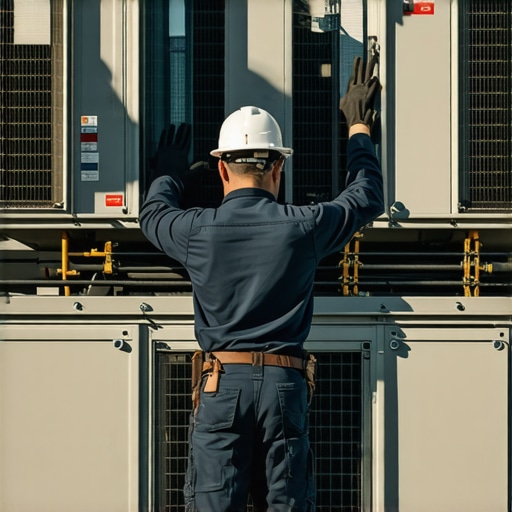
Listen, if you have spent three decades dragging a manifold gauge set through crawlspaces or balancing on a commercial parapet wall in a February sleet storm, you develop a sixth sense for when the industry is about to pull the rug out from under you. We are standing on that ledge right now. The shift from R-410A to low-GWP (Global Warming Potential) refrigerants like R-454B and R-32 isn’t just another ‘green’ suggestion; it is a regulatory cliff that will fundamentally change how you heat and cool your business. Last month, I followed one of those ‘Sales Techs’—you know the type, clean fingernails, shiny truck, and a commission-driven heart—who had quoted a local church board $15,000 for a full system replacement. He told them their ten-year-old RTU was ‘illegal’ because of the new EPA refrigerant phase-downs. It was a flat-out lie. All the unit needed was a $20 capacitor and a proper cleaning of the flame sensor. I caught him in the parking lot and told him he was the reason people don’t trust us. But while his ‘illegal’ claim was a scam, the reality of the coming 2025 mandate is very real, and if you don’t understand the physics of the transition, you are going to get fleeced by the next guy in a tie. This isn’t just about ‘swapping gas.’ It’s about thermodynamic efficiency, A2L flammability ratings, and why your old ductwork probably can’t handle the latent heat loads of a modern high-efficiency furnace installation.
The Thermodynamic Zoom: Why Low-GWP Matters to Your Bottom Line
When we talk about refrigerants, we are talking about enthalpy—the total heat content of a system. The juice we’ve used for years, R-410A, is being phased out because its GWP is over 2,000. The new A2L refrigerants drop that number significantly, but they bring a new headache: they are ‘mildly flammable.’ In a commercial setting or a large space like a sanctuary, this means you can’t just hack a system into place. You need leak detector integration built directly into the evaporator coil cabinet. If that sensor detects a leak, it shuts the system down and cranks the blower to dilute the gas. This is why Manual J calculations are more critical than ever. You can’t just ‘rule of thumb’ a 5-ton unit into a space anymore. If you oversize a unit with these new refrigerants, you won’t just get ‘short cycling’ (which kills compressors); you risk improper oil return and sensor trips that will leave your building in a lockout state. I’ve seen church heating systems that were designed in the 80s where the tin knocker just slapped some oversized trunk line together and called it a day. In the North, where we deal with a real polar vortex, that lack of precision leads to cracked heat exchangers and dangerous flame rollout. You need a pro who understands that airflow is the lifeblood of the system. As we say in the trade:
“The most expensive equipment in the world cannot overcome a bad duct system.” – Industry Axiom
The North Climate Reality: Furnaces and Cold Climate Heat Pumps
In our neck of the woods, where the mercury drops into the negatives, the ‘all-electric’ dream used to be a joke. But modern cold climate heat pumps have changed the math. We aren’t just moving sensible heat; we are extracting energy from sub-zero air. However, if your tech isn’t performing a combustion analysis on your backup furnace, you are literally burning money. I’ve seen furnaces that looked ‘fine’ but were dumping 400ppm of CO up the flue because the gas pressure was never clocked at the meter. When we talk about high-efficiency furnace installation, we are talking about condensing units that produce acidic condensate. If that drain line freezes because a ‘sparky’ or a lazy installer didn’t heat-tape it, your furnace becomes a $5,000 boat anchor. For businesses with aging infrastructure, baseboard heater repair is often a better stopgap than a cheap furnace swap. But if you are moving toward 2025, you need to look at ultimate guide to ac installation expert tips for 2025 success to understand how these A2L systems integrate with your existing footprint. The suction line on these new units needs to be ‘beer can cold’ just like the old days, but the pressures are different, and the margin for error is zero. If you don’t have predictive maintenance alerts through remote thermostat access, you are playing Russian roulette with your HVAC budget.
The Regulatory Trap: Why Cheap Units Will Cost You More
I see businesses trying to save $2,000 by buying ‘dry-charge’ units or old R-410A stock. Stop. The price of R-410A is going to skyrocket as production is cut by 40% this year. If you have a leak in three years, ‘topping it off’ will cost as much as a mortgage payment. This is why preventative hvac repair tips for year-round efficiency are no longer optional. You need HVAC maintenance plans that include nitrogen pressure testing. These new refrigerants have smaller molecules; if there is a pinhole leak in a copper joint, the juice will find it. I don’t care how much ‘pookie’ (mastic) you slap on the outside of the plenum—if the internal pressures aren’t right, the system will fail.
“Proper refrigerant management is not just a legal requirement under EPA Section 608; it is the cornerstone of mechanical longevity.” – EPA Regulatory Guide
For churches and commercial spaces, remote thermostat access is the only way to manage these loads. You can’t have the choir director cranking the heat to 80 on a Tuesday and leaving it there until Sunday. You need a system that sends predictive maintenance alerts to your phone when the static pressure starts to climb. That’s usually just a dirty filter, but in a 2025-compliant system, a dirty filter can lead to an evaporator freeze-up that triggers a leak sensor and shuts the whole building down. If you are confused about your options, you should check out choosing the right hvac fixes what homeowners need to know because the same physics apply to your business. Don’t let a Sales Tech talk you into a $30,000 retrofit that doesn’t include a Manual J calculation. If they didn’t bring a tape measure and check your insulation, they aren’t technicians—they’re just guys in a fancy van. For a real diagnosis, you can always contact us to see what’s actually happening under the hood of your rooftop unit.