Why Your Garage Door Spring Snapped and the Safest Way to Get Your Car Out
It usually happens at the worst possible moment. You are already running five minutes late for a meeting in downtown San Francisco or heading out for a school drop-off in Folsom. You press the button on your remote, expect the familiar hum of the motor, but instead, you are greeted by a bone-chilling “BANG” that sounds like a gunshot echoing through your home. You look at your door, and it hasn’t budged. Or worse, it’s crooked and hanging precariously. This is the classic signature of a snapped spring, a mechanical failure that effectively turns your garage door into a multi-hundred-pound dead weight. When it comes to bay area garage doors, this is one of the most common – and potentially dangerous – service calls we receive.
As experts in garage door repair, we understand the immediate panic that sets in. Your car is trapped inside, and your schedule is ruined. However, before you attempt to force the door open or reach for a ladder, it is vital to understand the physics at play. The garage door is the single heaviest moving object in your entire home. It relies on a delicate balance of counterweight and tension to operate. When a spring snaps, that balance is gone. This article will guide you through why this happened, why you should never attempt a DIY fix, and the only safe method to get your vehicle out so you can get on with your day while waiting for professional assistance.
The Science of Failure: Why Garage Door Springs Snap
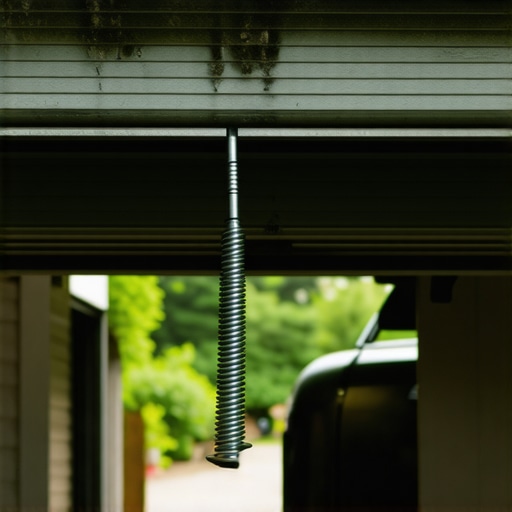
To the naked eye, a garage door spring looks like a simple piece of coiled metal. In reality, it is a high-tension energy storage device. Whether you have a torsion spring system or an extension spring system, these components do the heavy lifting that your opener simply cannot handle alone. Understanding why they fail requires looking at several factors, ranging from simple math to environmental chemistry.
The 10,000-Cycle Life Expectancy
Most standard garage door springs are manufactured with a rated “cycle life.” A single cycle consists of the door opening and closing once. The industry standard for a residential spring is typically 10,000 cycles. While that sounds like a lot, let’s do the math. If you live in a busy household in Roseville or El Dorado Hills and use your garage door four times a day (morning departure, lunch return, afternoon departure, evening return), you are looking at roughly 1,460 cycles per year. At this rate, your springs will reach their engineered limit in about 6.8 years. If you use the garage as your primary entrance, that lifespan drops even further. Eventually, metal fatigue sets in, the molecular structure of the steel weakens, and the spring simply gives up. This is why garage door spring replacement is an inevitable part of homeownership.
The Impact of Northern California’s Climate
Geography plays a significant role in the longevity of your hardware. For those seeking garage door repair bay area, coastal humidity is a silent killer. Salt air and moisture accelerate rust and corrosion. Rust creates friction between the coils every time the spring expands and contracts. This friction creates “pitting,” which acts as a stress concentrator, leading to a snap much sooner than the 10,000-cycle rating would suggest. Conversely, in the Greater Sacramento area, including Lincoln and Folsom, we deal with significant temperature fluctuations. Cold snaps can make metal more brittle. A spring that is already near the end of its life is much more likely to snap on a freezing January morning than a mild spring afternoon.
Lack of Proper Maintenance
Many homeowners treat their garage door like a “set it and forget it” appliance, much like they might forget about their HVAC system until it stops working. Just as you might need emergency HVAC services: What to do when your furnace dies at 2 AM, your garage door requires preventative care. Without regular lubrication, the spring binds and grinds. We highly recommend visiting bayareagaragedoorrepairinc.com to learn about maintenance schedules that can extend the life of your hardware and prevent these sudden failures.
The Extreme Danger of DIY Spring Repair
In the age of YouTube tutorials, it is tempting to think you can fix garage door spring issues yourself with a few tools from the local hardware store. We cannot emphasize this enough: Do not attempt this. There is a reason safety warning videos regarding garage door springs have amassed over 15 million views online; the stakes are incredibly high.
A torsion spring is wound under hundreds of pounds of torque. To replace it, a technician must use “winding bars” to manually add tension to the new spring. If a winding bar slips, or if the spring breaks while being tensioned, the force released is equivalent to a high-velocity projectile. We have seen DIY attempts result in shattered bones, lost fingers, and catastrophic facial injuries. Furthermore, if the door is not perfectly balanced during the install, it can come crashing down, crushing anything – or anyone – beneath it. Professional technicians undergo years of training to handle this tension safely. When you need to fix garage door components that are under load, the cost of a professional is a small price to pay for your physical safety.
If you are a hobbyist who enjoys working in your garage, you might have considered a ductless mini-split installation: The perfect climate fix for your garage workshop. While you can certainly enjoy a climate-controlled DIY space, the garage door springs should remain strictly off-limits to anyone without professional certification and the correct safety equipment.
How to Safely Get Your Car Out (The Emergency Protocol)
If your spring has snapped and your car is trapped, you likely need a solution right now. Here is the safest way to manually operate the door to get your vehicle out while you wait for urgent garage door repair.
Step 1: Disconnect the Opener
Do NOT continue to press the wall button or remote. When the spring is broken, the door weighs its full 150 to 400 pounds. The electric motor is only designed to move a balanced door. If you keep trying to force it, you will strip the gears or burn out the motor, leading to a much more expensive garage door opener repair. Pull the red emergency release cord to disconnect the door from the carriage.
Step 2: The Two-Person Rule
Never attempt to lift a door with a broken spring alone. You are essentially dead-lifting the entire weight of the steel or wood panels. You need at least one other strong adult to help you. Stand on either side of the door, use proper lifting form (legs, not back), and lift the door slowly and evenly. If the door feels too heavy or starts to bind, stop immediately. A door that is lifted unevenly can jump the tracks, leading to a situation where you need bayareagaragedoorrepairinc.com for off-track services.
Step 3: Secure the Door
Once the door is fully open, do not trust it to stay there. Without the springs, gravity is working against you. Have your partner hold the door while you place heavy-duty vice grips on the tracks directly under the rollers, or prop the door up with sturdy 2×4 wooden blocks. Only once the door is mechanically secured should you drive your car out. Once the car is out, carefully lower the door back down. Do not leave it open, as this puts immense strain on the remaining components and is a major security risk.
If at any point the process feels unsafe, it is time to call for emergency garage door repair. Much like hearing a screeching noise in your furnace: When to call for a blower motor replacement, a garage door making grinding or straining noises during a manual lift is a sign of imminent mechanical failure elsewhere in the system.
Identifying Torsion vs. Extension Springs
When you call for garage door repair bay area, the technician will ask what kind of system you have. Being able to identify this over the phone helps them arrive with the correct parts.
- Torsion Springs: These are located on a metal shaft directly above the garage door opening. They slide onto the shaft and “wind” up to create torque. These are the most common in modern homes across Sacramento and the Bay Area because they are smoother and last longer.
- Extension Springs: These are found on the sides of the door, running parallel to the horizontal tracks. They stretch (extend) to provide lift. When these snap, they can fly across the garage like a whip, which is why they should always have a safety cable running through the center.
Often, when a spring snaps, it puts sudden, violent stress on the cables. This is why garage door cable replacement is frequently performed at the same time as a spring repair. If you notice a cable is loose or frayed, read about the dangerous reason your garage door cable keeps fraying and how to fix it to understand why this is a critical safety issue.
Why Professional Replacement is Non-Negotiable
Replacing a spring isn’t just about putting a new piece of metal on a bar; it’s about precision calibration. A professional service like 24×7 Pro Service ensures that the new spring is the exact wire gauge and length required for your specific door weight. If the spring is too strong, the door will fly open dangerously; if it’s too weak, the fix garage door opener efforts you made earlier will be in vain as the motor continues to strain.
Furthermore, a pro will inspect the entire system. They will check the drums, the bearing plates, and the rollers. We often find that when a spring goes, the rollers are also seized. Replacing them via bayareagaragedoorrepairinc.com ensures the door operates quietly and reduces the load on your new springs. This holistic approach is why professional garage door repair is the only way to ensure the long-term safety of your home.
We serve a wide range of communities, providing commercial garage door repair for businesses and residential services for homeowners in El Dorado Hills, Folsom, Roseville, Lincoln, and the Greater Sacramento area. Whether it’s a standard sectional door or a heavy industrial roll-up, the physics remain the same: respect the tension.
Conclusion: Prevention and Peace of Mind
A snapped garage door spring is more than an inconvenience; it is a major safety hazard that renders your home’s largest exit useless. By understanding the cycle life of your springs and the impact of the Northern California climate, you can better predict when a failure might occur. Remember, while getting your car out in an emergency is possible with a partner and extreme caution, the actual repair should always be left to the experts.
To avoid being caught off guard, consider the benefits of priority service memberships, which ensure you never wait for a technician again and receive regular inspections to catch fraying cables or weakening springs before they snap. If you are currently facing a garage door emergency, don’t wait. Whether you need a fix garage door opener or a complete garage door spring replacement, our team is ready to help.
For reliable, fast, and safe emergency garage door repair in the Bay Area and Greater Sacramento, contact us today at bay area garage doors. We will get your door back on track and your life back on schedule.