The Sound of a Dying Desert Breeze
You know the sound. It is not the steady, rhythmic hum of a well-oiled machine; it is a wet, sputtering gasp or a high-pitched screech that sounds like a banshee trapped in a tin box. I have spent three decades crawling across blistered rooftops in the high desert, and let me tell you, when the thermometer hits 105°F, your evaporative cooler is the only thing standing between you and a very expensive, sweaty afternoon. My old mentor, a man who could diagnose a bad compressor from three houses away, used to scream at me, ‘You can’t cool what you can’t touch!’ This is the fundamental law of the desert. If the air is not hitting every square inch of those saturated pads, you are just blowing hot, dry dust into your living room. Airflow is not just a suggestion; it is the absolute king of thermodynamics.
We are dealing with the physics of sensible heat versus latent heat. In an arid climate, we use the evaporation of water to strip heat from the air. It is simple, until it isn’t. When a ‘Sales Tech’—those guys who look like they have never seen a drop of pookie (mastic) in their life—tells you that your whole unit is ‘shot’ because the air feels warm, they are usually full of it. Most of the time, it is a $40 part and a bit of technical sweat. Let’s look at the mechanical anatomy of these beasts and why they fail when you need them most.
“The most expensive equipment in the world cannot overcome a bad duct system or improper airflow balance.” – Industry Axiom
The Forensic Diagnosis: The Water Pump and the ‘Spider’ Lines
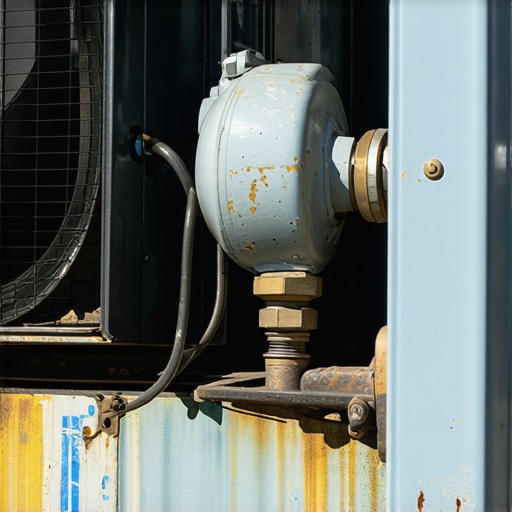
The heart of your swamp cooler is the pump. It’s a simple little induction motor, but it lives in a brutal environment. Mineral deposits from hard water are the silent killers here. When that pump starts to fail, you might hear a low-frequency hum but see no water hitting the pads. Without water, you’re just running a giant, inefficient fan. I’ve seen pumps seize up because the homeowner didn’t perform a basic preventative HVAC repair before the first heatwave hit. If the pump is spinning but the pads are dry, check the spider lines. These are the small plastic tubes that distribute water. They get clogged with calcium faster than a ‘sparky’ (electrician) can blow a fuse. If you don’t clear them, you get dry spots. Dry spots mean hot air bypasses the cooling media entirely.
The Float Valve: The Unsung Hero of the Sump
Next up is the float valve. This is the same tech you find in a toilet tank, but when it fails on a roof, it either starves the unit of water or causes a constant overflow that ruins your shingles. I once followed a tech who quoted a homeowner for a full pan replacement when all she needed was a new brass float. It’s a classic scam. You want that water level just right—not so high it’s spilling into the overflow pipe, and not so low the pump starts sucking air and cavitating. If you’re hearing a constant trickling sound, your float is stuck or the washer is shot. This is a basic HVAC fix that every homeowner should understand before calling out the big rigs.
The Motor and the V-Belt: The Screech of Failure
If you hear a screeching sound, your V-belt is either glazed or slipping. A belt should have about an inch of play; too tight and you’ll burn out the motor bearings; too loose and you won’t get the static pressure needed to move air through the house. And let’s talk about that motor. Swamp cooler motors are often open-frame, meaning they breathe the same humid air they create. When the bearings start to go, they emit a sharp, metallic whine. This is where zoning system installation becomes irrelevant if the prime mover can’t even turn the blower wheel. I have seen motors burn out because a homeowner ignored a $15 belt for two seasons.
The Thermodynamics of the Monsoon Effect
In places like Nevada or Arizona, we hit the ‘Monsoon Effect’ in late July. This is the ‘Thermodynamic Zooming’ part of the lesson. When the ambient humidity rises above 30-40%, evaporative cooling loses its efficiency. The air is already ‘full’ of water, so it can’t take on more. This is when people think their unit is broken. It’s not broken; it’s just physics. During these times, IAQ (Indoor Air Quality) improvement services become vital. If you’re forcing high-humidity air into a home, you’re inviting mold. This is why some folks supplement with infrared heater installation for the winter or biomass boiler services, but in the summer, if the swamp cooler fails, you are at the mercy of the dew point. We often see homeowners try to ‘smart’ their way out of it with a voice control setup Alexa Google, but no amount of voice commands can change the psychrometric chart.
“Ventilation systems must be designed to provide required outdoor air rates under all operating conditions.” – ASHRAE Standard 62.1
The Crossover: When Winter Meets Summer
I often get calls for limit switch replacement on furnaces during the summer because people try to run their furnace fan to help the swamp cooler. Don’t do it. The limit switch is a safety device designed to shut off the gas if things get too hot, but if you’re messing with the wiring to bypass the cooler’s controls, you’re asking for a fire. Similarly, if you have pellet stove repair needs or are looking into snow melt systems installation for the winter, remember that your ductwork is a shared highway. A dryer vent cleaning might seem unrelated, but back-pressure in a small house affects how the whole building ‘breathes.’ Even a simple furnace filter replacement can change the static pressure of the entire home, impacting how your swamp cooler’s air distributes through the vents.
The 2025 Transition: R-410A and the Future
We are currently facing the death of R-410A refrigerant. While swamp coolers don’t use ‘juice’ or ‘gas’ (refrigerant) in the traditional sense, the skyrocketing cost of AC repairs is making people lean harder on their evaporative units. If you are looking for efficient HVAC repairs, you have to realize that keeping your swamp cooler in top shape is the best hedge against the expensive A2L refrigerant transition coming in 2025. Don’t be the person who ignores a limit switch replacement or a leaky biomass boiler in the winter, only to have the swamp cooler’s tin knocker (duct guy) find a rusted-out plenum in July.
In conclusion, your swamp cooler is a mechanical lung. It needs clean water, a strong heart (motor), and clear veins (spider lines). If you treat it like a ‘set it and forget it’ appliance, it will fail you on the hottest day of the year. Check your pads, tension your belts, and for heaven’s sake, if you’re not sure what you’re looking at, contact us before you’re stuck in a 110-degree living room with nothing but a glass of lukewarm water and a broken dream. Comfort isn’t magic; it’s just physics, maintenance, and knowing when a ‘Sales Tech’ is blowing smoke up your flue.