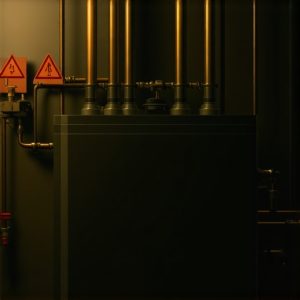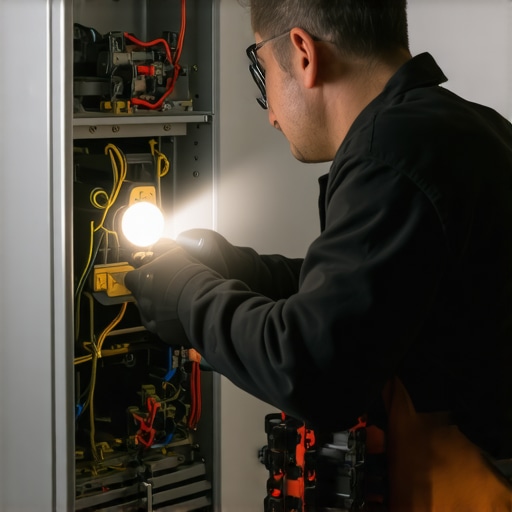
You hear that? It is a rhythmic, metallic ticking sound echoing through the floorboards at 3:00 AM while the outside temp drops to a bone-chilling 10 degrees. Most homeowners ignore it, thinking it is just the house ‘settling.’ To a veteran who has spent thirty years in crawlspaces, that sound is the death rattle of a stressed heat exchanger expanding against its mounting brackets. It is the sound of a system screaming for help. I have seen what happens when that scream goes unanswered. I remember following a ‘Comfort Advisor’—which is just a fancy name for a guy who gets a 15% commission on equipment sales—into a suburban home last November. He told a terrified young couple that their five-year-old furnace was a ‘ticking time bomb’ and that they needed a $14,000 replacement immediately because he saw a speck of rust on the cabinet. I pulled the blower motor, slid my borescope into the primary cells, and found nothing but clean metal. The ‘dangerous gas’ he claimed to detect? It was a tiny leak at a compression fitting on the gas valve that took half a turn of a wrench to fix. That is the difference between a technician and a salesman, and it is why a real annual heating inspection is about physics, not a sales pitch.
The Forensic Diagnosis: Anatomy of a Safe Burn
When I walk up to a furnace, I am not looking at a white box; I am looking at a controlled explosion. The core of your safety lies in the heat exchanger—the ‘lungs’ of your system. This is where the combustion of ‘gas’ (natural gas or propane) happens. The goal is simple: transfer sensible heat to the air in your home without letting the combustion byproducts—Carbon Monoxide (CO), nitrogen oxides, and water vapor—cross the line.
“A furnace’s heat exchanger must be inspected annually for signs of corrosion, cracks, or soot accumulation to prevent CO leakage.” – ACCA Standard 4
If that metal barrier develops even a hairline fracture, the blower motor, which creates a higher pressure on the house side, can actually push air INTO the crack, disrupting the flame and causing ‘rollout.’ Or worse, during the off-cycle, those gases can seep into your ductwork. This is why identifying when furnace repair is urgent is literally a matter of life and breath.
The Thermodynamic Zoom: Why AFUE and Latent Heat Matter
In the North, we live and die by the AFUE (Annual Fuel Utilization Efficiency) rating. If you have an old 80% unit, you are venting 20% of your money right up the chimney to keep the birds warm. But the 96% high-efficiency beasts? They are different animals. They use a secondary heat exchanger to extract latent heat. When the water vapor in the flue gas condenses into a liquid, it releases extra energy—roughly 970 BTUs per pound of water. That is why these furnaces have plastic PVC vents instead of metal; the exhaust is so cool that metal would just rot out from the acidic condensate. If your condensate drain is clogged, the system shuts down. It is not ‘broken’; it is just doing its job to prevent a flood. This is where heating service hacks for 2025 come into play—keeping that secondary coil clean is the difference between efficiency and a cracked primary coil due to overheating.
The Critical Safety Components: From Thermocouples to Inducers
Every inspection must start with the draft inducer motor. This little fan is the ‘Sparky’ of the mechanical world; it clears the heat exchanger of any residual gases before the ignitor glows. If the inducer doesn’t pull a specific vacuum, the pressure switch won’t close, and the ‘gas’ won’t flow. It is a fail-safe. In older units, we still see thermocouple replacement as a common task. The thermocouple is a simple millivolt generator; it sits in the pilot flame and uses the heat to keep the gas valve open. If that flame goes out, the thermocouple cools, the voltage drops, and the gas snaps shut. It is elegant, old-school safety. For modern homes, we are moving toward predictive maintenance alerts where sensors monitor the current draw of the ignitor. When the resistance gets too high, the system pings your phone before you’re left in the dark. If you are dealing with more niche setups, like a wall furnace installation in a workshop or even spa heater services for an indoor pool room, the combustion air requirements change drastically. You cannot starve a fire of oxygen, or it starts producing CO like a tailpipe.
Airflow: The King of the Castle
I tell every ‘Tin Knocker’ I train: ‘You can’t heat what you can’t touch.’ If your furnace filter replacement is ignored, the static pressure in your ductwork skyrockets. It is like trying to breathe through a cocktail straw while running a marathon. This causes the heat exchanger to overheat and trip the high-limit switch. Do this enough times, and the metal will fatigue and crack. Many people want HEPA filter systems for allergies, but unless your ductwork was sized for that massive pressure drop, you are suffocating your blower motor. We often recommend dehumidification services in conjunction with heating because dry winter air feels colder than it actually is. By maintaining a proper 40% humidity level, you can actually drop your thermostat by two degrees and feel just as warm, saving the equipment from ‘short cycling.’
The 2025 Reality: Repair vs. Replacement
We are at a regulatory cliff. With the shift toward electrification, heat pump installation is becoming the standard even in colder climates. Hybrid or ‘Dual Fuel’ systems—where a heat pump handles the mild days and the gas furnace kicks in during a polar vortex—are the smartest play for 2025.
“Proper venting is essential to ensure that combustion products are completely exhausted to the outdoors.” – ASHRAE Handbook
When I look at an old unit, I use the ‘50% Rule.’ If the repair cost is 50% of the value of a new unit, and it’s over 12 years old, it’s time to look at strategies to extend your system’s life or pull the trigger on a new one. Plus, with current rebate application assistance, you can often offset the cost of a high-efficiency install by thousands of dollars. It is a better investment than throwing ‘juice’ at a leaking system or constantly debunking furnace repair myths like ‘rusting is normal.’
Why Maintenance Contracts are the Only Way Forward
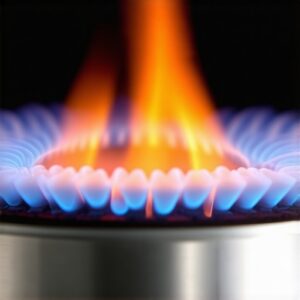
You wouldn’t drive your car for 50,000 miles without an oil change, yet people expect their furnace to run 2,000 hours a year without a set of eyes on the burners. Preventative maintenance contracts are not a luxury; they are an insurance policy against a 2 AM emergency call. A real tech will use ‘Pookie’ (mastic) to seal air leaks at the plenum, check the gas pressure with a manometer, and ensure the flame is a crisp, stable blue—not a lazy, orange flicker that indicates soot buildup. If you want to sleep soundly, stop wondering if your furnace is safe and get the data to prove it. If you have questions or need a real pro to look at your rig, contact us today before the next cold front hits. Don’t wait for the sound of silence.