The industry is staring down a barrel, and most homeowners don’t even see the trigger being pulled. We are currently standing on the edge of the 2025 regulatory cliff, where the refrigerants we’ve used for decades—specifically R-410A—are being phased out in favor of A2L ‘mildly flammable’ alternatives like R-454B. If you think the price of a furnace or a heat pump installation is high now, just wait until the new sensors and mitigation boards required for these flammables hit the supply chain. My old mentor, a man who could diagnose a bad TXV just by the vibration of the suction line, used to scream at me, ‘You can’t cool what you can’t touch, and you can’t heat what you don’t understand!’ This was his way of saying that physics doesn’t care about your thermostat setting. In freezing climates, thermodynamics is a brutal master. We aren’t just moving air; we are managing the transfer of molecular energy under extreme pressure. If your ‘Tin Knocker’ didn’t size your return air drops correctly, your fancy new high-efficiency furnace installation is nothing more than an expensive paperweight. Efficiency isn’t just a sticker; it’s a measurable result of static pressure and proper gas line installation for furnaces.
“The most expensive equipment in the world cannot overcome a bad duct system.” – Industry Axiom
When we talk about Energy Star heating certification in the North, we are looking at the 90% AFUE (Annual Fuel Utilization Efficiency) threshold. A standard 80% furnace wastes 20 cents of every dollar up the chimney. A high-efficiency unit uses a secondary heat exchanger—usually made of stainless steel to resist the acidic condensate—to capture the latent heat that would otherwise be lost. This is where ‘Thermodynamic Zooming’ matters. As the flue gases cool, they reach the dew point inside that secondary coil. The water vapor turns back into liquid, releasing extra BTUs into your home. If your heating service tech doesn’t explain the need for a condensate pump or a proper drain line, they aren’t a tech; they’re a part-swapper. This transition from gas to liquid is why we use PVC venting instead of B-vent metal. If you see metal vent pipes on a 96% furnace, run—don’t walk—to the phone and call someone who knows how to identify the right HVAC fixes. In the sub-zero winters of the Midwest or Northeast, that secondary exchanger is the only thing standing between you and a $400 gas bill.
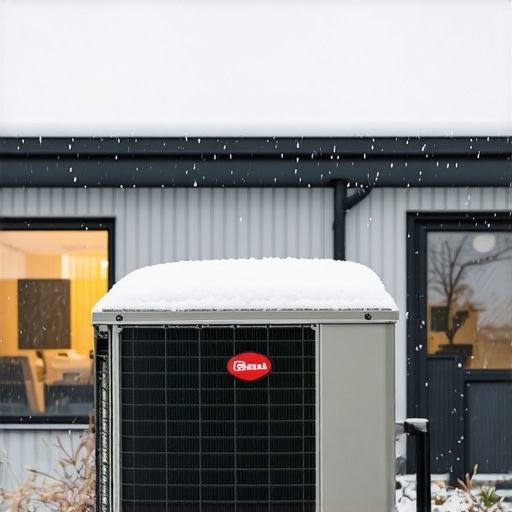
Then there is the ‘Juice’—the refrigerant. For years, we told people in the North that heat pumps were useless below 35°F. That’s old-school thinking. With SEER2 compliant upgrades and flash-injection technology, modern cold-climate heat pumps can pull heat out of the air even when it’s -13°F outside. It sounds like magic, but it’s just sub-cooling the liquid line to ensure the evaporator (which is now the condenser in heating mode) is cold enough to actually absorb energy from the freezing ambient air. However, a proper heat pump installation in a freezing climate requires a base pan heater. Without it, the defrost cycle turns your outdoor unit into a solid block of ice during a polar vortex. If a Sales Tech tries to sell you a standard SEER2 unit without a hyper-heat capability or an electric backup strip for emergency heat, he’s trying to meet a quota, not keep you warm. You need to understand the furnace repair myths debunked by guys who actually turn wrenches, not guys who wear suits to a crawlspace.
Airflow is where 90% of systems fail. I’ve seen brand-new, top-rated Energy Star models die in three years because the ductwork was choked. If the static pressure is too high, the blower motor—usually a variable speed ECM motor these days—has to work twice as hard. This leads to a blown transformer or a fried control board. A transformer replacement is a symptom, not the disease. The disease is usually a filthy 1-inch pleated filter that hasn’t been changed in six months or a return air duct that’s too small for the CFM requirements. This is why furnace filter replacement is the single most important thing a homeowner can do. If you want to get fancy with geofencing temperature control or smart building management, you better make sure your ‘Pookie’ (mastic) is sealed tight on every joint. Air leaking into an unconditioned attic is just burning money.
“Design heating loads shall be determined in accordance with the procedures described in the ASHRAE Fundamentals Handbook.” – ASHRAE Standard 62.2
In the North, we also deal with the ‘Monsoon’ of the heating world: the cracked heat exchanger. This is the ultimate ‘Red Tag’ event. When the metal in the primary heat exchanger fatigues from years of expanding and contracting, it develops cracks. This allows carbon monoxide to enter the airstream. A ‘Sales Tech’ will use this to scare you into a $15,000 system on the spot. A real tech will show you the crack with a camera and explain why it happened—often due to ‘short cycling’ caused by an oversized unit. An oversized furnace is just as bad as an undersized one; it gets the house to temperature too fast, never dries out the secondary coil, and the constant on-off cycle destroys the inducer motor. If you’re looking for heating service innovations, look for modulating gas valves that can fire at 40% capacity to provide a steady, gentle flow of heat. And don’t forget the hot water heater repair; if your furnace and water heater share a vent, a change in one can cause backdrafting in the other. If you’re smelling something sour or acidic, that’s not just ‘old house smell’—that’s flue gas or a burning compressor. Contact a pro at Heat Pros Services before the ‘sound of silence’ becomes your reality in the middle of a blizzard. Maintenance isn’t a luxury; it’s a survival strategy in the North. Learn the strategies to extend your system’s life and stop feeding the Sales Tech’s commission check.