The Sound of a Choking Machine
If you think your HVAC system is just a box that blows cold or hot air, you have already lost the battle. Most homeowners, and unfortunately most ‘Sales Techs’ wearing shiny un-creased uniforms, treat a furnace or an air handler like a toaster—plug it in and it works. But as a guy who has spent thirty years crawling through blown-in insulation and scraping my knuckles on galvanized steel, I am here to tell you that airflow is the lifeblood of your home. When your system struggles, it is usually because it is suffocating. In 2026, with higher efficiency standards and tighter homes, static pressure testing is no longer optional; it is the only way to prove your system isn’t killing itself.
The Physics Lesson: You Can’t Move What You Can’t Touch
My old mentor, a man who could smell a burnt-out compressor from the driveway, used to scream at me, ‘You can’t cool or heat what you can’t touch!’ He was talking about the boundary layer of air on the heat exchanger and the evaporator coil. If the air moves too fast, it whistles past the fins without dropping its heat. If it moves too slow, the coil freezes or the heat exchanger cracks from thermal stress. This is why static pressure—the resistance to airflow—is the most critical metric in HVAC repair. I once spent six hours in a drafty 19th-century basement trying to figure out why a brand-new gas furnace repair had failed within a week. The installer had slapped a 5-ton blower on a 2-ton duct system. It was like trying to breathe through a cocktail straw while running a marathon.
“The most expensive equipment in the world cannot overcome a bad duct system.” — Industry Axiom
In our northern climate, where gas furnace repair and chimney liner installation are part of the winter survival ritual, we see this constantly. People complain about ‘hot and cold spots,’ and the Sales Tech tries to sell them a $12,000 variable-speed unit. But the real culprit is usually ‘Pookie’—that messy mastic sealant—applied poorly, or a zoning system installation that was never balanced. If your static pressure is over 0.5 inches of water column (wc) on a standard residential blower, you are essentially redlining your engine every time the thermostat clicks on.
The Anatomy of Static Pressure in 2026
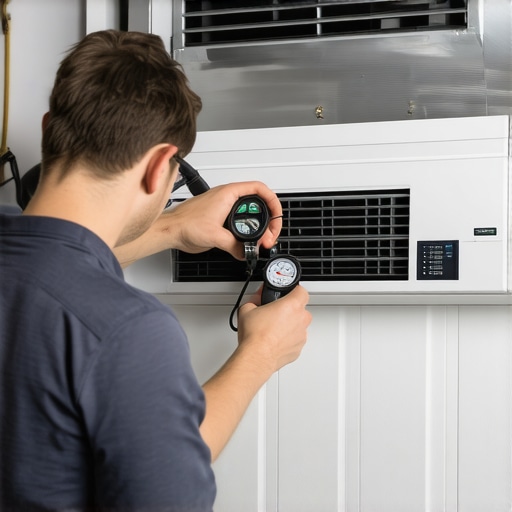
To understand why your AC is struggling, we have to look at Total External Static Pressure (TESP). This is the sum of the resistance on the return side (the air coming in) and the supply side (the air going out). When I hook up my dual-port manometer, I am looking for where the ‘blood pressure’ is high. Is it a dirty 1-inch pleated filter that hasn’t been changed since the last eclipse? Or is it a flue pipe installation that is causing backdrafting issues because the house is under too much negative pressure?
For those managing large properties, like church heating systems, the stakes are even higher. You have massive volumes of air moving through cavities that were often built before the invention of the slide rule. If the return air drops are undersized, the blower motor will ramp up its RPMs, consume massive amounts of ‘juice’ (electricity), and eventually burn out a winding. That leads to a 3 AM call for capacitor replacement services or, worse, a full motor swap that could have been avoided with a simple dryer vent cleaning or duct modification. You can find more on keeping things running long-term in these top HVAC repair strategies.
The Danger of the ‘Monoxide Monster’
In cold climates, we don’t just worry about comfort; we worry about staying alive. A high static pressure situation in a gas-fired system can lead to short-cycling. When the furnace gets too hot because it can’t move enough air over the heat exchanger, the high-limit switch trips. This constant expansion and contraction of the metal leads to cracks. Once that heat exchanger cracks, you have a direct line for carbon monoxide to enter the airstream. This is why proper flue pipe installation and a high-quality chimney liner installation are non-negotiable. If you are hearing a rhythmic ‘ticking’ sound when your furnace shuts down, it’s not ‘settling’—it’s a cry for help. Understanding when furnace repair is urgent can literally save your life.
“Design duct systems to ensure that the static pressure does not exceed the maximum rated pressure of the equipment.” — ACCA Manual D
The Solution: Mapping the Airflow
Stop guessing. If your ‘Tin Knocker’ (duct installer) didn’t use a manometer during the zoning system installation, the job isn’t finished. Here is how we fix it. First, we check the ‘gas’ (refrigerant) levels, ensuring the suction line is ‘beer can cold’—but only after we’ve verified airflow. You cannot accurately charge a system that has restricted airflow. It’s like trying to weigh a fish while it’s still swimming. Second, we look at gas line installation for furnaces to ensure we have the right BTUs for the blower capacity. If you have a ‘hot room,’ don’t just close the vents in the other rooms. That just increases the static pressure and makes the blower work harder. Instead, look into dampers or increasing the return air capacity. Most people think they need more ‘supply’ (cold air), but 90% of the time, they actually need more ‘return’ (to get the hot air out). This is a common point in furnace repair myths that homeowners fall for every year.
Maintenance is Physics, Not Magic
Don’t fall for the ‘Sales Tech’ who spends five minutes looking at your unit and tells you that you need a new one because the ‘Freon is low.’ If it’s low, there’s a leak. It’s a sealed system. A real technician will check your capacitor replacement services needs, wash your condenser coils to drop head pressure, and perform a static pressure test to see if your ductwork is the real enemy. Whether it’s church heating systems or a small bungalow, the physics of thermodynamics doesn’t change. You must maintain the balance between sensible and latent heat removal. For a deeper dive into making your system last through the seasons, check out this blueprint for repairs. Airflow is king, and until you respect the static pressure, you’re just throwing money into the return vent.