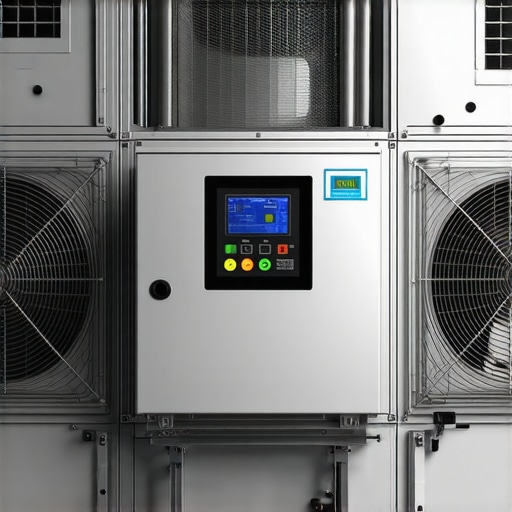
The Ghost in the Machine: Why Your Algorithm Needs a Tin Knocker
My old mentor used to scream at me until his face was the color of a manifold gauge: ‘You can’t cool what you can’t touch!’ He was talking about the boundary layer of air on an evaporator coil, but by 2026, that physics lesson applies to your smart home’s brain. If the AI doesn’t understand the physical resistance of your ductwork, it is just a fancy way to burn money. I have spent 30 years belly-crawling through fiberglass and spiders, and I have seen every ‘innovation’ come and go. Most are just shiny wrappers for the same thermodynamics. But as we stare down the barrel of 2026, the integration of AI-driven HVAC optimization is finally catching up to the iron. The problem? Most homeowners are still letting ‘Sales Techs’—those guys in crisp white shirts who couldn’t tell a capacitor from a canned ham—sell them oversized equipment that the AI can’t even save.
“The most expensive equipment in the world cannot overcome a bad duct system.” – Industry Axiom
1. Static Pressure Testing: The AI’s Blind Spot
You can have the smartest programmable thermostat programming in the world, but if your static pressure is through the roof, you are killing your blower motor. In the trade, we call it the ‘silent killer.’ High static pressure is like trying to breathe through a cocktail straw while running a marathon. When we perform static pressure testing, we are measuring the resistance the fan has to overcome. If your ‘Pookie’ (that’s mastic duct sealant for the uninitiated) is peeling and your returns are undersized, that AI is going to ramp up the ECM motor to compensate, doubling your electrical draw. Before you invest in 2026 tech, you need to ensure your ductwork is actually capable of moving the CFM the system requires. Without proper airflow, that high-efficiency unit is just an expensive paperweight.
2. Modulating Furnace Repair and the 2026 Efficiency Curve
In our North/Cold climate, we deal with the brutal reality of the polar vortex. By 2026, the standard is the modulating furnace. Unlike the old ‘on-off’ dinosaurs that blasted heat like a blowtorch, a modulating unit adjusts its flame in 1% increments. But here is the kicker: modulating furnace repair requires a tech who understands DC voltage and communication protocols, not just someone who can swap a thermocouple. When these units are paired with AI, they predict the heat load of the house based on the barometric pressure and outside temp. If you are still dealing with an old-school setup, a high-efficiency furnace installation is your only path to saving real cash. However, if your tech doesn’t check the gas pressure with a digital manometer, they’re just guessing. I’ve seen enough ‘Sales Techs’ skip this step to know that most furnace myths start with poor commissioning, not bad equipment.
3. The Hydronic Hybrid: Radiator Replacement and Smart Valves
Don’t think the AI revolution is only for forced air. If you are in an old Victorian with cast iron, radiator replacement with modern high-output panels is the 2026 play. We are now integrating AI to manage the boiler’s outdoor reset curve. Instead of the boiler firing to 180°F every time there is a call for heat, the system ‘learns’ that on a 40°F day, it only needs 140°F water to maintain comfort. This prevents the ‘overshoot’ that wastes gas. If you need gas furnace repair or boiler service, make sure your tech isn’t just looking at the flame; they need to be looking at the delta-T (the temperature difference) across the loop. It’s physics, not magic. If the return water is too hot, your condensing boiler won’t actually condense, and you’re flushing 10% of your efficiency down the chimney.
4. Dehumidification Services: Managing the Latent Heat
In 2026, we focus on the ‘wet bulb’ temperature. AI-driven systems now prioritize dehumidification services over simple cooling. Why? Because 75°F at 40% humidity feels like heaven, but 72°F at 70% humidity feels like a swamp. If your unit is oversized (the classic Sales Tech move), it ‘short cycles’—it cools the air so fast that the coil never gets below the dew point long enough to remove the moisture. This is where air purification integration comes in. Modern sensors detect VOCs and humidity levels, adjusting the blower speed to ensure the ‘Juice’ (refrigerant) has enough time to pull that latent heat out of your air. If you’re smelling that metallic, sour tang of a dirty coil, you’ve already lost the battle. Proper maintenance is the only way to extend your system’s life while keeping the air breathable.
“Proper sizing and installation of HVAC systems is critical for occupant comfort and energy efficiency.” – ASHRAE Standard 62.1
5. Commercial-Grade Logic for Residential Systems
The biggest shift in 2026 is that residential thermostat installation now mimics commercial furnace repair strategies. We are seeing VAV (Variable Air Volume) logic in 3-bedroom ranchers. This means the AI can shut off airflow to the guest room and divert it to the master suite without blowing out the ductwork, provided you have a bypass damper or a variable-speed blower. But beware: these systems are complex. If your ‘Sparky’ or a cut-rate ‘Tin Knocker’ messes up the low-voltage wiring, you can fry a $1,200 communication board in a heartbeat. When you see a ‘check system’ light, you need to know when the repair is urgent and when it’s just a sensor glitch. Don’t let a sales-hungry tech talk you into a whole new system when all you need is a software update and a new flame sensor.